

To achieve net-zero, focus on improving energy efficiency by maximizing natural light, adopting smart fixtures, and shifting to renewable energy like solar or wind. Set clear emission reduction targets aligned with climate goals and track your progress using accurate data. Invest in carbon capture technologies and electrify your operations with low-carbon solutions. Engage your supply chain and support policies that promote clean energy—if you want to explore more strategies, keep going.
Key Takeaways
- Implement energy efficiency measures like maximizing natural light and upgrading to smart, low-energy fixtures.
- Invest in on-site renewable energy sources such as solar and wind to reduce reliance on fossil fuels.
- Develop and deploy carbon capture, utilization, and storage (CCUS) infrastructure in industrial sectors.
- Transition to electrification of transportation and heating systems powered by clean energy.
- Establish clear, science-based emission reduction targets and monitor progress through accurate data and reporting.
Enhancing Energy Efficiency in Operations

To effectively enhance energy efficiency in operations, you need to focus on reducing unnecessary energy consumption through strategic measures. Start by maximizing natural light, which cuts down on electric lighting needs during daytime hours. Implementing smart, energy-efficient fixtures and appliances also plays a crucial role in lowering energy use. Adjust insulation levels to optimize building temperature control, reducing heating and cooling demands. Consider adopting remote or hybrid work arrangements to decrease energy consumption in office spaces. Accurate energy usage data and carbon accounting are essential for tracking progress and identifying further opportunities for efficiency. Regularly review your energy practices to find new ways to reduce waste. These targeted actions can considerably cut energy consumption, helping your organization lower emissions and improve overall sustainability.
Transitioning to Renewable Energy Sources

You can reduce your carbon footprint by investing in on-site renewable energy sources like solar or wind, which cut reliance on fossil fuels. Procuring electricity from certified renewable providers also offers a straightforward way to lower Scope 2 emissions. Harnessing solar power can significantly contribute to your energy independence and sustainability goals. Together, these strategies accelerate your shift to cleaner energy and support broader decarbonization efforts.
On-site Renewable Integration
Have you considered the benefits of on-site renewable energy integration as a key step toward decarbonizing your operations? Installing solar panels or small wind turbines on your property allows you to generate clean energy directly, reducing your dependence on fossil fuels. This approach not only cuts your Scope 2 emissions but also provides greater energy independence and stability against market fluctuations. By producing your own renewable power, you can optimize energy use, lower operational costs, and demonstrate your commitment to sustainability. Proper planning ensures your systems are scalable and aligned with your long-term net-zero goals. Integrating on-site renewables requires upfront investment but offers ongoing benefits, helping you meet regulatory requirements and strengthen your reputation as a responsible business. Additionally, understanding location and installation considerations ensures your renewable systems operate safely and efficiently over time.
Renewable Procurement Strategies
Investing in renewable procurement strategies allows organizations to source clean energy without the need for on-site generation. This approach helps reduce reliance on fossil fuels and lowers Scope 2 emissions. To maximize impact, consider these strategies:
- Partner with certified renewable energy providers to lock in renewable power contracts.
- Purchase Renewable Energy Certificates (RECs) to offset emissions and support renewable projects.
- Enter into power purchase agreements (PPAs) for long-term, fixed-price renewable energy supply.
- Join green tariffs offered by utilities dedicated to renewable energy.
- Invest in off-site renewable projects like solar farms or wind parks to expand clean energy access.
- Incorporating comprehensive planning can enhance the effectiveness of renewable procurement efforts and ensure alignment with broader sustainability goals.
Setting and Pursuing Emission Reduction Targets

How can organizations effectively set and pursue emission reduction targets that drive meaningful progress? First, establish clear, science-based goals aligned with global climate frameworks, such as limiting warming to 1.5°C. Use accurate data to define baseline emissions and track progress over time. Prioritize near-term targets to create momentum while planning long-term ambitions for net-zero by 2050 or sooner. Break down goals into actionable steps across scopes and value chains, engaging stakeholders to ensure accountability. Regularly review and update targets based on technological advances and policy changes. Communicate transparently about progress and challenges to build trust. This disciplined approach keeps your organization focused, measurable, and adaptable, ensuring your emission reduction efforts are impactful and aligned with broader climate objectives. Incorporating signs of spoilage and other data-driven insights can help refine your strategies and ensure credibility in your sustainability reporting.
Implementing Carbon Capture, Utilization, and Storage

You need to understand the different CO2 capture technologies available, such as post-combustion, pre-combustion, and oxy-fuel methods, to determine what fits your operations. Developing the necessary infrastructure, like transportation pipelines and storage sites, is vital for scaling these solutions effectively. Industry-specific applications, especially in hard-to-decarbonize sectors like cement and steel, highlight where CCUS can make the biggest impact. Additionally, understanding self-awareness can assist in optimizing operational strategies and fostering innovative approaches to carbon management.
CO2 Capture Technologies
Carbon capture, utilization, and storage (CCUS) technologies play a critical role in reducing emissions from industrial processes and hard-to-decarbonize sectors. You can implement these technologies to capture CO2 before it enters the atmosphere, making a tangible impact on your emissions footprint. To succeed, focus on:
- Installing capture systems at emission sources like cement plants or refineries
- Developing pipelines for efficient CO2 transport to storage sites
- Investing in underground storage options such as depleted oil fields or saline aquifers
- Utilizing captured CO2 for commercial applications like enhanced oil recovery or synthetic fuels
- Supporting pilot projects that demonstrate integration with existing infrastructure
- Recognizing that the effectiveness of CCUS can be enhanced through continuous innovation and creative problem-solving to address unique challenges in different industries.
These strategies help mitigate residual emissions and support your transition toward a low-carbon future, ensuring that industry-level emissions are effectively managed and reduced.
Infrastructure Development Needs
Implementing effective Carbon Capture, Utilization, and Storage (CCUS) requires robust infrastructure development that can reliably support each stage of the process. You need a network of pipelines for transporting captured CO2 from emission sources to storage sites. This infrastructure must be geographically extensive and resilient to handle large volumes of CO2 safely. Storage facilities, often deep underground rock formations, demand precise site selection and monitoring to prevent leaks. Additionally, you’ll require facilities for capturing and processing CO2 at industrial plants, ensuring seamless integration with existing operations. Investment in these infrastructure components is critical, as they form the backbone of scalable CCUS deployment. Developing this infrastructure today sets the foundation for reducing residual emissions and supporting a transition to a low-carbon economy. Moreover, ensuring high-quality storage options is essential for maintaining public trust and long-term effectiveness of CCUS initiatives.
Industry-Specific Applications
Industry-specific applications of Carbon Capture, Utilization, and Storage (CCUS) are essential for addressing emissions from sectors where decarbonization is particularly challenging. You can implement CCUS in industries like cement, steel, and chemicals, where emissions are embedded in production processes. Scaling infrastructure for CO2 transport and storage is critical to support widespread adoption. Pilot projects in regions such as the UK show how integrating CCUS with traditional industries can cut net emissions. You should also consider the following:
- Installing capture systems at industrial source points
- Developing regional CO2 transport networks
- Utilizing captured CO2 for enhanced oil recovery or mineralization
- Supporting government policies and incentives for CCUS projects
- Monitoring and verifying storage site integrity for long-term safety
- Incorporating natural materials such as stone and wood can enhance the sustainability and integration of CCUS infrastructure.
These steps help industries reduce residual emissions while enabling a smoother progression to net-zero.
Promoting Electrification and Low-Carbon Technologies

How can electrification and low-carbon technologies accelerate your efforts to cut emissions? By replacing fossil-fuel-powered systems with electric and clean alternatives, you reduce waste and emissions notably. Shifting to electric vehicles, heat pumps, and renewable-powered machinery cuts your reliance on fossil fuels. Investing in low-carbon tech drives efficiency and supports cleaner energy grids. Here’s a quick look at key areas:
| Technology | Impact |
|---|---|
| Electric Vehicles (EVs) | Lower transportation emissions |
| Renewable Energy Generation | Reduces reliance on fossil fuels |
| Efficient Electric Heating | Cuts building heating emissions |
| Smart Grids and Storage | Enhances energy use and stability |
Additionally, understanding the 16PF traits can help in optimizing the deployment of these technologies by aligning solutions with behavioral patterns.
Engaging Supply Chains for Broader Impact

Have you considered the powerful impact of engaging your supply chain to achieve broader emission reductions? By collaborating with suppliers and partners, you expand your reach beyond your direct operations, creating a more significant environmental impact. You can:
- Set clear emissions reduction targets for suppliers and track progress
- Incorporate sustainability criteria into procurement processes
- Encourage suppliers to adopt renewable energy and efficiency measures
- Share best practices and provide support for decarbonization efforts
- Develop metrics that account for water, waste, and pollution alongside carbon reductions
- Utilize specialized spray tips and equipment maintenance techniques to improve efficiency and reduce resource consumption during operations.
This approach fosters shared responsibility and scales your efforts across the value chain. Engaging your supply chain not only boosts your overall sustainability but also drives innovation and resilience in your network, making your net-zero journey more effective.
Leveraging Innovation and Policy Support for Net-Zero
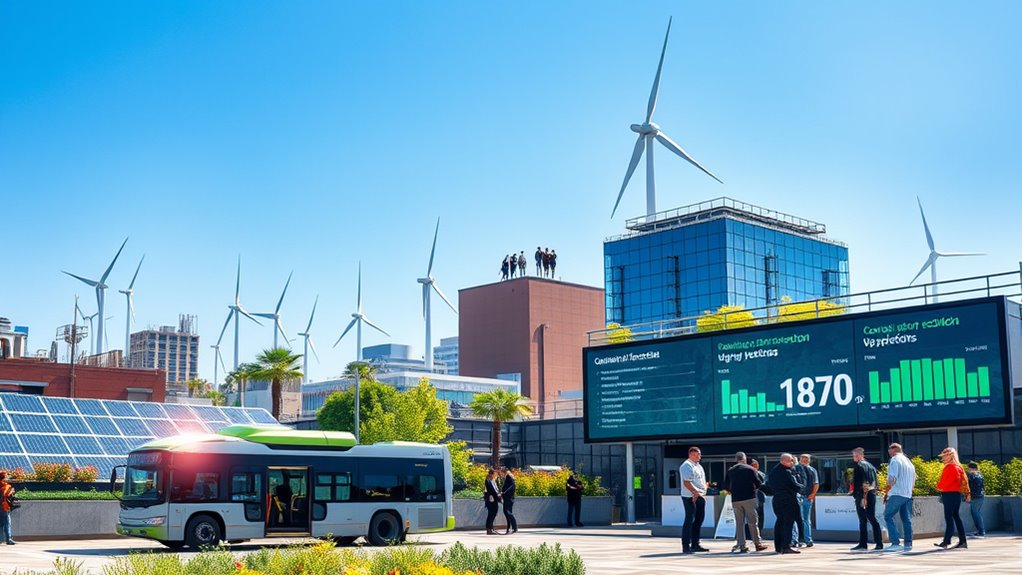
Building on supply chain efforts, leveraging innovation and policy support can accelerate your path toward net-zero. Embrace cutting-edge technologies like advanced renewable energy systems, energy storage, and smart grid solutions to enhance efficiency and reduce emissions. Advocate for policies that incentivize clean energy adoption, such as tax credits, subsidies, and stricter emissions standards, which create a favorable environment for sustainable investments. Collaborate with governments and industry groups to shape regulations that promote innovation and guarantee fair market access. Investing in research and development can open new low-carbon solutions, while policy frameworks provide the stability needed for long-term planning. Together, innovation and supportive policies enable you to overcome barriers, scale sustainable practices, and make meaningful progress toward achieving net-zero emissions.
Frequently Asked Questions
How Do Companies Accurately Measure and Report Their Carbon Footprint?
You can accurately measure and report your carbon footprint by implementing precise data collection methods for energy use and emissions across all scopes. Use standardized protocols, like the GHG Protocol, to guarantee consistency. Invest in reliable carbon accounting tools and software to track your progress. Regularly audit your data, verify emissions reports externally, and set clear boundaries for your reporting to improve transparency and credibility in your sustainability efforts.
What Are the Challenges in Integrating Renewable Energy Into Existing Infrastructure?
You face challenges when integrating renewable energy into existing infrastructure, such as compatibility issues with current systems and grid limitations. Upgrading or retrofitting facilities can be costly and complex, requiring careful planning and investment. You also need to address intermittency of renewables like solar and wind, which can affect supply stability. Managing regulatory hurdles and securing permits further complicate the shift, but these efforts are essential for a successful move to renewable energy.
How Can Organizations Ensure Credibility in Their Net-Zero Commitments?
Imagine your commitment as a lighthouse guiding ships safely through fog—that’s how you guarantee credibility. You must set transparent, science-based targets, regularly track progress with accurate data, and openly share successes and setbacks. Partner with third-party validators to verify your claims, and avoid greenwashing by investing genuinely in renewable projects. By demonstrating accountability and consistency, you build trust that your net-zero pledge is a true, measurable journey, not just a promise.
What Role Does Government Policy Play in Accelerating Decarbonization Efforts?
Government policy plays a vital role in accelerating decarbonization by creating clear regulations, incentives, and standards that drive industries toward cleaner practices. You benefit from supportive policies like renewable energy mandates, carbon pricing, and subsidies that make low-carbon technologies more affordable and attractive. Strong policies also foster innovation, expand infrastructure, and guarantee accountability, helping you meet your net-zero goals faster and more effectively while aligning with broader climate commitments.
How Can Small and Medium Enterprises Participate in Achieving Net-Zero Goals?
You might think small businesses are powerless in the net-zero race, but they’re actually key players. You can optimize energy use with smart fixtures, switch to renewable energy, and set clear emission targets. Engage your supply chain, adopt low-carbon tech, and promote sustainable practices. It’s not about huge investments—small actions multiply when everyone participates. So, surprise yourself: even a modest enterprise can make a big, positive impact on the planet.
Conclusion
Achieving net-zero isn’t just a goal; it’s a responsibility you can take on today. By enhancing energy efficiency, embracing renewables, and engaging your supply chain, you make a real difference. Are you ready to lead the change and leverage innovation for a sustainable future? Every step you take brings us closer to a healthier planet. Together, your actions matter—so why wait to start making an impact now?