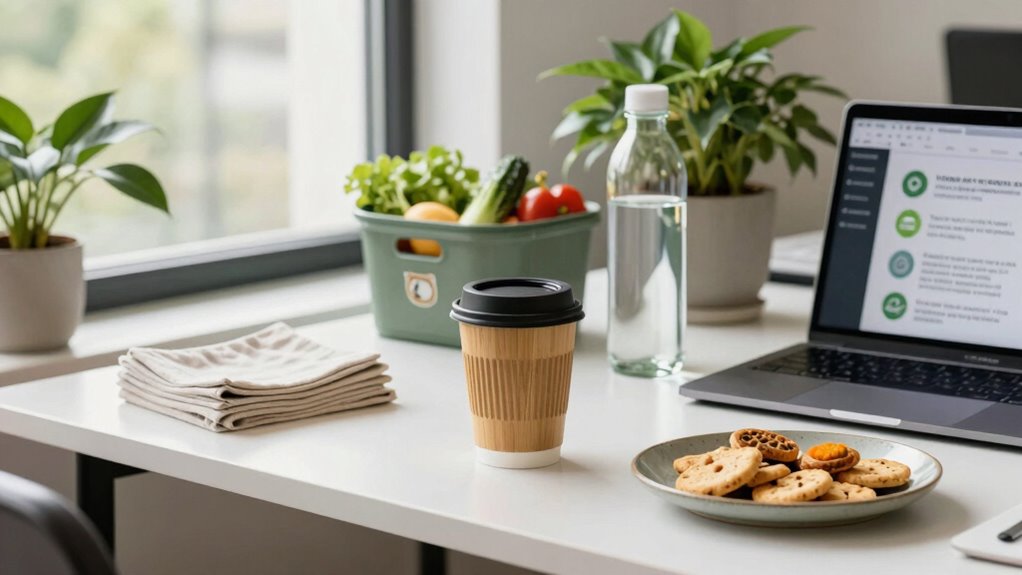

To build low-waste routines at work, start by actively participating in recycling and composting programs, ensuring waste is properly sorted and composted if possible. Bring reusable items like bottles and containers, and opt for digital documents instead of paper to cut down on waste. Encourage your colleagues to adopt sustainable habits and advocate for company-wide initiatives. By making resource-conscious choices daily, you help foster a culture of sustainability—keep exploring to find more effective strategies.
Key Takeaways
- Promote and participate in workplace recycling and composting programs to minimize waste sent to landfills.
- Encourage the use of reusable items and minimal packaging to reduce single-use plastics and waste generation.
- Transition to digital documentation and communication to cut down on paper consumption.
- Educate colleagues on waste reduction practices and foster a culture of sustainability.
- Advocate for sustainable policies and embed eco-friendly habits into daily routines for long-term impact.
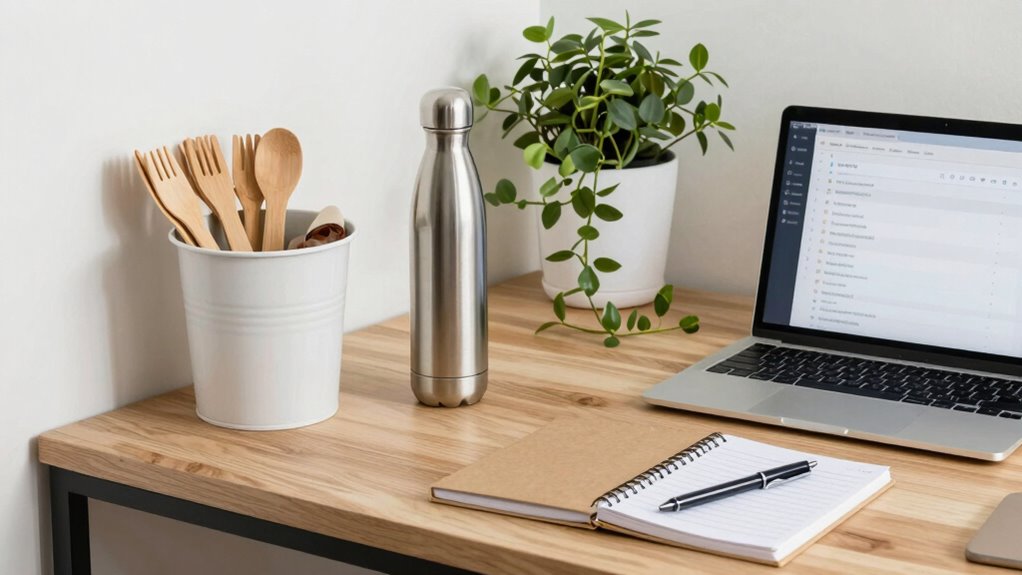
Creating low-waste routines at work can considerably reduce your environmental impact and promote sustainable practices. One effective way to do this is by actively participating in recycling programs. Many offices now have designated bins for paper, plastics, and metals. Make it a habit to sort your waste properly, ensuring recyclable materials go into the correct containers. Not only does this minimize landfill waste, but it also encourages your coworkers to adopt eco-friendly habits. If your workplace doesn’t already have recycling programs in place, consider advocating for their implementation. You can gather support from colleagues and present the benefits to management, emphasizing how simple adjustments can lead to significant environmental benefits. Incorporating waste separation techniques like proper sorting can further optimize your recycling efforts. Office composting is another crucial component of low-waste routines. If your workplace produces organic waste—such as food scraps or coffee grounds—suggest setting up a composting system. This keeps biodegradable waste out of landfills and turns it into nutrient-rich compost, which can be used for office plants or shared gardens. You might start small, with a dedicated compost bin in the break room, and clearly label it to prevent contamination. Educate your coworkers about what can and cannot go into the compost, and encourage everyone to participate. Office composting not only reduces waste but also fosters a culture of responsibility and sustainability among employees. Additionally, increasing awareness about environmental impact can motivate colleagues to adopt more sustainable habits and support waste reduction initiatives. Recognizing the importance of waste reduction strategies can help reinforce the significance of these routines and inspire ongoing commitment.
Participate in recycling programs and advocate for sustainable waste practices at work to reduce environmental impact.
Beyond waste sorting, focus on reducing waste before it’s generated. Bring reusable items like coffee cups, water bottles, and containers to work. Over time, these small changes cut down on single-use plastics and packaging waste. When ordering supplies or snacks, opt for bulk or minimal packaging options whenever possible. Additionally, encourage colleagues to do the same, creating a ripple effect that amplifies your efforts.
Another way to build low-waste routines is by digitalizing as much as possible. Switch to electronic documents, memos, and reports instead of printing hard copies. When printing is necessary, use double-sided printing and set default print options to save paper. These simple shifts can dramatically cut down on paper waste, aligning with your recycling efforts and promoting a more eco-conscious workplace.
Incorporating these habits into your daily routine takes effort, but consistency makes a difference. By actively participating in recycling programs, advocating for office composting, and making mindful choices about resources, you help create a greener work environment. Over time, your actions can inspire others and embed sustainability into your company culture, making low-waste routines an essential part of your professional life.

Fanhaw 32 oz Clear Plastic Water Bottle, BPA Free Leakproof Tritan Sports Water Bottle with Chug Lid, Wide Mouth Reusable Bottle for Gym, Travel, School & Office (Clear & Black)
- Material: BPA-free Tritan for safety and odorless use
- Lid Design: Leakproof with safety lock and one-handed open
- Carrying Handle: Durable handle for easy transport
As an affiliate, we earn on qualifying purchases.
As an affiliate, we earn on qualifying purchases.
Frequently Asked Questions
How Can I Motivate Colleagues to Adopt Low-Waste Habits?
You can motivate colleagues by fostering employee engagement through collaborative efforts and open conversations about sustainability. Use behavioral incentives like recognition or small rewards to encourage low-waste habits. Lead by example, showing your commitment to waste reduction, which inspires others to follow suit. Regularly share progress and successes, making everyone feel involved and motivated to maintain eco-friendly routines. This approach builds a motivated, environmentally-conscious workplace.
What Are the Best Eco-Friendly Office Supplies to Use?
Imagine a workspace where every item sparks sustainability. Opt for office supplies made from recyclable materials like notebooks, pens, and folders, reducing waste. Choose eco-friendly packaging for deliveries and storage, cutting down on plastics. Have you considered reusable items such as refillable pens and bamboo utensils? These choices not only lower your environmental impact but also inspire colleagues to follow suit, creating a greener, more conscious office environment.
How Do I Handle Waste Management in Shared Workspaces?
You should implement clear recycling policies and encourage everyone to participate, making waste separation simple and accessible. Promote waste reduction strategies like reusing supplies and minimizing single-use items. Educate your colleagues about proper disposal methods and set up designated bins for different materials. Regularly review and update waste management procedures to guarantee they’re effective. By fostering a culture of sustainability, you’ll make waste management more efficient and environmentally friendly in shared workspaces.
Are There Specific Policies to Support Sustainable Routines at Work?
You might be surprised, but many workplaces do have recycling policies and aim for green certifications—it’s just that sometimes, they’re more for show than substance. To truly support sustainable routines, push for clear recycling guidelines and champion green certifications that hold your company accountable. These policies encourage mindful waste management and demonstrate genuine commitment, making your workplace a true eco-friendly space rather than just a badge on the wall.
How Can I Measure the Impact of Low-Waste Practices?
You can measure the impact of your low-waste practices by tracking recycling metrics regularly. Conduct waste audits to identify waste sources and monitor improvements over time. Keep detailed records of waste reduction, recycling rates, and material usage. Comparing data before and after implementing routines helps you assess progress. Engage colleagues in tracking these metrics to foster accountability and continuously refine your strategies for a more sustainable workspace.

Utopia Kitchen Countertop Compost Bin 1.3 Gallon, Stainless Steel, Silver
- Capacity: 1.3 Gallon stainless steel bin
- Durable Material: Stainless steel resists scratches and chipping
- Odor Control: Includes charcoal filters for natural smell management
As an affiliate, we earn on qualifying purchases.
As an affiliate, we earn on qualifying purchases.
Conclusion
By weaving these low-waste routines into your daily work, you’re planting seeds for a greener future. Each small act is like a drop of water nourishing the roots of sustainability, gradually transforming your workspace into a thriving, eco-friendly garden. With consistent effort, your habits will bloom into a vibrant landscape of change, showing that even the tiniest actions can grow into a powerful forest of impact. Keep tending your routines, and watch the world around you flourish.

DocSafe 5200°F Fireproof Document Organizer Box with Lock, Heat Insulated
- High-Temperature Fireproof Material: Withstands up to 5200°F fire
- Water-Resistant Protection: Resistant to water and fire damage
- Large Capacity Storage: Multiple compartments for documents and valuables
As an affiliate, we earn on qualifying purchases.
As an affiliate, we earn on qualifying purchases.

jinfusi Bamboo Retractable Ballpoint Pen(12 pack),Black ink 1mm Sustainable Pens for Journaling Writing Office Supplies Eco Friendly Products Set Pens
- Set Includes: 12 biodegradable bamboo pens with box
- Material: Bamboo barrels with metal tips and clips
- Design: Lightweight, portable, comfortable grip
As an affiliate, we earn on qualifying purchases.
As an affiliate, we earn on qualifying purchases.