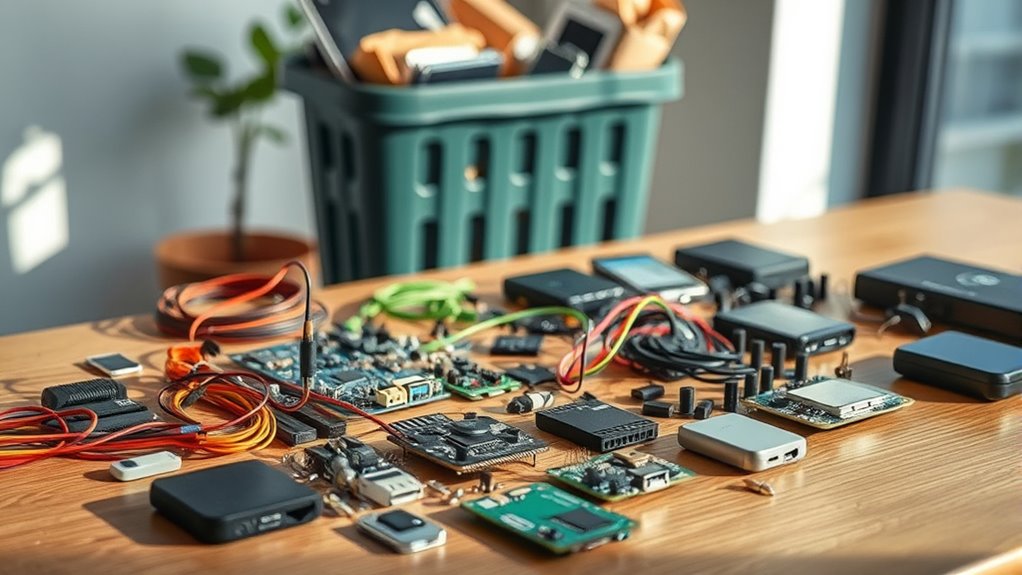

To help reduce e-waste, focus on supporting circular economy practices like repairing, reusing, and recycling your electronics. Proper disposal prevents pollution and conserves resources, while choosing sustainable brands encourages innovation. Technologies like AI and product-as-a-service models are making recycling more efficient. Overcoming barriers, such as lack of awareness or standardization, is key, and policies like right-to-repair are gaining momentum. Keep exploring to discover how your choices and these innovations can shape a more sustainable future.
Key Takeaways
- Circular economy practices extend device lifespans through reuse, repair, and remanufacturing, reducing e-waste generation.
- Designing out waste and promoting resource efficiency help minimize environmental impact of electronic products.
- Innovative recycling technologies, like AI and robotics, improve e-waste processing accuracy and efficiency.
- Consumer awareness and responsible choices drive industry shifts toward sustainable electronics and circular models.
- Policies such as extended producer responsibility and right-to-repair support effective e-waste reduction strategies.

TecHong Reusable USB Cable, Both End Repairable Fast Charging Cord Compatible with iProduct, Micro/Type C Android Smartphone, 1.5 M / 5 Fts Renewable Quick Repair Recycling Phone Accessory
As an affiliate, we earn on qualifying purchases.
As an affiliate, we earn on qualifying purchases.
The Growing Challenge of E-Waste Worldwide

Why is e-waste becoming one of the fastest-growing waste streams worldwide? You might notice that as technology advances rapidly, devices become outdated or break more often. Consumers tend to replace gadgets quickly, driven by the desire for the latest features. Planned obsolescence and shorter product lifespans accelerate this cycle. Additionally, global e-waste increased by 82% between 2010 and 2022, reaching over 62 million tonnes. Many devices contain hazardous materials like lead and mercury, which pose environmental and health risks when improperly disposed of. Despite the rise, only about 17.4% of e-waste gets properly recycled. Implementing effective filtration methods and sustainable disposal practices can help mitigate these environmental impacts. This rapid growth highlights the urgent need for effective strategies to manage e-waste, reduce environmental harm, and promote sustainable practices across the electronics industry.

MOGAOPI Electronic Component Kit Total 1390 Pcs, LED Diodes, Metal Film Resistors, Electrolytic Capacitor Package, Common Diodes, Ceramic Capacitors, Common Transistor Assortment Box
All products are tested for stability, consistency and reliability,Ensure product excellence
As an affiliate, we earn on qualifying purchases.
As an affiliate, we earn on qualifying purchases.
Core Principles of the Circular Economy in Electronics

What are the fundamental ideas driving the circular economy in electronics? The core principles focus on designing out waste, keeping products and materials in use, and regenerating natural systems. You should prioritize resource efficiency by extending product lifespans and promoting reuse, repair, and remanufacturing. This reduces reliance on raw materials and minimizes e-waste. The table below highlights key concepts:
| Principle | Explanation |
|---|---|
| Design for Longevity | Create durable, upgradeable devices |
| Resource Recovery | Recycle and reuse materials efficiently |
| Circular Business Models | Shift from ownership to services |
Applying these principles helps you minimize waste, conserve resources, and foster sustainable electronics practices. Incorporating design for durability in product development is essential to ensure longevity and reduce environmental impact.

BulbCycle Large Electronics Recycling Box (Holds up to 70 lbs. of E-Waste, E-Scrap) RecyclePak 061CH
Ewaste Mail back Kit
As an affiliate, we earn on qualifying purchases.
As an affiliate, we earn on qualifying purchases.
How Technological Advancements Drive E-Waste
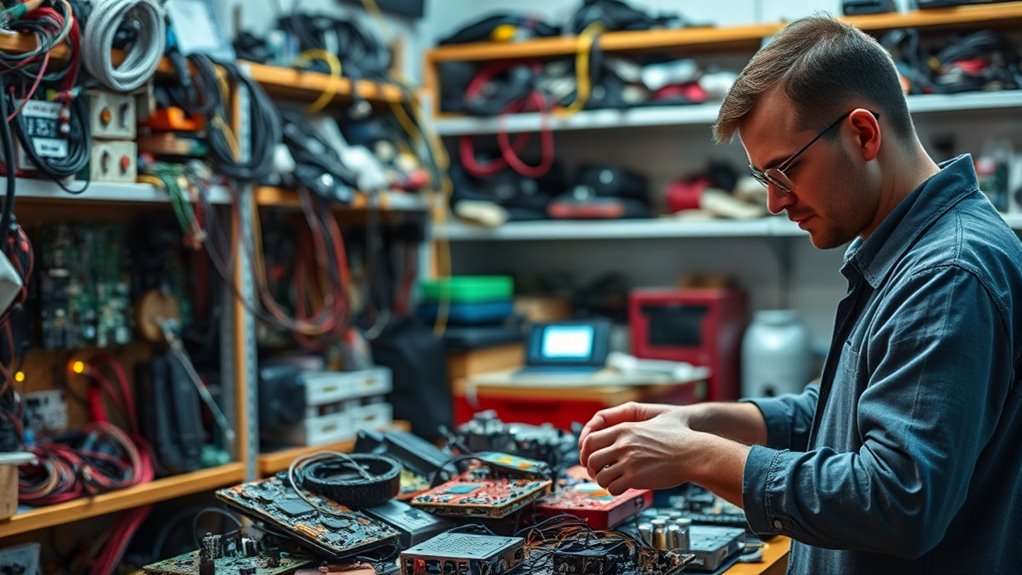
You see, rapid innovation cycles mean new devices arrive faster than ever, making older models obsolete quickly. This leads to shorter device lifespans, prompting consumers to replace electronics more frequently. As a result, technological progress accelerates e-waste generation, challenging efforts to create a sustainable circular economy. Additionally, the increasing popularity of forsale 100 gadgets encourages more frequent upgrades, further contributing to e-waste accumulation.
Rapid Innovation Cycles
Rapid innovation cycles in the electronics industry accelerate the turnover of devices, leading to increased e-waste generation. As new models emerge quickly, you often feel the urge to upgrade to the latest technology, even if your current device still functions well. Manufacturers release frequent updates and newer versions, making older devices seem outdated and less desirable. This rapid pace pushes consumers to replace gadgets more often, without sufficient consideration for recycling or reuse. Technological advancements also make older devices incompatible with new software, encouraging premature disposal. Additionally, the lack of awareness about proper disposal methods exacerbates the problem, as many consumers are unaware of appropriate recycling practices. Consequently, this cycle results in a significant surge of e-waste, putting pressure on waste management systems and environmental resources. Without proper strategies, these swift innovation cycles threaten the sustainability of electronic consumption and waste reduction efforts.
Short Device Lifespans
Technological advancements are accelerating the decline of device lifespans, prompting you to replace electronics more frequently. This rapid turnover fuels e-waste and strains resources. Consider these impacts:
- You upgrade your device before it’s truly worn out, leading to unnecessary waste.
- Shorter lifespans mean more devices end up discarded, polluting the environment.
- Constant innovation pushes consumers to chase the latest models, keeping old devices out of use.
- Manufacturers often design devices with planned obsolescence, intentionally shortening product life to boost sales.
This cycle creates a sense of obsolescence, making sustainability difficult. As manufacturers design devices with planned obsolescence, your choices inadvertently contribute to mounting e-waste. Reducing device lifespans isn’t just about technology; it’s about shaping a more sustainable future. Recognizing this pattern empowers you to make more mindful decisions about electronics use and disposal.

Your Brand, the Next Media Company: How a Social Business Strategy Enables Better Content, Smarter Marketing, and Deeper Customer Relationships
As an affiliate, we earn on qualifying purchases.
As an affiliate, we earn on qualifying purchases.
Innovative Strategies for Sustainable Electronics Management

Innovative strategies are essential for advancing sustainable electronics management in today’s rapidly evolving landscape. You can leverage digital circular platforms to improve traceability, ensuring materials and devices are reused or recycled efficiently. Adopting product-as-a-service models allows you to extend device lifespans, reducing waste and resource extraction. Sharing and access platforms encourage shared use, decreasing the total number of devices needed. Implementing circular supply chains helps close loops by emphasizing reuse, refurbishment, and recycling of components. Additionally, offering product-life extension services can prolong device usability, decreasing e-waste generation. Incorporating AI security technologies can enhance the detection of counterfeit or compromised devices within supply chains, improving overall integrity. Embracing these strategies requires collaboration across industries and consumers, but they create a sustainable approach that minimizes environmental impact, conserves resources, and supports the transition toward a circular economy in electronics.
Overcoming Barriers to Circular Economy Adoption
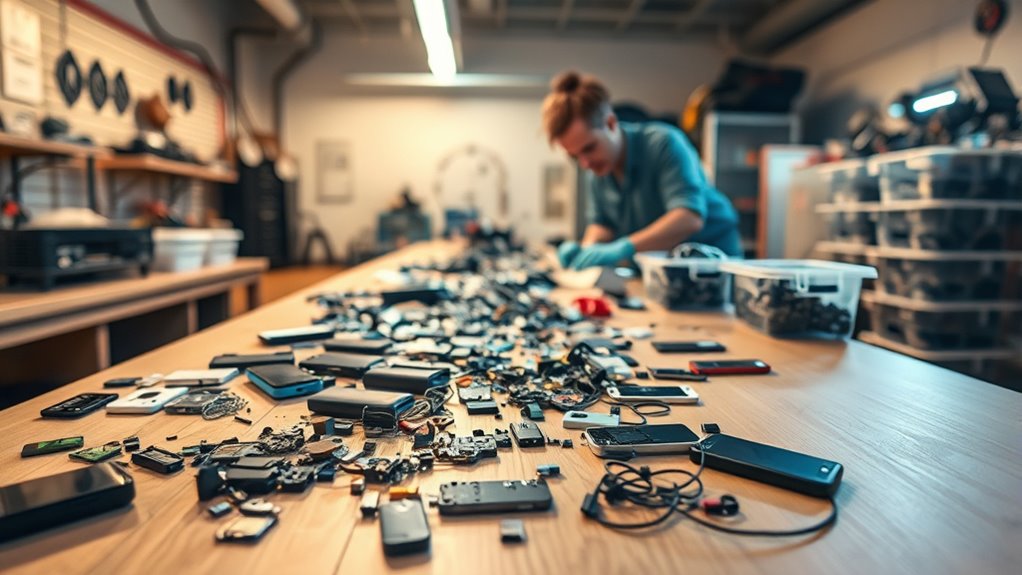
You face significant hurdles like inconsistent data standards that slow down circular economy efforts. Without clear, standardized information, tracking and recycling electronics become more difficult. Additionally, many consumers remain unaware of the importance of sustainable electronics, limiting their participation in circular practices. To address security concerns, implementing AI safety measures can help prevent misuse and ensure responsible deployment of AI technologies in environmental initiatives.
Data Standardization Challenges
Data standardization remains a significant barrier to adopting a circular economy in electronics because fragmented standards hinder seamless data sharing and interoperability across different systems and stakeholders. Without unified standards, you face:
- Data silos that prevent collaboration, slowing progress and innovation.
- Inaccurate information, leading to misinformed decisions and inefficient recycling.
- Delayed responses to e-waste challenges, risking environmental harm and resource loss.
These issues make it difficult to track devices, manage materials, and ensure compliance effectively. As a result, the full potential of digital platforms and data-driven solutions remains untapped. Overcoming these barriers requires industry-wide cooperation and the development of universal standards that foster transparency, accuracy, and real-time data sharing. Only then can you truly accelerate the shift to a sustainable, circular electronics industry.
Consumer Awareness Gaps
Why do many consumers remain unaware of the environmental impact of their electronics choices? Often, it’s because information isn’t easily accessible or communicated effectively. You might not see the full lifecycle of your device or understand how improper disposal harms the environment. Marketing and branding tend to focus on features rather than sustainability, making eco-friendly options less prominent. Additionally, a lack of clear labeling and education leaves you uncertain about how to recycle or extend your device’s lifespan. Without awareness of the benefits of circular economy practices, you’re less likely to make sustainable choices. Bridging this gap requires better education, transparent information, and accessible recycling programs. When you’re informed about the environmental impacts, you can actively support initiatives that reduce e-waste and promote responsible consumption. Incorporating vertical storage solutions can also help in managing electronic accessories and components more sustainably at home.
Cutting-Edge Technologies Transforming E-Waste Recycling
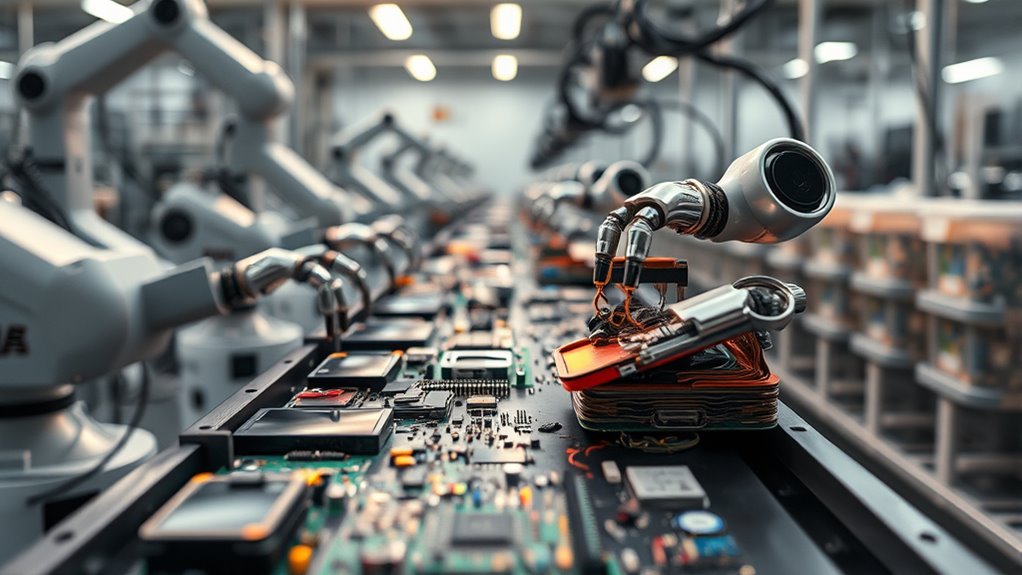
Cutting-edge technologies are revolutionizing e-waste recycling by making processes faster, safer, and more efficient. You can now witness incredible innovations that transform how we handle electronic waste.
- AI-Driven Analytics: This technology optimizes material sorting, boosting recycling accuracy and reducing contamination. AI content clusters enhance the effectiveness of recycling operations by enabling targeted, interconnected workflows.
- Robotics in Recycling: Robots like Apple’s “Daisy” dismantle devices quickly, extracting valuable components and minimizing hazardous exposure.
- Blockchain Traceability: It offers transparent tracking of e-waste, ensuring responsible disposal and reuse throughout supply chains.
These advancements not only accelerate recycling but also improve safety and resource recovery. By embracing these tools, you’re contributing to a more sustainable future, reducing environmental harm, and maximizing the value of electronic materials. The future of e-waste management is smarter, safer, and more effective.
The Role of Policy and Consumer Behavior in Sustainability
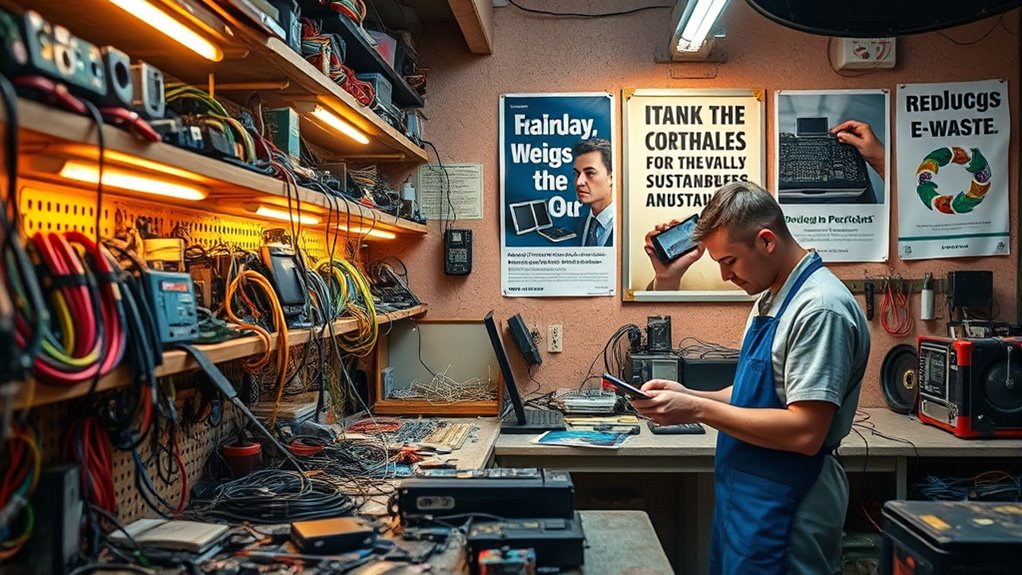
You can influence how electronics are reused and recycled through your choices and actions. Strong policies, like extended producer responsibility and right-to-repair laws, guide manufacturers and consumers toward sustainability. By supporting these policies and adopting eco-friendly habits, you help move the industry closer to a circular economy. Additionally, embracing water conservation practices when managing electronic devices can further reduce environmental impact.
Policy Enforcement Strategies
Effective policy enforcement is essential for advancing sustainability in the electronics industry, as regulations shape manufacturer practices and consumer behaviors alike. Strong enforcement guarantees companies follow recycling laws, design for longevity, and adopt circular models. It also motivates consumers to prioritize sustainable choices. To make this happen, focus on:
- Implementing clear, strict regulations that hold manufacturers accountable for e-waste management.
- Establishing penalties for non-compliance to deter irresponsible practices.
- Promoting transparency through audits and reporting, inspiring consumer trust and engagement.
Promoting Sustainable Consumer Practices
Promoting sustainable consumer practices is essential for advancing the circular economy in electronics, as individual choices directly impact waste reduction and resource conservation. You can make a difference by opting for devices with longer lifespans, supporting repair and refurbishment services, and choosing products from eco-conscious brands. Properly recycling electronics ensures valuable materials are recovered and hazardous substances are contained. Educating yourself about product lifecycle impacts and resisting the latest device hype helps minimize unnecessary replacements. Additionally, participating in sharing platforms or leasing services reduces e-waste by extending device use. When you demand transparent sustainability information from manufacturers, you encourage industry-wide shifts toward responsible production and disposal. Your mindful consumer behavior creates a ripple effect, fostering a more sustainable electronics ecosystem and supporting global e-waste reduction efforts.
Market Trends and Future Opportunities in Circular Electronics

The market for circular electronics is experiencing rapid growth, driven by technological advancements, increasing environmental awareness, and supportive policies worldwide. You can expect:
The rapid growth of circular electronics offers innovative, sustainable opportunities driven by technology and global policies.
- A surge in digital platforms that enhance transparency and facilitate responsible recycling and reuse.
- New business models like product-as-a-service, which prolong device life and reduce waste.
- Expanding markets in Asia-Pacific, accelerating the adoption of circular practices through national policies and recycling targets.
This momentum creates exciting opportunities for innovation, collaboration, and investment. You have the chance to be part of a transformation that not only reduces e-waste but also reshapes how electronics are designed, used, and recycled. The future of circular electronics is promising—and within your reach.
Case Studies Highlighting Successful Circular Initiatives

Several companies have successfully implemented circular initiatives that demonstrate the potential of sustainable electronics. These efforts show how innovation and commitment can reduce e-waste and resource depletion. For example, Apple’s “Daisy” robot efficiently disassembles devices for recycling, recovering valuable materials. Similarly, Fairphone designs modular smartphones to extend product life and facilitate repairs. Patagonia’s electronics recycling program encourages consumers to return old devices for proper disposal. These initiatives prove that circular practices are practical and impactful.
| Company | Initiative |
|---|---|
| Apple | Daisy robot for device disassembly and material recycling |
| Fairphone | Modular phones for repairability |
| Patagonia | Electronics recycling program |
| HP | Take-back and reuse programs |
| Dell | Closed-loop supply chain for recycled components |
Building a Sustainable Future Through Circular Practices
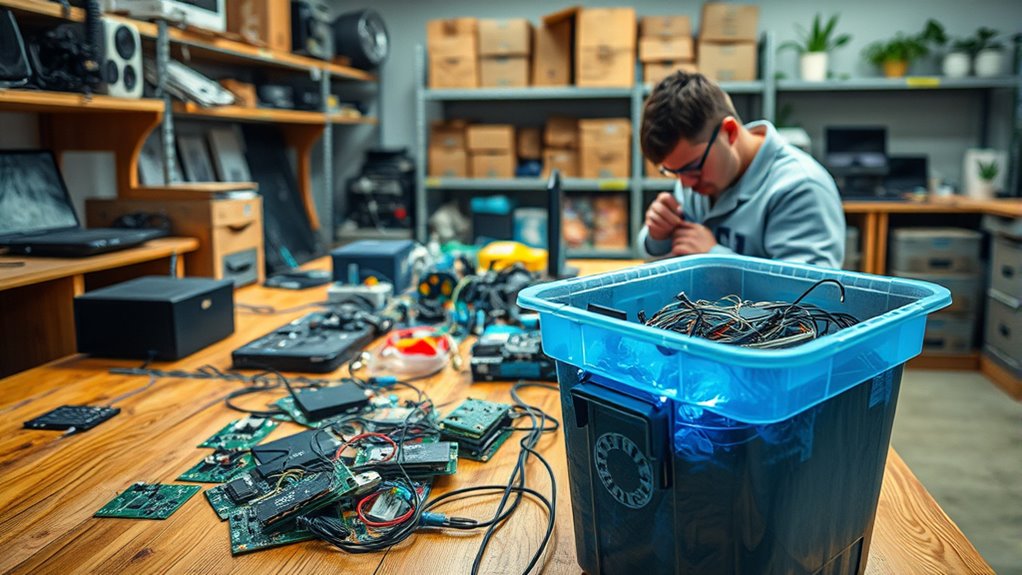
How can adopting circular practices shape a sustainable future? By embracing these strategies, you can considerably reduce e-waste and conserve resources. First, you create a cycle where products are reused, repaired, and remanufactured, preventing unnecessary waste. Second, you support innovation that designs electronics for longevity and easy recycling, making devices part of a sustainable lifecycle. Third, you empower consumers and manufacturers to take responsibility, fostering a culture of sustainability. These practices make a real difference—reducing environmental harm, lowering resource extraction, and supporting economic growth through new job opportunities in recycling and refurbishment. By actively participating in circular practices, you help build a future where electronics serve society without depleting our planet. Your choices matter in shaping a resilient, sustainable world.
Frequently Asked Questions
How Can Consumers Participate Actively in Circular Electronics Practices?
You can actively participate by choosing products with repairability and longevity in mind, supporting brands that offer take-back programs, and using repair services instead of replacing devices. Additionally, you can share or lend electronics, properly recycle old devices, and stay informed about sustainable practices. By making conscious choices, you help extend product lifespans, reduce waste, and promote a circular economy, all while minimizing your environmental impact.
What Are the Environmental Risks of Improper E-Waste Disposal?
Imagine over 60 million tons of e-waste piling up globally by 2025. If you dispose of electronics improperly, hazardous materials like lead and mercury can leach into soil and water, harming ecosystems and human health. You risk exposing yourself and communities to toxins, and valuable materials like gold can be lost forever. Proper disposal prevents environmental damage and helps recover resources, making your actions vital for a healthier planet.
How Do Companies Ensure Data Security During Device Recycling?
You can guarantee data security during device recycling by implementing strict data wiping protocols before disposal. Use certified software to securely erase all personal and sensitive information, and verify the process. Work with recycling partners who follow industry standards for data destruction, such as GDPR or NIST guidelines. Additionally, consider physical destruction methods like shredding or degaussing to prevent data recovery, safeguarding your information throughout the recycling process.
What Role Do Startups Play in Advancing Circular Economy Technology?
Startups play a crucial role in advancing circular economy technology by innovating new solutions that promote reuse, recycling, and resource efficiency. You can see them developing digital platforms for traceability, creating eco-friendly materials, or designing products with longer lifespans. Their agility allows them to experiment with innovative business models like product-as-a-service or sharing platforms, helping to transform the electronics industry toward sustainability and reduce e-waste globally.
How Can International Cooperation Improve Global E-Waste Management?
You can improve global e-waste management through international cooperation by sharing best practices, harmonizing regulations, and developing unified standards. It’s essential to collaborate on innovative recycling technologies and create cross-border platforms for data and resource exchange. Supporting global initiatives and funding projects that promote responsible disposal and reuse will help reduce e-waste, protect the environment, and assure responsible resource management worldwide. Your active participation can drive meaningful change.
Conclusion
So, congratulations! You’ve now *discovered* the secret to turning your old gadgets into gold—well, maybe just less e-waste. By embracing circular practices, you can dodge the landfill fate and become a hero of sustainability. Who knew that repairing, recycling, and rethinking electronics could be so revolutionary? So go ahead, make smarter choices, and watch as your outdated devices transform from environmental villains into champions of a cleaner, greener future. The planet’s counting on you—no pressure.