📊 Full opportunity report: How To Build Educational Games Around Museum Displays on IdeaNavigator AI — validation score, market gap, and execution plan.

Get the little things that make your day delivered free with Prime
- Fast, free delivery on millions of items
- Prime Video, Amazon Music and more included
- Member-only deals all year
TL;DR
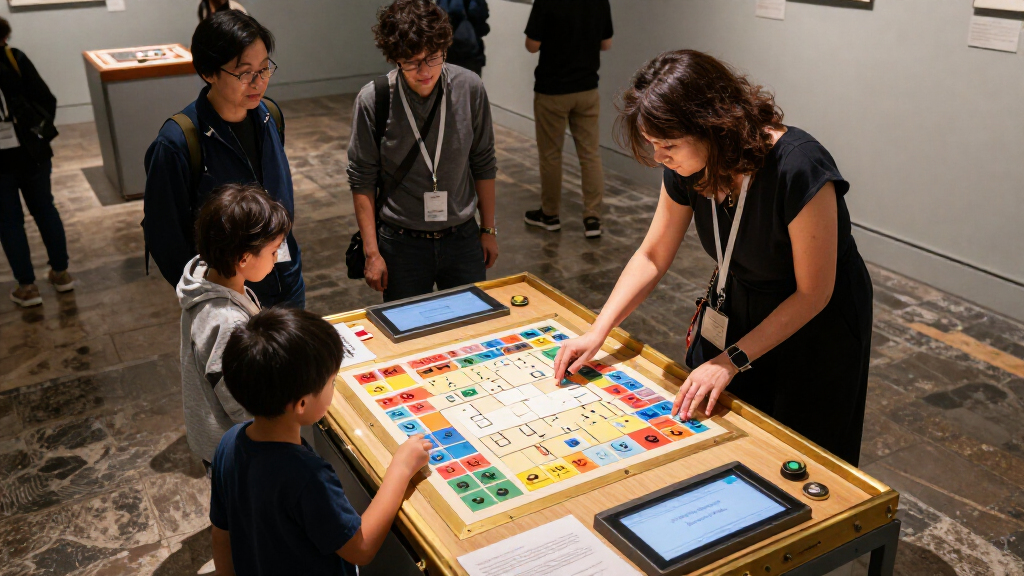
A proposal for small museums recommends a fixed-price, browser-based educational game built around each museum’s own collection. The suggested pilot would test the games at three museums and track bookings, visitor time and repeat visits; no results are available yet.
IdeaNavigator AI’s proposal describes a fixed-price service that would turn small museums’ collections into browser-based educational games, with a three-museum pilot suggested to test whether the format can improve school bookings and family engagement. The proposal is a product concept, not a report of a launched service or proven results.
According to the IdeaNavigator AI proposal, intended customers are directors or sole educators at small history, art and science museums, particularly institutions with annual budgets typically below $250,000 that serve school groups and families. The proposal says these museums often rely on printed worksheets and limited staff time, while off-the-shelf apps still require museums to create, test and maintain their own content. It also argues that custom agency projects may be too costly for institutions with small education budgets; these are problem statements in the proposal, not independently measured findings.
Under the suggested minimum viable product, a museum would provide photographs, exhibit labels and object records. The proposal says that within two weeks, the museum would receive a browser-based quest with three formats: a school-group activity organized by grade band and aligned to state standards, a family quest, and a 10-minute individual trail. The package would also include educator review, a basic editor for changing objects, a printable alternative and visit analytics intended for grant reports.
The proposal recommends a fixed-price build sized to fit a small grant budget, plus an annual hosting and content-refresh fee. It suggests regional museum associations as potential group buyers. To test the idea, IdeaNavigator AI proposes building games for three museums at cost, comparing school bookings, family dwell time and repeat visits over one term with the same term a year earlier, and asking whether at least two museums would seek paid refreshes in future grant applications.
Build Games Around Museum Displays
IdeaNavigator AI proposes fixed-price, browser-based educational games built from each museum’s collection. The concept has no published pilot results yet.
What museums would receive
The proposed package turns museum-provided collection materials into activities for different visitors.
Grade-based quest
A school-group activity organized by grade band and aligned to state standards.
Family quest
A collection-based activity designed for families visiting together.
Short individual trail
A 10-minute trail, with printable materials as an alternative to using a phone.
How the pilot would work
The proposal outlines a test of visitor outcomes and future demand.
Create quests for three small museums at cost using their collection materials.
Track school bookings, family dwell time and repeat visits against the same term a year earlier.
Ask whether at least two museums would seek paid content refreshes in future grant applications.
Why the format may fit
The proposal targets small museums with limited education budgets and staff time.
- Printed worksheets and limited staff time
- Off-the-shelf apps still need museum-created content
- Custom agency projects may be too costly
- Fixed-price build intended for a small grant budget
- Browser access without an app download
- Editor, educator review and visit analytics included
Funding context needs checking
The proposal points to museum grants as a possible route to fund scoped education projects.
A Grant-Sized Route to Museum Games
If the service proves affordable and useful, it could give small museums a way to add digital interpretation without commissioning a custom app or assigning substantial staff time to writing and updating game content. The proposal says the browser-based format avoids an app download, while printable materials could serve visitors who do not use a phone during a visit.
The idea also connects digital education work to a practical funding question: whether museums can define a limited, fixed-cost project that fits a grant application and produces attendance or engagement measures for reporting. But the expected benefits remain hypotheses to test, as the proposal itself acknowledges. It provides no evidence yet that games increase bookings, extend visits or bring families back.
Products Worth Considering

Withings Body Scan Smart Scale with Segmental Body Composition and ECG, Black

Therabody TheraFace Mask Glo Cordless LED Skincare Mask

Blueair Blue Pure 511i Max Smart Air Purifier
As an affiliate, we earn on qualifying purchases.
Museum Grants and the Timing
IdeaNavigator AI’s proposal points to federal museum funding as a reason to consider small, clearly scoped education projects. It states that the Institute of Museum and Library Services announced FY2026 Inspire Grants for Small Museums on Sept. 9, 2026, funding 88 small museums to develop educational programs and exhibits. The proposal also refers to an April 2026 court settlement that left the agency intact, while noting that the President’s FY2027 budget again proposed eliminating IMLS.
The proposal lists the FY2027 National Leadership Grants deadline as tentatively Nov. 13, 2026. That date is presented as provisional, not a confirmed deadline. These grant details are cited here as statements made in the proposal; they provide its funding context but do not establish that this game service has received a grant or that museums have committed to buy it. Museums should consult official IMLS announcements for current information.
Pilot Results Are Still Pending
The IdeaNavigator AI proposal reports no completed pilot and provides no outcome figures for visitor dwell time, school bookings, repeat visits, project costs or staff workload. Its three-museum test is a suggested validation plan, not an ongoing trial with published results. The proposal also does not specify the fixed build price or annual fee, how many objects each package would cover, or how accessibility, privacy and differing state standards would be handled.
The funding details cited in the proposal need confirmation before museums act on them: the FY2027 grant deadline is described as tentative, and the proposal’s references to the IMLS budget and grant announcements do not show whether any particular museum is eligible or has secured funding. The proposal identifies no named museum, buyer commitment or service provider.
Test Three Museums Before Scaling
The next step in IdeaNavigator AI’s proposal is to build quests for three small museums at cost and evaluate them over one school term. The proposed comparison would use each museum’s results from the same term in the previous year, tracking school-group bookings, family dwell time and repeat visits. The plan would also ask whether two of the three museums would include a paid content refresh in a future grant application.
Those measures could indicate whether the format is workable and whether institutions see enough value to pay for updates. The proposal does not specify when the pilot would begin, who would deliver it, or how it would account for differences between museums or visitor seasons. Until those details and results are available, the concept remains an untested service proposal rather than a confirmed solution.
Source: IdeaNavigator AI
Key Questions
Has this museum game service launched?
The IdeaNavigator AI page describes a proposed service and a possible pilot. It does not identify a launch, a provider or museums already using it.
What would a museum receive?
According to the proposal, the package would include a browser-based quest with school, family and solo formats, content based on the museum’s collection, educator review, an editor, printable materials and visit analytics.
Have the games been shown to increase visits?
No results are reported in the proposal. Its suggested pilot would compare bookings, family dwell time and repeat visits with the same term a year earlier, but those measurements have not been published.
What funding dates does the proposal mention?
The proposal cites the FY2026 Inspire Grants announcement dated Sept. 9, 2026, and gives Nov. 13, 2026, as a tentative FY2027 National Leadership Grants deadline. Museums should check current official IMLS information before relying on either detail for an application.
Source: IdeaNavigator AI