
Digital tools play a vital role in preserving endangered languages by enabling documentation, accessible learning, and community involvement. Platforms like digital archives, online dictionaries, and social media help connect speakers and learners worldwide. Artificial intelligence enhances translation, pronunciation, and linguistic analysis, even with limited data. Mobile apps and immersive technologies like virtual reality create engaging practice environments. To discover how these innovations can empower language preservation, keep exploring these transformative solutions further.
Key Takeaways
- Digital media platforms like online dictionaries, videos, and podcasts facilitate documentation and sharing of endangered languages.
- AI-powered tools support language modeling, translation, and automated data entry for low-resource and dialect-rich languages.
- Mobile applications with gamification and open-source tools enable accessible, anytime language learning and digital input support.
- Virtual Reality (VR) and Augmented Reality (AR) create immersive environments for authentic cultural and linguistic experiences.
- Digital communities and online archives promote long-term community ownership, collaboration, and resilience in language preservation efforts.

Rogue Archives: Digital Cultural Memory and Media Fandom
As an affiliate, we earn on qualifying purchases.
As an affiliate, we earn on qualifying purchases.
The Scope and Urgency of Language Loss

Have you ever considered how fast languages are disappearing? Nearly 40-43% of the approximately 7,000 world languages are endangered, with about one vanishing every two weeks. Over 3,000 are at risk according to UNESCO, many with fewer than 1,000 speakers. When a language dies, so does a wealth of culture, history, identity, and ecological knowledge. This rapid loss threatens global diversity and cultural richness. If preservation efforts don’t accelerate, more than half of the world’s languages could become extinct by the end of this century. The urgency to act is clear: each language lost is a unique window into human experience and knowledge that we may never recover. Addressing this crisis requires immediate, coordinated efforts through digital tools to support and revitalize endangered languages.

Essential Portuguese Grammar: All The Grammar Really Needed For Speech And Comprehension (Dover Language Guides Essential Grammar)
As an affiliate, we earn on qualifying purchases.
As an affiliate, we earn on qualifying purchases.
Digital Media as a Catalyst for Preservation

Digital media plays a crucial role in preserving endangered languages by enabling documentation, learning, and sharing in innovative ways. You can record native speakers through videos, create online dictionaries, and develop podcasts that showcase authentic pronunciation and stories. Platforms like Wikitongues and FirstVoices allow communities to build digital archives accessible worldwide, fostering a sense of ownership and pride. Social media amplifies visibility, connecting speakers and learners instantly, encouraging active use of endangered languages. Interactive formats, such as videos and online courses, draw younger generations into language revitalization efforts. These digital tools break geographical barriers, making language resources available anytime and anywhere. Digital archiving also helps safeguard linguistic diversity for future generations. Overall, digital media transforms how endangered languages are preserved, shared, and celebrated across global communities.

Language Translator Device, VORMOR Two-Way AI Voice Translator for Voice/Text/Offline/Photo Translation 150+ Language Online Translation Portable Tow Way Translator Device for Business Learning Travel
【150 Language Online Translation】: Our language translator device supports more than 150 online voice translations. Whether you're traveling…
As an affiliate, we earn on qualifying purchases.
As an affiliate, we earn on qualifying purchases.
Harnessing Artificial Intelligence for Language Revitalization

You can use AI language modeling techniques to create tools that understand and generate endangered languages, making them more accessible. Developing digital dictionaries and automated translation tools helps preserve vocabulary and facilitate communication across communities. These technologies play a vital role in revitalizing languages that lack extensive resources or speakers. Incorporating language support features can further enhance the effectiveness of these digital solutions.
AI Language Modeling Techniques
How can artificial intelligence transform efforts to revive endangered languages? AI language modeling techniques play a vital role by creating digital tools that understand, generate, and translate low-resource languages. These models can learn linguistic patterns from limited data, making them ideal for languages with few speakers. They support developing automated speech recognition, translation, and text generation that preserve cultural nuances. Additionally, AI helps build more accurate digital dictionaries and spell-checkers tailored to specific languages, increasing usability. Incorporating language preservation strategies ensures these technologies support the longevity of endangered dialects. AI helps build more accurate digital dictionaries and spell-checkers tailored to specific languages, increasing usability.
Digital Dictionary Development
Artificial intelligence is revolutionizing the creation of digital dictionaries, making it possible to document and preserve endangered languages more efficiently. AI-powered tools can analyze vast amounts of linguistic data to generate accurate word lists, definitions, and pronunciation guides. This accelerates language documentation, especially when resources are limited. You can now develop exhaustive lexicons that include cultural nuances, dialectal variations, and idiomatic expressions. Here’s a quick look at how AI supports digital dictionary development:
| Feature | Benefit |
|---|---|
| Automated Data Entry | Speeds up lexicon creation and updates |
| Pronunciation Modeling | Ensures accurate, native-like audio examples |
| Cultural Context Integration | Preserves linguistic authenticity and nuance |
Automated Translation Tools
Automated translation tools powered by artificial intelligence are transforming efforts to revitalize endangered languages by making communication more accessible and widespread. These tools help bridge language gaps, enabling speakers and learners to connect across borders and generations. By leveraging AI, you can develop models that understand nuanced cultural contexts and dialectal variations, ensuring translations stay authentic. This technology accelerates language documentation, supports educational initiatives, and fosters community engagement. Incorporating multi-lingual support in these tools can further enhance their effectiveness and inclusivity.

3D VR Headset, Virtual Reality Glasses Headset Helmets, Compatible with 5.0-7.0 inch with Controller, for Mobile Games & Movies(Black)
【Immersive 3D Movie Viewing】Gaming and watching movies in 3D works best when proper your eyes properly align with…
As an affiliate, we earn on qualifying purchases.
As an affiliate, we earn on qualifying purchases.
Mobile Applications and Interactive Learning Platforms
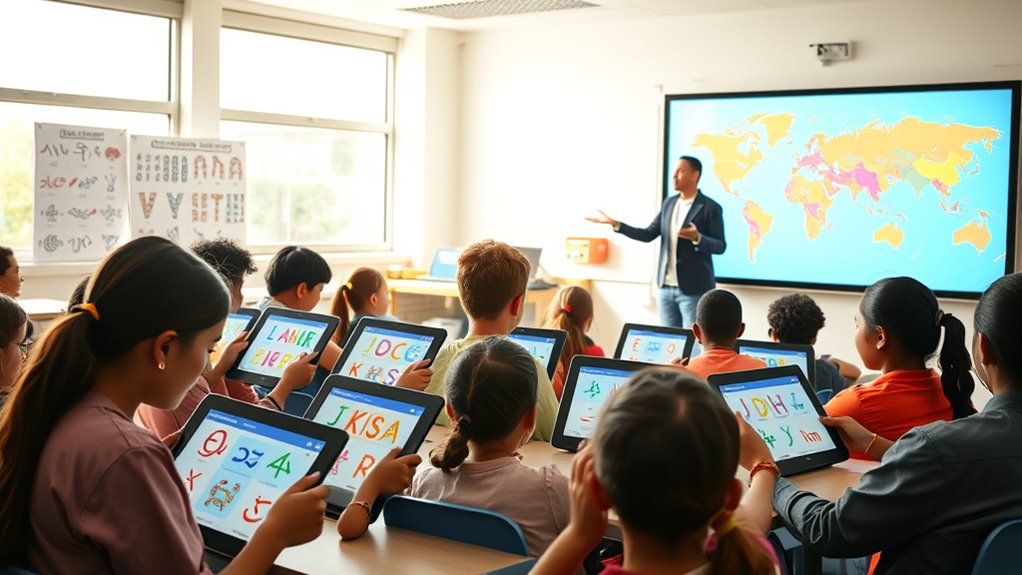
Have you ever wondered how mobile apps are transforming language preservation? These tools make learning and practicing endangered languages more accessible than ever. Apps like Duolingo and Memrise now include languages like Hawaiian and Navajo, attracting thousands of learners worldwide. Their gamified features keep users engaged, encouraging regular practice. You can find keyboards, digital archives, and educational games tailored to specific indigenous languages, making it easier to use these languages on your device. Mobile accessibility means you can learn anytime, anywhere, without needing to be physically present in a community. Open-source tools also help create digital input options for languages lacking native support. Somatic therapy techniques and the integration of technology foster community involvement, increase visibility, and help preserve languages by integrating them into daily digital life.
Virtual Reality and Augmented Reality in Language Education

Virtual reality and augmented reality offer powerful ways to immerse you in cultural contexts and practice endangered languages authentically. These technologies make it possible to simulate real-life interactions and environments that are otherwise inaccessible. However, accessibility challenges, like limited digital resources and technological gaps, can hinder widespread adoption and effectiveness.
Immersive Cultural Contexts
Immersive technologies like virtual reality (VR) and augmented reality (AR) are transforming language education by creating engaging, culturally rich environments that deepen learners’ connections to endangered languages. These tools let you step into authentic settings, from traditional festivals to everyday conversations, without leaving your space. You can practice language skills while exploring ancestral homes, markets, or ceremonies, making learning more meaningful. Additionally, sustainable technology can help ensure that these tools are developed and used responsibly, minimizing environmental impacts.
Authentic Language Practice
How can virtual reality (VR) and augmented reality (AR) transform language learning? These tools immerse you directly in cultural and linguistic contexts, making practice authentic and engaging. You can interact with virtual native speakers, navigate traditional settings, and use language in real-life scenarios without leaving your home. Imagine:
| Virtual Environment | Real-World Simulation |
|---|---|
| Conversing with avatars | Exploring a marketplace in the native town |
| Participating in rituals | Practicing vocabulary in context |
| Cultural immersion | Experiencing daily life scenarios |
| Authentic pronunciation | Receiving instant feedback |
VR and AR boost motivation, improve retention, and foster cultural understanding. They turn language practice into a dynamic, immersive experience, creating opportunities that traditional methods can’t match. Additionally, color accuracy in virtual environments enhances the realism and effectiveness of immersive language exercises.
Accessibility Challenges
Despite the potential of VR and AR to revolutionize language learning, widespread accessibility remains a significant hurdle. Many communities lack the necessary hardware, stable internet, or technical skills to use these tools effectively. Cost barriers make VR headsets and AR devices unaffordable for many indigenous groups. Additionally, digital resources like compatible fonts or linguistic data are often missing, limiting the usefulness of AR and VR in some languages. Furthermore, the lack of Personal Finance Management knowledge can hinder communities from investing in necessary technology or seeking funding opportunities to acquire such tools.
Overcoming Challenges and Building Sustainable Strategies

Addressing the challenges of language preservation requires strategic collaboration among communities, governments, and tech developers. You must prioritize funding and policies that support digital projects, making certain resources reach endangered language communities. Building digital literacy and infrastructure within these communities is vital, so they can actively participate in preservation efforts. To create sustainable strategies, you need to foster partnerships that share expertise, data, and technology, making certain tools are culturally and linguistically appropriate. Support community-led initiatives to maintain ownership and relevance. Additionally, advocate for inclusive policies that address digital inequality and promote multilingual online spaces. By combining technological innovation with community engagement and policy support, you can develop resilient, long-term solutions that guarantee endangered languages thrive in the digital age. Digital tools can greatly enhance these preservation efforts by providing accessible platforms for documentation and learning.
Frequently Asked Questions
How Can Communities Ensure Digital Tools Respect Cultural Authenticity?
You can verify digital tools respect cultural authenticity by involving community members in the development process, so the technology reflects their values and traditions. Use authentic recordings, stories, and symbols, and prioritize local input to preserve nuances. Regularly review content with elders and cultural experts, and promote platforms that support community control. This collaborative approach guarantees the tools honor your language’s unique cultural identity while fostering preservation efforts.
What Are Effective Strategies for Funding Language Preservation Projects?
Secure funding by building partnerships, seeking grants, and engaging communities. Leverage government support, collaborate with NGOs, and attract private donors to sustain projects. Develop clear proposals highlighting cultural importance and long-term impact. Use crowdfunding campaigns and social media to raise awareness and funds. Prioritize transparency and accountability to maintain trust. By combining these strategies, you guarantee continuous resources, fostering successful preservation efforts that honor and sustain endangered languages.
How Do Digital Tools Address Linguistic Nuances and Dialectal Variations?
Digital tools help you address linguistic nuances and dialectal variations by training AI models on diverse, high-quality datasets that include regional speech, idioms, and pronunciation differences. You can develop digital dictionaries and translation systems that recognize and preserve these variations, ensuring authentic representation. Interactive apps and virtual environments also allow speakers to practice their dialects in context, strengthening cultural identity and linguistic diversity within endangered languages.
Can AI Inadvertently Reinforce Language Biases or Inaccuracies?
You might worry AI could reinforce biases, like how Google’s early translation errors favored dominant dialects. AI models learn from biased data, risking inaccuracies or stereotypes for endangered languages. For example, if AI trained mainly on one dialect, it could distort or marginalize others. To prevent this, you need diverse, high-quality datasets and ongoing community input to guarantee cultural and linguistic authenticity.
What Role Do Governments Play in Supporting Digital Language Preservation?
Governments play a vital role in supporting digital language preservation by funding projects, creating policies, and providing infrastructure that enables communities to digitize and promote their languages. You can advocate for national recognition and integration of endangered languages into educational systems and public services. By fostering collaborations between tech developers and indigenous communities, governments help guarantee these languages thrive digitally, safeguarding cultural heritage for future generations.
Conclusion
By embracing digital tools, you become a guardian of endangered languages, turning the tide like a skilled captain steering a fragile ship through stormy seas. Technology offers a powerful lighthouse guiding these languages back to safety, ensuring they thrive for generations to come. Your efforts can breathe new life into fading words, transforming loss into legacy. Together, you can keep the rich tapestry of human culture vibrant and alive, one digital step at a time.