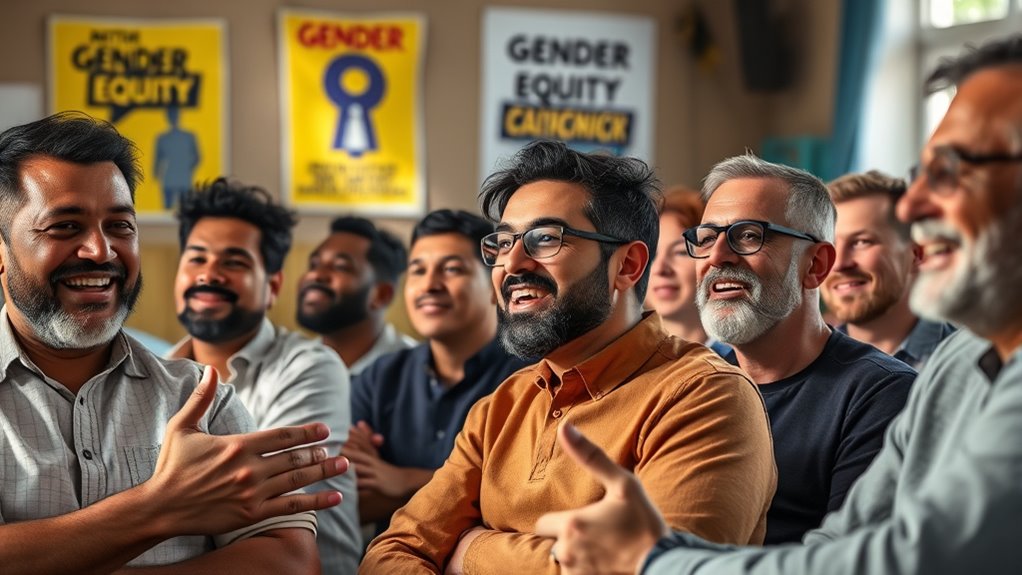

Engaging men in gender equity involves understanding their attitudes and barriers, such as social norms and fear of judgment. You should use inclusive strategies, relatable messaging, and community partnerships to foster openness and trust. Men can play a key role in preventing violence and promoting respectful relationships by challenging harmful norms. Building strong social connections helps change attitudes. Exploring effective policies and long-term programs can support lasting change—if you want to learn how to effectively promote these efforts, keep going.
Key Takeaways
- Design inclusive programs that resonate across diverse backgrounds, using relatable language and local contexts to build trust.
- Foster social connections through group activities and community engagement to challenge stereotypes and promote empathy.
- Collaborate with community leaders, workplaces, and media to reach men where they are and encourage ongoing dialogue.
- Address social norms and harmful masculinity ideas by encouraging men to speak out, support survivors, and model respectful behaviors.
- Implement long-term, policy-driven approaches that integrate reflection, relationship-building, and continuous evaluation for sustained change.

Of Boys and Men: Why the Modern Male Is Struggling, Why It Matters, and What to Do about It
As an affiliate, we earn on qualifying purchases.
As an affiliate, we earn on qualifying purchases.
Understanding Men’s Attitudes and Barriers Towards Gender Equity

Understanding men’s attitudes towards gender equity reveals a complex landscape where many support the idea in principle but hesitate to take action. You might agree with gender equality, yet social norms and fears of judgment can hold you back from getting involved. Men with higher education and income are more aware of gender issues, while those with less education often feel less supported and more disengaged. Concerns about appearing less masculine or being misunderstood can discourage open support. Many lack firsthand understanding of women’s daily experiences, making it harder to empathize. Systemic barriers, like workplace cultures and societal expectations, also limit participation. Additionally, health disparities can influence men’s perceptions of gender roles and their willingness to engage in gender equity efforts. As a result, even well-intentioned men may feel unsure about how or if they should contribute to gender equity efforts.
community workshop materials for gender norms
As an affiliate, we earn on qualifying purchases.
As an affiliate, we earn on qualifying purchases.
Strategies for Inclusive and Effective Male Engagement
To foster meaningful male engagement in gender equity, programs must be designed to be inclusive and relevant across diverse backgrounds. You should create initiatives that resonate with men from different socioeconomic, educational, and cultural contexts, avoiding a one-size-fits-all approach. Use accessible language, relatable examples, and locally relevant settings to build trust and understanding. Incorporate listening and reflection, encouraging men to share their experiences and challenge harmful norms without judgment. Collaborate with community leaders, workplaces, sports clubs, and media to reach men where they are. Long-term commitment is essential, so focus on sustained efforts that shift social norms gradually. Additionally, understanding the importance of high refresh rates and low input lag can help in designing programs that appeal to men’s interests and technological engagement. Measure success by changes in attitudes and behaviors, fostering an environment where men feel empowered and motivated to be active participants in gender equality.

Planning Programs for Adult Learners: A Practical Guide
As an affiliate, we earn on qualifying purchases.
As an affiliate, we earn on qualifying purchases.
The Role of Men in Preventing Violence Against Women and Girls
Have you ever considered how men’s attitudes and behaviors directly influence the prevalence of violence against women and girls? Most violence is perpetrated by men, often rooted in harmful ideas of masculinity that justify control and aggression. Your role is vital in challenging these norms. By speaking out against violence, supporting survivors, and promoting respectful relationships, you help shift societal expectations. Men in positions of authority—like police, healthcare, and policy—can guarantee safety and justice. Engaging men in conversations about gender norms reduces the pressure to conform to violent stereotypes. When men actively oppose VAWG, it not only protects women and girls but also alleviates harmful pressures on men to embody dominant or aggressive identities. Incorporating sound design techniques into awareness campaigns can amplify messages and reach wider audiences effectively. Your involvement can truly transform communities into safer, more equitable spaces.

Emotional Intelligence for Sales Leadership: The Secret to Building High-Performance Sales Teams
As an affiliate, we earn on qualifying purchases.
As an affiliate, we earn on qualifying purchases.
Building Social Connections to Support Gender Norm Change

Building social connections is essential for shifting gender norms and fostering supportive environments. When you strengthen relationships with others, especially those from different backgrounds or experiences, you create spaces where conversations about gender equity can thrive. Connecting with peers, community members, or mentors helps break down stereotypes and dispel myths that reinforce harmful masculinity. These bonds provide emotional support and shared understanding, making it easier to challenge societal expectations. Engaging in group activities, community events, or support networks allows you to see different perspectives, fostering empathy and collective action. As your social ties deepen, you become more confident in advocating for change, knowing you’re part of a broader movement working toward gender equity and healthier, more inclusive communities. Energetic alignment can further strengthen these social bonds and amplify your efforts.
Policy and Program Approaches to Foster Long-term Gender Partnerships
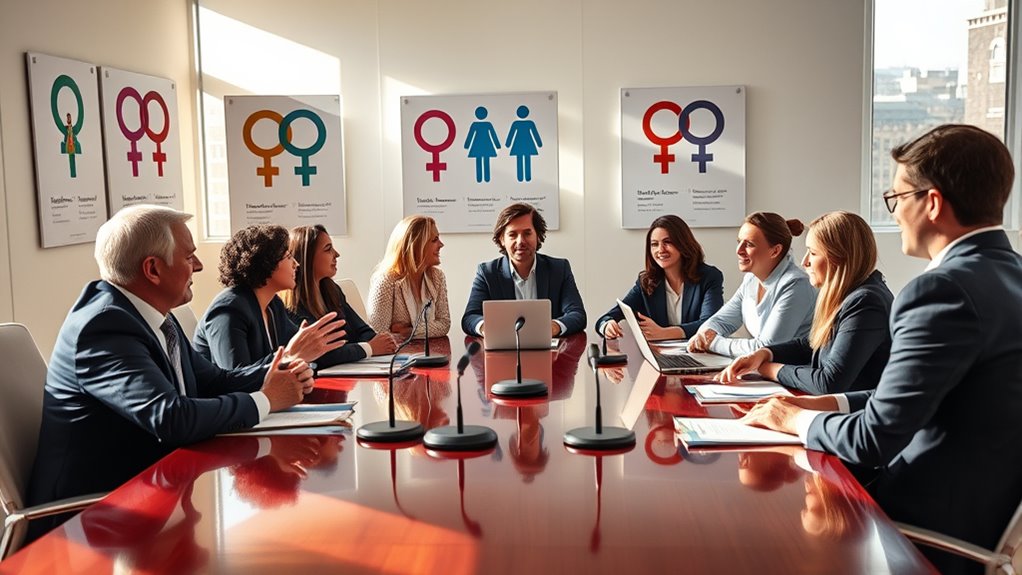
Effective policy and program strategies are key to creating sustained gender partnerships that last beyond individual efforts. To achieve this, focus on:
- Inclusive Policies: Develop national and organizational policies that explicitly involve men in gender equity goals, ensuring their roles are recognized and supported across sectors like workplaces, health, and education.
- Long-term Engagement Programs: Invest in community-based initiatives that emphasize dialogue, reflection, and relationship-building, making programs relevant for men from diverse backgrounds and income levels.
- Measurement & Adaptation: Continuously evaluate program outcomes, focusing on shifts in social norms and couple dynamics, then adapt strategies accordingly to foster genuine, lasting change.
Additionally, integrating hydrotherapy techniques into programs can support emotional well-being and enhance relationship resilience among participants. These approaches create a foundation for enduring partnerships that challenge harmful norms and promote shared responsibility.
Frequently Asked Questions
How Can Workplaces Better Support Men’s Active Participation in Gender Equity?
You can support men’s active participation in gender equity by creating inclusive workplace policies that encourage open dialogue and challenge harmful stereotypes. Offer training that emphasizes empathy and understanding of gender issues, and involve men in decision-making processes related to diversity. Foster a culture where men feel safe to speak up and show genuine commitment from leadership, demonstrating that gender equity benefits everyone and is a shared responsibility.
What Role Do Cultural Norms Play in Shaping Men’s Attitudes Toward Gender Equality?
Cultural norms shape your attitudes toward gender equality by defining what’s seen as masculine or acceptable. When society equates masculinity with dominance, you may feel pressured to conform, hesitating to support equitable behaviors. Conversely, cultures that value respect and shared roles empower you to challenge stereotypes. Recognizing these norms helps you understand your reactions and opens the door to embracing more inclusive attitudes, fostering genuine engagement in gender equity efforts.
How Can Men’s Mental Health Be Integrated Into Gender Partnership Programs?
You can integrate men’s mental health into gender partnership programs by creating safe spaces where they feel comfortable sharing their emotions and challenges. Offer mental health resources, peer support groups, and training that links emotional well-being with gender norms. Encourage open dialogue about mental health’s importance, destigmatize seeking help, and promote holistic approaches that recognize mental health as essential to positive gender relationships and overall community well-being.
What Strategies Effectively Challenge Harmful Masculinity Stereotypes Globally?
Think of harmful masculinity stereotypes as weeds choking healthy growth. To challenge them, you should promote positive role models who exemplify diverse, respectful masculinity. Use media campaigns and community dialogues that spotlight alternative masculinities, encouraging men to redefine strength and vulnerability. Engage men directly in conversations about emotional expression and respect, making it clear that true strength lies in kindness and empathy. Consistent, genuine efforts can help cultivate a garden of healthier, inclusive identities.
How Do Gender Partnerships Impact Children’s Development and Future Attitudes?
Gender partnerships positively influence children’s development by modeling respectful, equitable relationships. When you actively involve men in gender equity efforts, you help children learn healthier attitudes towards gender roles, reducing stereotypes and violence. Your engagement encourages open communication and empathy, fostering a supportive environment. As a result, children grow up with better social skills, higher self-esteem, and more egalitarian views, shaping a future where gender equity becomes a norm.
Conclusion
By engaging men in gender equity, you challenge outdated norms and foster real change. While barriers may persist, your active involvement creates opportunities for connection and understanding. Remember, progress isn’t just about policies; it’s about transforming attitudes. When men stand together for equality, they build bridges where once there were walls. Your commitment can turn the tide, proving that gender partnership isn’t just an ideal—it’s a necessary reality.