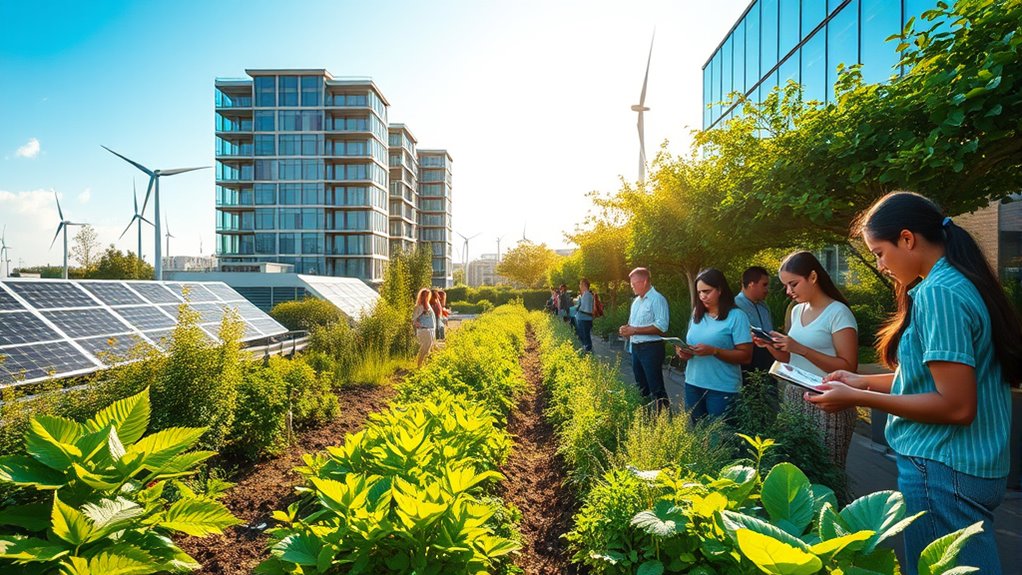

Green careers are booming across industries like renewable energy, sustainable finance, and urban planning, offering you lucrative and impactful options. Demand for green-skilled workers is growing fast, with roles often paying 15-25% more and expanding 30% quicker than traditional jobs. To seize these opportunities, you’ll want to develop in-demand skills, earn relevant certifications, and stay informed about industry trends. Keep exploring to discover how you can position yourself for success in the sustainable economy.
Key Takeaways
- Green careers are expanding rapidly across sectors like renewable energy, sustainable finance, and urban planning, offering diverse opportunities.
- Demand for green-skilled professionals is rising faster than supply, creating high-growth job prospects with competitive salaries.
- Roles include renewable energy engineers, climate data scientists, ESG analysts, and green building specialists.
- Developing technical skills and obtaining certifications such as LEED or GRESB enhances employability in sustainability roles.
- Continuous learning and cross-sector experience are essential to stay competitive in the evolving green job market.
Top picks for "green career opportunity"
Open Amazon search results for this keyword.
As an affiliate, we earn on qualifying purchases.
Growing Demand for Green Skills and Careers

The demand for green skills and careers is accelerating rapidly, driven by the global shift toward sustainability. You’ll notice a consistent increase in green job opportunities, with employment in this sector growing around 8% annually over the past five years. Sustainability roles are expected to grow 30% faster than traditional jobs through 2025, often paying 15-25% higher. However, there’s a significant talent gap, as demand for green-skilled workers outpaces supply—globally, demand rose 11.6%, while supply increased just 5.6%. Hiring rates for green professionals are 54.6% higher worldwide, and in the U.S., that jumps to 80.3%. With four in five employers planning to recruit sustainability experts soon, developing relevant skills now can position you for a thriving career in this expanding field.
Key Sectors and High-Demand Roles in Sustainability

Ever wondered which sectors are driving the surge in green jobs? You’ll find key opportunities across renewable energy, climate tech, and sustainable finance. In renewable energy, roles like Renewable Energy Engineer and Wind Turbine Technician focus on expanding clean power sources. Climate tech offers positions such as Climate Data Scientist and Energy Efficiency Consultant, optimizing environmental solutions. Sustainable finance is thriving with roles like ESG Analyst and Sustainable Investment Manager, driven by rising investor demand. Circular economy and supply chain sectors prioritize waste reduction, with jobs like Sustainable Supply Chain Manager. Urban planning and infrastructure also grow, emphasizing green building and resilient cities. Additionally, the importance of projector specifications such as high contrast ratios and color accuracy mirrors the precision and technological advancements found in these green sectors. These sectors collectively push the green economy forward, creating high-demand roles that combine technical skills with sustainability expertise, offering promising career paths for those ready to make a difference.
Top Green Jobs: Salaries and Growth Potential

Green jobs are not only expanding rapidly across sectors like renewable energy, climate tech, and sustainable finance but also offering compelling salary prospects and impressive growth potential. Roles such as Wind Turbine Technicians, Renewable Energy Technicians, and Solar PV Installers boast median salaries ranging from $56,428 to $65,372 annually, with projected growth rates between 48% and 60%. These positions are crucial in boosting renewable capacity and reducing fossil fuel reliance. As demand for green skills surges—hiring rates are over 50% higher globally—you stand to benefit from higher salaries and abundant opportunities. With sustainability careers expected to grow 30% faster than traditional jobs through 2025, investing in these roles can lead to a rewarding, future-proof career. The green sector’s rapid expansion makes now an ideal time to pursue these high-growth, well-compensated careers. Additionally, understanding the private equity market trends can help emerging green ventures secure funding and scale effectively, further accelerating sector growth.
Overcoming Talent Shortages in the Green Workforce
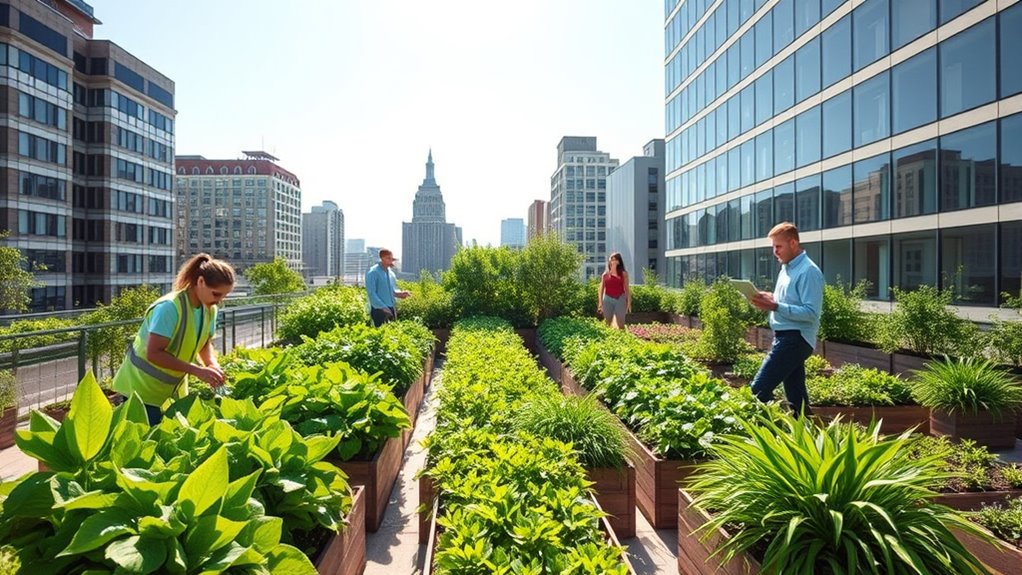
To overcome the talent shortages in the green workforce, you need to focus on upskilling existing professionals and attracting transferables skills from related sectors. Bridging this gap requires strategic investments in education and training programs that align with emerging green job demands. By acting now, you can help develop a pipeline of skilled workers ready to support the green transition. Incorporating training in sound design techniques can also contribute to diversifying skill sets within the green industry.
Upskilling Green Professionals
Are organizations doing enough to bridge the talent gap in the green workforce? Not quite. To upskill green professionals, you need targeted training programs that combine technical knowledge with sector-specific expertise. Emphasize continuous learning through certifications, workshops, and online courses focused on renewable energy, sustainable finance, and circular economy practices. Encourage employees to develop transferable skills that allow career mobility within the sustainability sector. Mentorship and hands-on experience are vital for deepening understanding and practical application. Companies should also partner with educational institutions to create tailored curricula aligned with industry needs. Investing in performance support solutions such as coaching and on-the-job training can further accelerate skill development. By investing in these strategies, you’ll help close the skills gap, retain top talent, and accelerate your organization’s transition to sustainable operations. Upskilling isn’t optional—it’s essential for future growth.
Bridging the Talent Gap
Despite the rapid growth of green jobs, a significant talent shortage threatens to slow progress towards sustainability goals. To bridge this gap, you need to focus on strategic solutions. First, prioritize upskilling existing workers through targeted training programs. Second, promote transferable skills that allow career changers to enter green roles without starting from scratch. Third, collaborate with educational institutions to develop specialized curricula aligned with industry needs. Fourth, leverage technology and online platforms to expand access to green education globally. Additionally, referencing proven training programs can provide effective models for workforce development. By implementing these measures, you help close the talent gap, ensuring organizations can meet their sustainability targets. Your efforts will accelerate the green progression, creating a more skilled workforce ready to tackle climate challenges head-on.
Consumer and Business Trends Driving Sustainability Careers

Consumer and business trends are fueling a surge in sustainability careers as both groups increasingly prioritize environmental responsibility. More employees now prefer working for companies committed to sustainability, with 67% valuing eco-friendly workplaces. Meanwhile, 72% of consumers are willing to pay more for sustainable products, driving companies to adopt greener practices. Gen Z and Millennials are leading this shift, pushing for sustainable workplace policies and eco-conscious purchasing. Businesses recognize that sustainability offers a competitive edge, expecting significant gains by 2030. Technology platforms are streamlining carbon management and emission reductions, making sustainability integral across sectors. This demand creates opportunities for green professionals across functions, from marketing and finance to operations and supply chain management. Embracing these trends helps you build a resilient, impactful career in the growing green economy. Additionally, understanding how creativity can be cultivated can support innovative approaches to sustainability challenges.
Strategies for Career Advancement in Green Industries

To advance your career in green industries, actively seek out opportunities to develop relevant skills and gain practical experience. Start by identifying gaps in your knowledge and pursuing targeted training or certifications. Next, consider volunteering or taking on projects that support green initiatives to build hands-on experience. Additionally, network with industry professionals through events or online platforms to stay informed about trends and opportunities. Finally, focus on these four strategies:
- Specialize in high-demand areas like renewable energy or sustainable finance.
- Pursue certifications that validate your expertise and boost credibility.
- Gain cross-sector experience to increase versatility and marketability.
- Stay current with emerging technologies and industry standards to remain competitive.
- Develop an understanding of green careers and the diverse opportunities they offer to position yourself effectively in the evolving market.
Implementing these steps positions you for growth and leadership in the evolving green economy.
Essential Skills and Certifications for Sustainability Professionals

Success in sustainability roles depends on acquiring the right skills and certifications that demonstrate your expertise and keep you competitive. You should focus on technical skills like renewable energy systems, environmental data analysis, and life cycle assessment. Certifications such as LEED Accredited Professional, GRESB, and the ISSP Certified Sustainability Professional boost your credibility. Strong project management, communication, and stakeholder engagement skills are also essential, enabling you to lead initiatives effectively. Staying current with emerging technologies and regulations helps you adapt to industry shifts. Developing sector-specific knowledge in areas like finance, urban planning, or supply chain management can set you apart. Continuous learning through online courses, workshops, and industry conferences ensures your skills remain relevant and your certifications up-to-date. Additionally, understanding Dog breeds can enhance your awareness of biodiversity and conservation efforts, which are increasingly relevant in sustainability work.
The Future Outlook of Green Careers and Market Opportunities
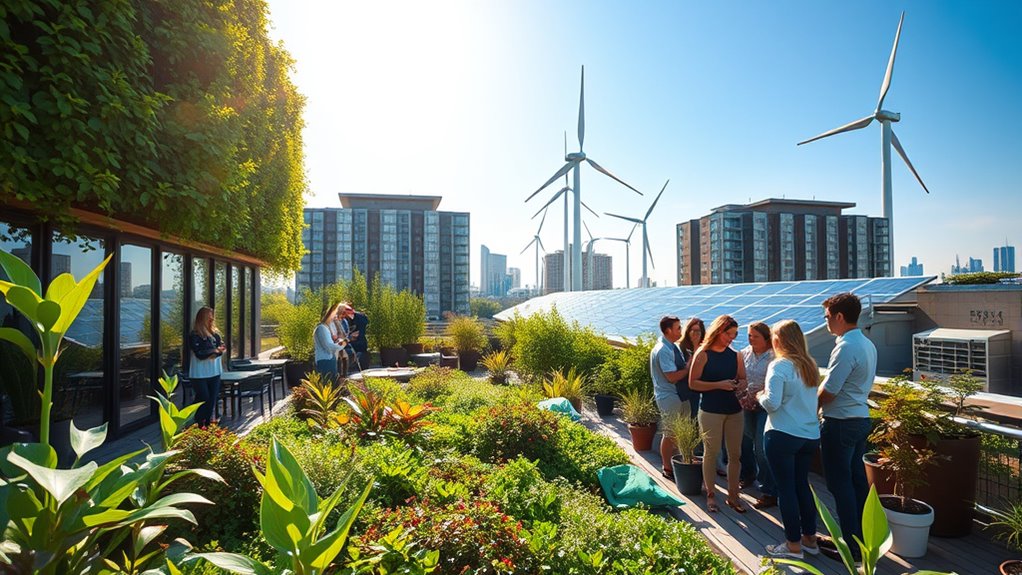
The future of green careers looks promising, driven by growing global emphasis on sustainability and climate action. You’ll see significant market growth, including:
- Green jobs increasing at an 8% annual rate, with projections showing acceleration.
- Sustainability roles expanding 30% faster than traditional careers through 2025, offering higher salaries.
- Demand for green-skilled workers rising by 11.6%, while supply lags behind at just 5.6%, creating a talent gap.
- Four out of five employers planning to hire sustainability professionals within the next year, with salary increases in 84% of cases.
- Advances in renewable energy technology continue to open new career pathways and improve the efficiency and accessibility of sustainable solutions.
These trends signal expanding opportunities across renewable energy, sustainable finance, urban planning, and corporate sustainability, making now an ideal time to pursue or grow your green career path.
Frequently Asked Questions
What Are the Most Accessible Entry-Level Green Jobs for Career Changers?
You can start with entry-level green jobs like solar photovoltaic installer, wind turbine technician, or energy efficiency technician. These roles often require technical training or certifications but don’t demand extensive experience. By gaining relevant skills through courses or certifications, you make yourself more marketable. Volunteering or supporting green initiatives also helps build your resume. With determination and the right training, you can smoothly shift into a meaningful sustainability career.
How Can Professionals Develop Green Skills Without Formal Education?
You can develop green skills without formal education by taking online courses, webinars, and workshops focused on sustainability topics like renewable energy, waste reduction, or sustainable finance. Volunteering for environmental projects or joining industry groups helps you gain practical experience. Stay current with certifications and emerging technologies, and leverage transferable skills from your previous work. Networking with professionals in the field also provides valuable insights and mentorship opportunities.
Which Certifications Most Enhance Employability in Sustainability Roles?
Certifications can boost your employability like a rocket propels a rocket into space. To stand out in sustainability roles, pursue credentials like LEED AP for green building, GRI Standards for sustainability reporting, and ISO 14001 for environmental management. Certifications in renewable energy, ESG analysis, and circular economy principles also make you more competitive. Keep updating your skills through industry-recognized certifications to stay ahead and open new career opportunities.
How Does Remote Work Influence Opportunities in Green Careers?
Remote work expands your green career opportunities by breaking geographic barriers, allowing you to access roles in renewable energy, sustainable finance, and urban planning from anywhere. It offers flexibility to upskill through online courses and certifications, making you more competitive. Plus, companies increasingly prioritize sustainability, and remote work helps you stay connected and collaborate globally. Embrace remote work to accelerate your growth in the green sector and contribute to sustainability efforts worldwide.
What Industries Are Expected to Lead Green Innovation in the Next Decade?
You can expect renewable energy, climate tech, and sustainable finance to lead green innovation over the next decade. These industries are experiencing rapid growth, driven by increasing demand for green skills and supportive policies. As you get involved, you’ll find opportunities in wind, solar, and energy efficiency roles, as well as ESG and sustainable investment positions. Staying current with emerging technologies and certifications will help you stay ahead in these evolving sectors.
Conclusion
As you explore green careers, envision yourself planting seeds in a thriving garden of opportunity, where each skill you nurture helps the environment blossom. The path may have gentle slopes and winding turns, but with dedication, you’ll find yourself basking in the sunlight of growth and impact. Embrace the journey ahead, knowing that your efforts are like guiding stars illuminating a sustainable future for all.