
📊 Full opportunity report: Mistral Forge’s Model Ownership: Unlocking New AI Possibilities on ThorstenMeyerAI.com — validation score, market gap, and execution plan.

Get the little things that make your day delivered free — and shop member deals
- Fast, free delivery on millions of items
- Access to Prime Big Deal Days deals on October 6–7
- Prime Video, Amazon Music and more included
TL;DR
Mistral announced Forge at Nvidia GTC 2026, a platform enabling organizations to develop and operate their own AI models. This approach emphasizes model ownership over API reliance, targeting highly sensitive or specialized data environments.
Mistral has introduced Forge, a comprehensive platform designed to enable organizations to develop, train, and deploy their own AI models on-premises or in private clouds. This move shifts the focus from using third-party APIs to owning and controlling AI models, a development that significantly impacts enterprise sovereignty and data security.
Forge is positioned as an end-to-end lifecycle platform that supports data preparation, large-scale training, alignment, evaluation, lifecycle management, and deployment of customized AI models. Unlike simpler options like retrieval-augmented generation (RAG) or fine-tuning, Forge creates models that fundamentally change how an organization’s AI reasons, tailored to proprietary knowledge and specialized tasks.
It includes managed services with embedded engineers from Mistral, who work directly with client teams to ensure proper integration and operation. The platform leverages Mistral’s open-weight checkpoints as its base, supporting multimodal architectures and reinforcement learning techniques such as RLHF and distillation. The deployment options include private cloud, on-premises, or Mistral’s own compute infrastructure, depending on security needs.
Early adopters like ASML, the European Space Agency, and Singapore’s DSO are targeting highly sensitive, specialized data environments where model ownership and control are critical. Mistral emphasizes Forge’s suitability for organizations that require models to internalize complex knowledge, such as technical, legal, or governmental data.
Mistral Forge: owning the model, not just renting the API
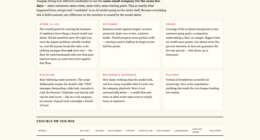
Europe’s most valuable AI company is betting the next sovereignty fight isn’t which API you call — it’s whether you own the model at all. Forge builds a model adapted to your data, terminology & rules, run inside your own walls. A leap for the right buyer; overkill for most.
Your proprietary knowledge changes how the model reasons — engineering/code, industrial constraints, government language & law, security telemetry, agentic tool-use by your rules. High-consequence, data-mature, sovereignty-bound.
You want a knowledge assistant, doc search or support bot — RAG or light fine-tuning wins on cost, speed & updatability. Analysts warn most enterprises lack the clean, governed data Forge assumes.
Train on your data, in your jurisdiction, on infrastructure you control, with a non-US vendor — air-gapped if needed, keeping the models, infra & knowledge. In a year when model access proved to be a geopolitical variable, owning the model stops being philosophy and becomes a hedge. (US labs offer custom models too; Forge’s moat is the combination — full pre-training + EU residency + on-prem, one platform.)
Forge packages what used to require an in-house AI research team — deep adaptation, sovereign deployment, full lifecycle, with embedded engineers. For big, regulated, data-rich orgs with high-consequence use cases, that’s a real leap, and the European framing is a feature. For everyone else it’s a heavier commitment than the problem needs — climb the ladder (RAG → fine-tune → Forge) and demand proof, not marketing. The deeper signal: enterprise sovereignty is shifting from “which API?” to “do I own the model?”
Why Model Ownership Changes the Enterprise AI Landscape
This development signifies a shift toward greater AI sovereignty for organizations with sensitive or proprietary data, reducing reliance on external API providers. For companies with complex, domain-specific knowledge, Forge offers a way to embed their expertise directly into AI models, potentially leading to more accurate, trustworthy, and compliant AI systems.
However, the platform’s complexity and data requirements mean it is mainly suited for large, technically capable organizations. The broader market may find simpler solutions like RAG or fine-tuning more practical, as Forge’s capabilities demand mature data infrastructure and significant investment.
Overall, Forge’s introduction could accelerate the adoption of internalized AI models in sectors where control and security are paramount, influencing future enterprise AI strategies and sovereignty debates.
enterprise AI model development platform
As an affiliate, we earn on qualifying purchases.
As an affiliate, we earn on qualifying purchases.
Background on Enterprise AI Model Strategies
For two years, enterprise AI has largely revolved around using large, general-purpose models via API calls, with organizations adapting outputs through prompts, retrieval pipelines, or lightweight fine-tuning. Mistral’s Forge represents a departure from this trend, promoting the development of models that are tailored and owned by individual organizations.
Previous approaches like retrieval-augmented generation (RAG) and fine-tuning have been more accessible but limited in their ability to embed proprietary knowledge into the core reasoning of the model. Forge aims to address this gap by enabling organizations to create models that reason based on their own data, a capability previously accessible mainly to large tech firms with significant resources.
The platform’s announcement aligns with ongoing discussions on AI sovereignty, data security, and the future of enterprise AI deployment, especially in sensitive sectors such as aerospace, government, and critical infrastructure.
“Forge is designed as an end-to-end lifecycle platform, embedding engineers directly with clients to ensure successful deployment and operation.”
— Mistral spokesperson
private cloud AI training software
As an affiliate, we earn on qualifying purchases.
As an affiliate, we earn on qualifying purchases.
Unclear Market Adoption and Data Readiness
It remains unclear how quickly and broadly organizations will adopt Forge, given its technical complexity and data requirements. Experts like Futurum analysts suggest that many enterprises lack the mature data infrastructure necessary to fully leverage Forge’s capabilities, potentially limiting its initial market.
Further, the actual cost, time investment, and operational challenges of deploying such models at scale are still being evaluated, and real-world case studies are yet to emerge.
on-premises AI model deployment tools
As an affiliate, we earn on qualifying purchases.
As an affiliate, we earn on qualifying purchases.
Next Steps for Forge and Enterprise AI Adoption
Mistral plans to continue onboarding early adopters and gather feedback from initial deployments. The company is likely to expand its support for different industries and refine its platform based on user experiences.
Industry analysts expect more detailed case studies and performance benchmarks to appear over the coming months, clarifying Forge’s practical benefits and limitations. Additionally, broader market interest will depend on how well organizations can meet the platform’s data and technical demands.
AI model lifecycle management software
As an affiliate, we earn on qualifying purchases.
As an affiliate, we earn on qualifying purchases.
Key Questions
Who are the main targets for Mistral Forge?
Organizations with sensitive, proprietary, or highly specialized data, such as aerospace, government, and industrial firms, are the primary targets due to their need for model ownership and control.
How does Forge differ from traditional fine-tuning?
Forge creates models that fundamentally change how an organization’s AI reasons, embedding proprietary knowledge directly into the model weights, unlike fine-tuning which adjusts output style or task behavior without altering core reasoning.
Is Forge suitable for all companies?
No, Forge is best suited for large, technically capable organizations with mature data infrastructure. Many smaller or less mature companies may find simpler solutions like RAG or light fine-tuning more practical.
What are the deployment options for Forge?
Forge supports deployment on private cloud, on-premises, or Mistral’s own compute infrastructure, depending on security and data residency needs.
When will Forge become widely available?
Initial deployments are beginning with early adopters, with broader availability expected after further testing and refinement over the next year.
Source: ThorstenMeyerAI.com
NFL season / tailgating Picks
team gear
As an affiliate, we earn on qualifying purchases.