
📊 Full opportunity report: When Does Cheap Memory Come Back? The 2027–2029 Question on ThorstenMeyerAI.com — validation score, market gap, and execution plan.
TL;DR
Memory prices are expected to remain elevated through 2028–2029, with relief unlikely before then. Industry capacity builds and demand trends suggest a new normal rather than a return to pre-crisis prices.
Memory prices are unlikely to return to pre-crisis levels before 2028, according to industry forecasts. Experts point to ongoing capacity constraints and sustained demand, particularly from AI applications, as reasons for a permanently higher price floor. This outlook matters for consumers, businesses, and industry players planning their investments and budgets amid the persistent shortage.
The consensus among analysts and manufacturers is that memory prices will begin to stabilize around mid-2027, but a significant easing in prices is not expected until late 2028 or even 2029. Major memory makers like Samsung, SK Hynix, and Micron warn that shortages could extend into 2027 and beyond, with a true market normalization likely delayed until 2028–2029.
The physical constraints of capacity expansion are the primary reason for this delay. Building new fabrication plants takes years, with the first wave of new capacity—including Micron’s Idaho fab and SK Hynix’s Yongin plant—scheduled to ramp up in 2027. The largest planned facility, Micron’s Clay megafab in New York, has been delayed to 2030, further pushing the timeline.
Industry experts outline three scenarios: a base case of gradual relief with prices remaining 30–50% above pre-crisis levels, a bear case where shortages persist past 2029 due to rising demand and limited supply, and a potential crash if demand suddenly drops or oversupply occurs. However, structural limits—such as bottlenecks in advanced packaging and disciplined capacity expansion—are likely to keep prices elevated.
When does cheap memory come back?
The question everyone’s really asking: do I just wait this out? The honest answer is a timeline, three scenarios, and news you may not want — the cheap memory you remember isn’t coming back. A less-expensive market probably is — later, and at a higher floor.
Capacity ramps ’27–’28; price climbs stop, then ease. Settles ~30–50% above pre-crisis — the new baseline, not a return to 2024.
AI keeps accelerating; OpenAI locked ~40% of DRAM through 2029; makers pause expansion to protect record margins; each HBM gen worsens the math.
AI demand moderates just as delayed ’27–’28 fabs all arrive → classic overshoot → prices crash. Not the bet — but never impossible in this industry.
The one relief valve that needs no fab is efficiency: if compression (Part 9) cuts how much memory each model needs, demand softens on the timescale of a software update, not a construction project. So the posture isn’t waiting — it’s the discipline this series has been about. Memory is now a scarce, valuable resource; treat it that way. Buy what you need, right-size, own what’s steady, rent what’s spiky, quantize either way. The people who do best won’t be the ones who guessed the bottom — they’ll be the ones who stopped needing so much. That’s the squeeze, end to end.
Implications for Market Stability and Planning
This outlook indicates that the current memory shortage and high prices will likely persist for several more years, affecting industries reliant on memory chips, including AI, data centers, and consumer electronics. Businesses should plan for sustained higher costs, and consumers may face continued premium prices for devices with memory components. The expectation of a permanently elevated price floor also shifts market dynamics, discouraging overinvestment in capacity expansion.
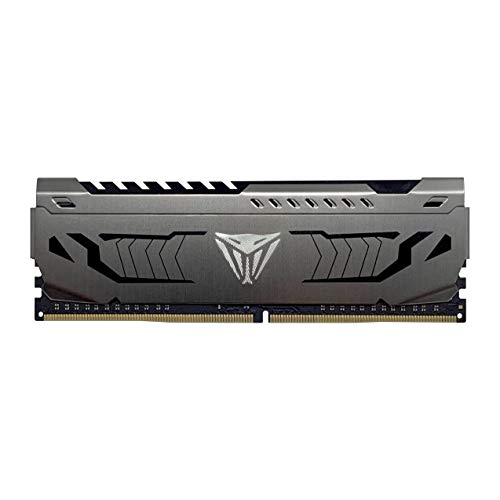
Patriot Viper Steel DDR4 RAM 16GB (1X16GB) 3200MHz CL16 Desktop Memory
- Capacity: 16GB DDR4 RAM module
- Heat Spreader: Aluminum with unique design
- Overclocking: Supports XMP 2.0 for automatic overclocking
As an affiliate, we earn on qualifying purchases.
As an affiliate, we earn on qualifying purchases.
Recent Industry Capacity and Demand Trends
The memory industry has faced a significant supply crunch since 2026, driven by physical constraints and increased demand from AI and data-intensive applications. Major manufacturers have announced new fabs and capacity expansions, but these projects take years to complete. The first capacity additions are expected in 2027, with the largest facilities delayed until 2030. Meanwhile, demand continues to grow rapidly, especially from AI firms that have secured long-term supply agreements, further tightening the market.
Historically, the industry has experienced boom-bust cycles, but the current structural limitations and demand patterns suggest a new normal of higher, more stable prices. The industry’s disciplined approach to capacity expansion aims to prevent oversupply, reinforcing the likelihood that prices will stay elevated for the foreseeable future.
“The shortage could extend through 2027 and beyond, with a genuine easing only expected around late 2028.”
— Samsung and SK Hynix spokespersons

CORSAIR Vengeance LPX DDR4 RAM 32GB (2x16GB) Up to 3200MHz CL16-20-20-38 1.35V Intel XMP AMD EXPO Computer Memory – Black (CMK32GX4M2E3200C16)
- Maximum Speed Note: Requires overclocking and BIOS adjustments
- High Performance Chips: Hand-sorted for overclocking headroom
- Wide Compatibility: Optimized for Intel and AMD DDR4 motherboards
As an affiliate, we earn on qualifying purchases.
As an affiliate, we earn on qualifying purchases.
Unconfirmed Factors and Potential Disruptions
Several factors could alter the projected timeline, including unexpected demand shifts, technological breakthroughs in manufacturing, or a sudden oversupply caused by market overshoot. The possibility of a demand crash or ‘AI winter’ remains, which could lead to a rapid oversupply and price collapse. Additionally, the pace of capacity expansion and the success of new fabs in ramping up production are still uncertain.

Crucial 32GB DDR5 RAM Kit (2x16GB), 5600MHz (or 5200MHz or 4800MHz) Laptop Memory 262-Pin SODIMM, Compatible with Intel Core and AMD Ryzen 7000, Black – CT2K16G56C46S5
- Memory Capacity: 32GB DDR5 RAM Kit (2x16GB)
- Memory Speed: 5600MHz, 5200MHz, or 4800MHz
- Performance Boost: Enhances multitasking and responsiveness
As an affiliate, we earn on qualifying purchases.
As an affiliate, we earn on qualifying purchases.
Key Developments to Watch for in 2024–2029
Next steps include monitoring capacity ramp-ups from Micron, Samsung, and SK Hynix, as well as the impact of new US fabs funded by CHIPS Act. Industry analysts will also track demand trends, particularly from AI firms with long-term supply agreements. The market will likely see gradual stabilization starting in 2027, but significant relief may only materialize around 2028–2029. Watch for any technological innovations that could accelerate capacity or reduce demand.

GEEKOM A9 Mega AI Workstation Desktop PC, Ryzen AI Max+ 395 for Local LLM
- Limited Supply of Ryzen AI Max+ 395: First to integrate this high-performance chip
- Exclusive 126 TOPS AI Performance: Unlocks advanced local large language models
- 3-Year Warranty & 24/7 Reliability: Industrial-grade build with extended warranty
As an affiliate, we earn on qualifying purchases.
As an affiliate, we earn on qualifying purchases.
Key Questions
Will memory prices ever return to pre-2024 levels?
Based on current forecasts, it is unlikely that memory prices will fall back to pre-2024 levels before 2028, and they are expected to settle at a permanently higher baseline.
What is causing the delay in relief?
The primary cause is physical capacity constraints, as building new fabs takes years, combined with sustained high demand from AI and other data-intensive industries.
Could a market crash happen if demand suddenly drops?
Yes, if demand moderates sharply or an oversupply occurs, prices could crash. However, structural features and disciplined capacity expansion make this less likely in the near term.
Are there technological solutions that could speed up relief?
Demand reduction through efficiency improvements and technological innovations in memory stacking and packaging could help, but capacity expansion remains the main factor.
Source: ThorstenMeyerAI.com