

📊 Full opportunity report: VigilSAR: The Object That Isn’t Transmitting on ThorstenMeyerAI.com — validation score, market gap, and execution plan.
TL;DR
VigilSAR is a radar-based platform that detects objects, like ships, that are visible on radar but not transmitting transponder signals. It fuses radar data with other signals to identify potentially suspicious vessels. The technology is proven using European Space Agency data, but commercial deployment details remain undisclosed.
VigilSAR has confirmed its ability to detect objects visible on synthetic-aperture radar (SAR) imagery that are not broadcasting transponder signals, such as AIS or ADS-B, which is vital for maritime security and rule enforcement. The platform combines radar detection with data fusion to identify vessels that are intentionally or unintentionally “dark,” improving situational awareness in challenging conditions.
The core capability of VigilSAR is built on publicly available European Space Agency Sentinel-1 SAR data, which provides a checkable foundation for detection. The platform pairs a classical detection pipeline with neural classifiers to identify different object types, primarily vessels.
Its key innovation lies in fusion: by correlating radar detections with AIS and ADS-B signals, VigilSAR identifies vessels that show up on radar but lack transponder signals. Such “dark” vessels are often linked to illegal activities like fishing, smuggling, or sanctions evasion, or may be vessels in distress.
While the detection and classification techniques are established, VigilSAR’s unique value is in its ability to fuse these data streams to highlight anomalies—objects visible on radar but unaccounted for by transponder signals—thus providing actionable intelligence for maritime authorities and defense agencies.
VigilSAR — the object that isn’t transmitting
Radar sees through cloud and darkness, when cameras can’t. Fuse it with transponder data and the signal is the one detection no transponder explains.
Independent commentary on public positioning, produced with AI assistance under human editorial oversight. The views are the author’s own and may change. This does not verify or endorse VigilSAR’s capabilities, contracts, or performance. Capabilities on Sentinel-1 / Copernicus reflect a free, public data foundation; commercial-constellation and air-gapped-deployment references reflect stated positioning, not independently demonstrated fact. ISR and related technologies may be subject to export controls and dual-use regulations — lawful, ethical use is solely the operator’s responsibility. Nothing here is an offer, pricing, or operational/safety/legal advice. AI detection and classification can err and require human verification. Product and company names are trademarks of their respective owners; mention does not imply endorsement.
Implications for Maritime Security and Rule of Law
VigilSAR’s confirmed capability to detect non-transmitting vessels enhances maritime domain awareness, especially under adverse weather or darkness conditions where optical sensors fail. This technology helps combat illegal fishing, smuggling, and sanctions violations by revealing vessels that attempt to go dark.
Its broad applicability extends beyond defense to include coast guard operations, fisheries enforcement, and search-and-rescue missions, making it a versatile tool for maintaining maritime safety and security.
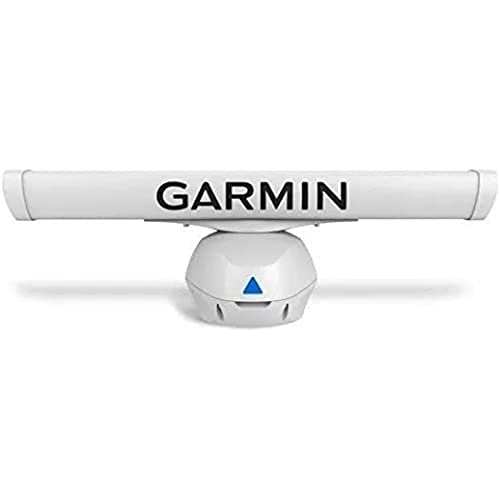
Garmin GMR Fantom 54-4 Open Array Radar
This open-array radar highlights moving targets in color and gives you excellent close- and long-range target detection —…
As an affiliate, we earn on qualifying purchases.
As an affiliate, we earn on qualifying purchases.
Development of SAR-Based Maritime Monitoring Technologies
Radar satellites like Sentinel-1 have been operational for years, providing all-weather, day-and-night imaging capabilities. The challenge has been interpreting SAR signals to reliably detect and classify objects. VigilSAR’s approach of fusing radar detections with transponder data leverages existing satellite data and AI techniques to fill a critical gap in maritime surveillance.
While the core detection capability is demonstrated using ESA’s publicly available data, the commercial deployment and integration with other satellite constellations remain in development. The platform’s precise pricing and market offerings are not yet publicly disclosed.
“Our platform fuses radar detection with other signals to highlight anomalies, which is crucial for spotting illegal or distress signals at sea.”
— VigilSAR spokesperson

AirNav Radar ADS-B AIS Hybrid Receiver
Dual AIS & ADS-B Receiver
As an affiliate, we earn on qualifying purchases.
As an affiliate, we earn on qualifying purchases.
Limitations and Unconfirmed Capabilities
While VigilSAR has demonstrated its core detection and fusion capabilities using ESA Sentinel-1 data, details about its deployment at scale, commercial offerings, and integration with other satellite constellations are not yet confirmed. The accuracy rates, false positive rates, and operational readiness are still to be validated in real-world scenarios.
Additionally, the platform’s ability to distinguish between benign dark vessels and malicious actors remains to be fully tested and publicly validated.

Spotlight-Mode Synthetic Aperture Radar: A Signal Processing Approach: A Signal Processing Approach
Used Book in Good Condition
As an affiliate, we earn on qualifying purchases.
As an affiliate, we earn on qualifying purchases.
Upcoming Deployment and Validation Phases
VigilSAR plans to expand its deployment through commercial partnerships and possibly conduct field validation exercises with maritime authorities. Further demonstrations are expected to clarify its operational effectiveness, pricing, and integration options.
Stakeholders anticipate that real-world testing will solidify VigilSAR’s role in maritime security and potentially lead to broader adoption in global maritime surveillance networks.
maritime vessel tracking equipment
As an affiliate, we earn on qualifying purchases.
As an affiliate, we earn on qualifying purchases.
Key Questions
How does VigilSAR detect vessels that are not broadcasting transponder signals?
VigilSAR uses synthetic-aperture radar imagery to detect objects on the surface, then fuses this data with AIS and ADS-B signals to identify vessels that appear on radar but lack transponder broadcasts.
Is VigilSAR’s technology proven for operational use?
The core detection and fusion capability has been demonstrated using ESA Sentinel-1 data, but full operational deployment and validation are still underway.
What types of vessels can VigilSAR identify?
VigilSAR primarily targets large vessels such as ships and boats that are visible on radar. Its classification system estimates vessel types but detailed accuracy metrics are not yet publicly available.
Who are the primary users of VigilSAR?
Potential users include maritime security agencies, coast guards, fisheries regulators, and defense organizations interested in maritime domain awareness.
What are the limitations of VigilSAR?
While effective at detection, its accuracy in complex environments, false positives, and ability to distinguish benign from malicious dark vessels are still being tested and validated.
Source: ThorstenMeyerAI.com