
📊 Full opportunity report: VigilSAR: The Object That Isn’t Transmitting on ThorstenMeyerAI.com — validation score, market gap, and execution plan.
TL;DR
VigilSAR is a radar-based platform that detects ships and objects without transponder signals, crucial for maritime security and safety. Its core relies on publicly available SAR data and fusion with other signals.
VigilSAR has confirmed its capability to detect objects, such as ships, that do not broadcast transponder signals, using synthetic-aperture radar (SAR) technology. This development enhances maritime situational awareness, especially for security, safety, and law enforcement, by identifying vessels that are otherwise hidden or ‘dark.’ The platform pairs radar detection with data fusion to flag anomalies, marking a significant step in all-weather, day-and-night maritime monitoring.
The core of VigilSAR relies on SAR data from the European Space Agency’s Sentinel-1 satellites, which provide free, public radar imagery. It detects objects by identifying anomalous radar returns, such as ships, and then classifies them using neural networks. The key innovation is its ability to fuse radar detections with other signals, like AIS and ADS-B transponder data, to identify vessels that are intentionally or unintentionally ‘dark.’
When a vessel appears on radar but lacks a corresponding transponder signal, VigilSAR flags it as a significant anomaly, often linked to illegal activities or distress situations. The platform’s approach is rooted in established detection and classification techniques, with the unique value coming from its fusion capability, which subtracts explained signals to highlight unexplained objects.
VigilSAR — the object that isn’t transmitting
Radar sees through cloud and darkness, when cameras can’t. Fuse it with transponder data and the signal is the one detection no transponder explains.
Independent commentary on public positioning, produced with AI assistance under human editorial oversight. The views are the author’s own and may change. This does not verify or endorse VigilSAR’s capabilities, contracts, or performance. Capabilities on Sentinel-1 / Copernicus reflect a free, public data foundation; commercial-constellation and air-gapped-deployment references reflect stated positioning, not independently demonstrated fact. ISR and related technologies may be subject to export controls and dual-use regulations — lawful, ethical use is solely the operator’s responsibility. Nothing here is an offer, pricing, or operational/safety/legal advice. AI detection and classification can err and require human verification. Product and company names are trademarks of their respective owners; mention does not imply endorsement.
Implications for Maritime Security and Safety
This capability matters because it enhances the ability of coast guards, maritime authorities, and security agencies to monitor and respond to vessels that attempt to evade detection by turning off transponders or operating in stealth mode. It addresses critical issues such as illegal fishing, smuggling, sanctions evasion, and vessels in distress, all of which depend on detecting ‘dark’ ships.
By reliably identifying vessels in all weather and lighting conditions, VigilSAR fills a vital gap in maritime surveillance, offering a tool that supports law enforcement, safety, and environmental protection efforts worldwide.
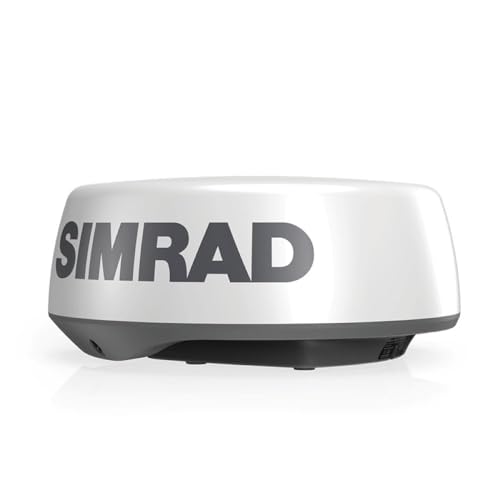
Simrad Marine Electronics, HALO20 Radar System, 24 Nautical Mile Range, Compact 20 Inch Dome, White, 000-14537-001
- Dome Size: 20-inch compact radar dome
- Detection Range: 24 nautical miles
- Performance: Reliable situational awareness
As an affiliate, we earn on qualifying purchases.
As an affiliate, we earn on qualifying purchases.
Background on SAR and Maritime Detection Challenges
Traditional optical satellites are limited by weather and daylight, making them unreliable under cloud cover or at night. SAR technology overcomes these limitations by using microwave signals that penetrate clouds and operate in darkness, providing consistent surface imaging. However, interpreting SAR data requires advanced AI and data fusion techniques.
Previous efforts focused on detection and classification of objects in SAR imagery, but the key challenge has been associating these detections with transponder data. VigilSAR’s approach of fusion—subtracting explained signals to find anomalies—is a recent advancement that addresses this gap, with initial demonstrations relying on publicly available data from Sentinel-1.
“The core innovation of VigilSAR is its ability to fuse radar detections with other signals to identify vessels that are deliberately going dark, which is a game-changer for maritime security.”
— Thorsten Meyer, remote sensing expert
As an affiliate, we earn on qualifying purchases.
Limitations and Unconfirmed Capabilities
While VigilSAR has demonstrated the ability to detect vessels without transponder signals using Sentinel-1 data, it is not yet clear how well the system performs across different satellite constellations or in real-time operational environments. Details about its commercial deployment, pricing, and integration with existing maritime surveillance systems remain undisclosed.
Furthermore, the extent of its accuracy in complex maritime scenarios, such as congested ports or high-traffic areas, is still being evaluated.
As an affiliate, we earn on qualifying purchases.
Next Steps for Validation and Deployment
Further testing and validation are expected as VigilSAR moves toward broader commercial deployment, including integration with government and private maritime security agencies. Public demonstrations and pilot programs are likely to occur over the coming months, with potential updates on capabilities and operational effectiveness.
Stakeholders will also be watching for transparency around pricing, data sources, and performance metrics to assess its role within existing maritime surveillance frameworks.

AIS Receiver Portable AIS Receiver with Stable USB Output for Marine
- Folding Telescopic Antenna: Stainless steel, durable, foldable design
- Portable and Lightweight: Compact for easy marine use
- USB Connectivity: Receives AIS messages directly to devices
As an affiliate, we earn on qualifying purchases.
As an affiliate, we earn on qualifying purchases.
Key Questions
How does VigilSAR detect vessels without transponder signals?
It uses SAR radar imagery to identify objects based on their radar scattering properties and then fuses this data with transponder signals like AIS and ADS-B. Vessels that appear on radar but lack transponder signals are flagged as anomalies.
What are the main applications of VigilSAR?
The platform supports maritime security, law enforcement, search and rescue, environmental monitoring, and compliance enforcement by detecting ‘dark’ vessels engaged in illegal activities or in distress.
Is VigilSAR available for commercial use now?
It is currently in demonstration and pilot phases. Full commercial deployment, including pricing and integration details, has not yet been announced.
What are the limitations of SAR-based detection?
While SAR can operate in all weather and lighting conditions, interpreting the raw radar data requires sophisticated AI. Performance in complex maritime environments and the ability to distinguish between different vessel types are ongoing challenges.
Source: ThorstenMeyerAI.com