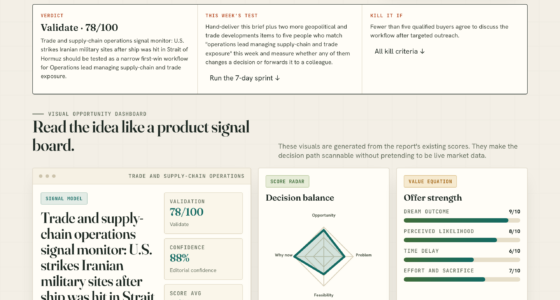

📊 Full opportunity report: Data: The One Thing You Can’t Rent on ThorstenMeyerAI.com — validation score, market gap, and execution plan.
TL;DR
The AI industry is moving away from renting compute and web data toward controlling and licensing rare, verified data sources. This shift creates new barriers for startups and consolidates industry power among big players, making data ownership a critical survival factor.
In 2026, the AI industry has moved to restrict access to the most valuable data, with companies now facing legal and financial barriers to training on data that was once freely scraped from the web. This marks a significant shift in the industry’s approach to data, making ownership and licensing the new chokepoints that could determine market dominance and innovation capacity.
Recent legal settlements, such as Anthropic’s $1.5 billion agreement over copyright claims, confirm that the era of free data scraping is ending. The judge’s ruling clarified that training on legally acquired books is fair use, but pirated content is not, effectively ending the free download of shadow library materials. Learn more about AI and legal issues. As a result, companies are now required to pay licensing fees for datasets that were previously obtained at no cost, creating a new market for data rights.
Major publishers like The New York Times and News Corp are shifting from lawsuits to licensing agreements, further indicating that data access is becoming a paid commodity. This trend favors large, financially capable firms, creating high entry barriers for startups. Additionally, synthetic data, while increasingly used, carries risks of model collapse if over-relied upon, emphasizing the importance of verified human-generated data.
Simultaneously, the industry has seen a shift towards acquiring expertise-driven data from specialists—lawyers, scientists, and domain experts—whose insights are costly but essential for training models that require nuanced understanding. This has turned data ownership into a strategic asset, with companies like Meta investing heavily in expert-driven datasets and vendors like Scale AI gaining strategic importance.
Data: The One Thing You Can’t Rent
The free part of “all human knowledge” is running out. As compute and models commoditize, the corpus you can’t replicate becomes the moat — so data is being fenced, priced, and, in places, treated as a national asset.
Data was supposed to be the abundant input. It’s the scarce one. It’s also the chokepoint you can actually own — so guard your proprietary data, and don’t hand it to a provider who can become your competitor (the lesson everyone fled Scale to learn). Nations: license it like Ukraine — keep the model, keep the leverage.
Why Data Ownership Will Shape AI Industry Power
This shift to fencing and licensing data fundamentally alters the AI landscape. It consolidates power among established players with deep pockets, raises barriers for startups, and makes data ownership a key determinant of competitive advantage. As access to free, high-quality data diminishes, control over verified, expert-generated data becomes critical for innovation and market survival.
As an affiliate, we earn on qualifying purchases.
Legal and Market Changes in Data Accessibility
Historically, AI training relied heavily on web scraping and open datasets, with minimal legal restrictions. However, 2026 marks a turning point, exemplified by Anthropic’s landmark copyright settlement and ongoing legal disputes involving major publishers. These developments indicate a broader industry move toward formal licensing regimes, making data a paid resource rather than a free input. The industry also increasingly relies on expert-generated data, which is scarce and expensive, further emphasizing the shift from open access to controlled data markets.
“The ruling clarifies that training on legally acquired books is fair use, but piracy is not, marking a turning point for data licensing.”
— Legal expert involved in copyright settlement
As an affiliate, we earn on qualifying purchases.
Unresolved Questions About Data Market Dynamics
It remains unclear how quickly licensing regimes will become standardized across industries and regions, and whether new legal frameworks will effectively prevent unauthorized data scraping. Additionally, the long-term impact of synthetic data reliance on model accuracy and safety is still being evaluated. The pace at which startups can access or develop proprietary, verified data is also uncertain, potentially shaping future industry structure.
As an affiliate, we earn on qualifying purchases.
Next Steps in Data Licensing and Industry Consolidation
Legal battles and licensing negotiations are expected to intensify, with major publishers and data providers establishing clearer rights and pricing structures. Industry consolidation may accelerate as companies with extensive verified data assets strengthen their market position. Meanwhile, innovation in synthetic data and expert annotation techniques will continue, but their role will be increasingly supplementary to verified human data. Monitoring legal developments and licensing standards will be critical for industry stakeholders.
As an affiliate, we earn on qualifying purchases.
Key Questions
Why is data now considered a chokepoint in AI development?
Because publicly available web data is becoming exhausted and synthetic data carries risks, verified, expert-generated data is now scarce and highly valuable, making control over it a strategic advantage.
How does legal licensing affect startups in AI?
Licensing fees and legal restrictions create high barriers to entry, favoring large firms with deep pockets and making it harder for smaller companies to access essential training data.
What are the risks of relying on synthetic data?
Synthetic data can lead to model inaccuracies or collapse if overused or unverified, especially in domains requiring precise, verified information.
Will open data sources disappear entirely?
While some open data may remain, legal restrictions and licensing will significantly limit free scraping, making verified, licensed data the primary resource for training.
What is the significance of expert-generated data?
Expert data is becoming the most valuable resource because it provides verified, nuanced information that synthetic data cannot reliably replicate, shaping competitive advantages in AI development.
Source: ThorstenMeyerAI.com