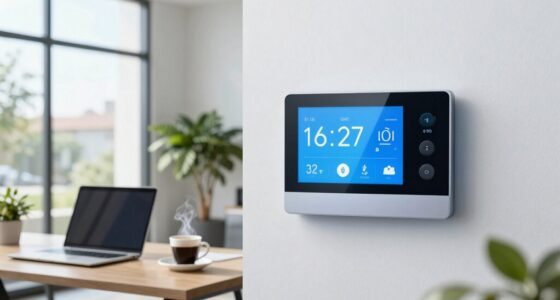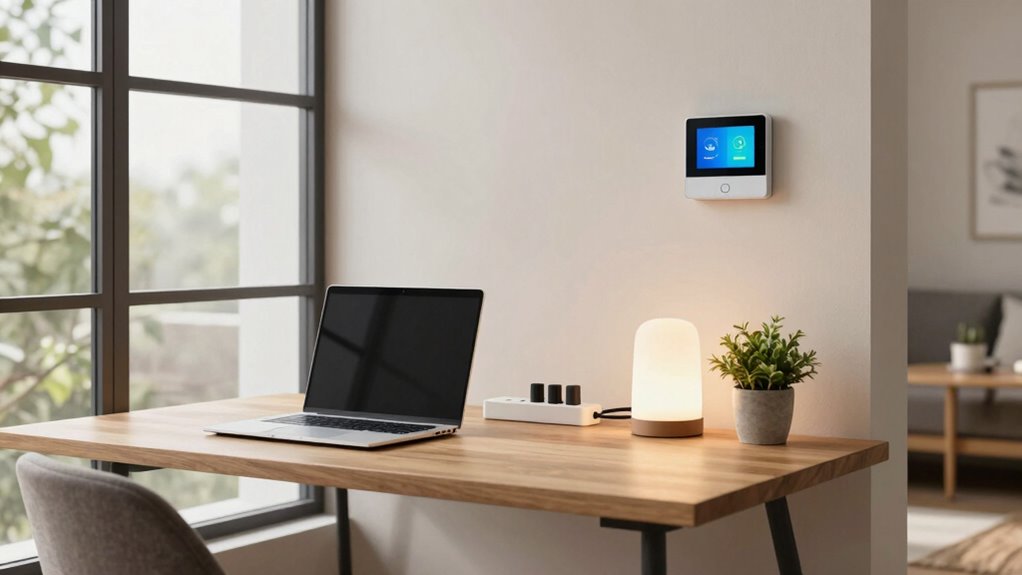

To manage your home office’s energy use, focus on efficiency and sustainable choices. Rely on renewable energy sources like solar and support community programs to reduce your carbon footprint. Use LED lighting, ENERGY STAR devices, and unplug unused electronics to prevent energy waste. Maintain your HVAC system for peak performance and position your workspace near natural light to cut lighting needs. Monitor your energy use with tools that help you stay efficient—if you want to learn more, keep exploring these strategies.

Get the little things that make your day delivered free with Prime
- Fast, free delivery on millions of items
- Prime Video, Amazon Music and more included
- Member-only deals all year
Key Takeaways
- Prioritize renewable energy sources like solar panels to reduce carbon footprint and lower utility bills.
- Implement energy efficiency habits such as switching to LED bulbs and unplugging unused devices.
- Regularly maintain HVAC systems to ensure optimal performance and reduce energy consumption.
- Optimize workspace setup by maximizing natural light and controlling temperature with curtains and thermostats.
- Use energy monitoring tools to track usage and identify areas for reducing unnecessary power consumption.
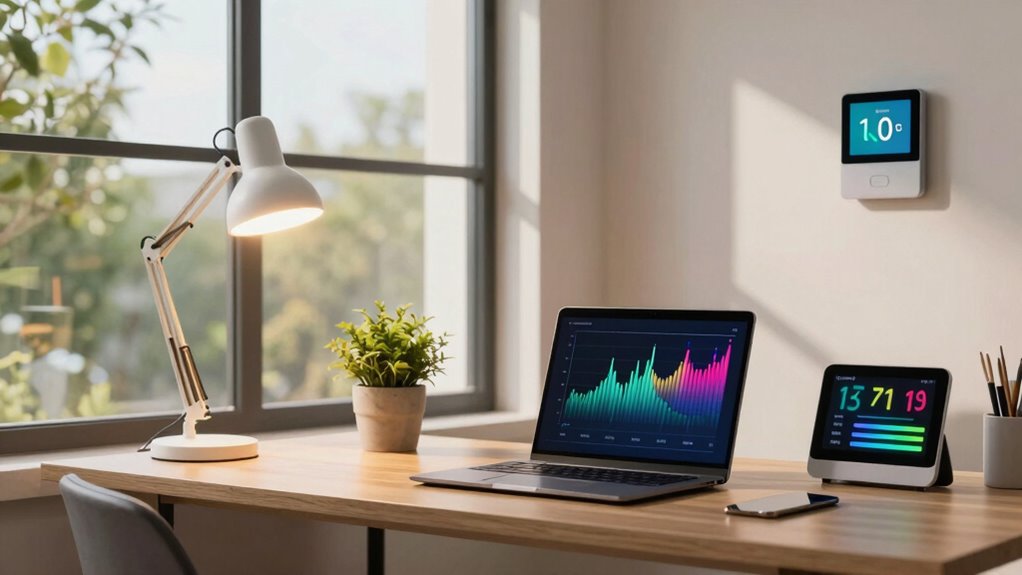
Working from home offers flexibility, but it also means your energy consumption can quickly add up if you’re not mindful. When you think about your home office, it’s essential to consider where your energy comes from and how efficiently you use it. Relying on renewable sources, like solar panels or wind energy, can considerably reduce your carbon footprint and lower your utility bills. Installing solar panels, for example, allows you to generate your own clean energy, making your home office more sustainable. Even if you’re not ready for a full solar setup, exploring community solar programs or renewable energy plans from your utility provider can help you support cleaner energy sources without the upfront costs.
Supporting renewable energy sources like solar or wind reduces your carbon footprint and lowers utility bills.
Beyond renewable energy, focusing on energy efficiency is vital. Small changes in your daily routines and equipment can make a big difference. Start by switching to LED bulbs, which use a fraction of the energy of traditional incandescent bulbs and last much longer. When choosing electronics, opt for energy-efficient models that meet ENERGY STAR standards, guaranteeing they consume less power without sacrificing performance. Unplug chargers, printers, and other devices when they’re not in use, because these small habits prevent “phantom” energy drain that adds up over time. energy efficiency is a key aspect of reducing overall home energy consumption. Additionally, being aware of your dust accumulation and how it can affect indoor air quality can help you maintain a healthier workspace. Proper maintenance and cleaning can also ensure your HVAC system operates more efficiently, further reducing energy use. Incorporating smart home devices that monitor and adjust energy consumption can optimize your space even more.
Your workspace setup also impacts energy use. Position your desk near natural light to reduce the need for artificial lighting during the day. Use blackout curtains or blinds to control glare and temperature, helping to keep your space comfortable without over-relying on heating or cooling systems. When you do need climate control, set your thermostat to a reasonable temperature and consider using a programmable thermostat to optimize energy use based on your schedule. Maintaining your HVAC system through regular filters and tune-ups guarantees it runs efficiently and costs less to operate. Additionally, installing solar system components with proper safety features, such as rapid shutdown placement, ensures your system operates safely and efficiently.
Furthermore, being mindful of your internet and computer use can save energy. Use power-saving settings on your devices, and turn off your computer completely when you’re done working, instead of leaving it in sleep mode. If you have the option, connect your devices via Ethernet instead of Wi-Fi, as wired connections often use less energy. Incorporating these practices helps you stay productive while minimizing unnecessary energy consumption. Recognizing the importance of energy monitoring tools can also help you track and manage your overall home energy use more effectively.
As an affiliate, we earn on qualifying purchases.
Frequently Asked Questions
How Can I Track My Home Office Energy Consumption Accurately?
You can track your home office energy consumption accurately by analyzing your energy consumption patterns and using monitoring tools. Install smart meters or energy monitors on your devices and circuits to get real-time data. Keep a log of your usage, and review your energy bills for trends. These tools help you identify high-consuming appliances and optimize your energy use, making it easier to reduce waste and save money.
Are There Specific Energy-Efficient Appliances Suitable for Home Offices?
You can’t judge a book by its cover, so look beyond appearances when choosing energy-efficient appliances for your home office. Opt for LED desk lamps, ENERGY STAR-rated computers, and smart power strips. These home office gadgets use less energy and save you money in the long run. By investing in the right appliances, you boost your efficiency and reduce your environmental footprint, making your workspace both smart and sustainable.
How Does Climate Impact Energy Use in Home Office Environments?
Climate substantially impacts your home office energy use through climate adaptation needs and temperature regulation. In hot climates, you might use more energy for cooling, while colder environments demand extra heating. To reduce energy consumption, you can improve insulation, install energy-efficient windows, or use smart thermostats. Adapting your space to seasonal changes helps maintain comfortable temperatures efficiently, ultimately lowering your energy bills and minimizing your environmental footprint.
What Are Cost-Effective Ways to Upgrade My Home Office Lighting?
Think of your home office lighting as a guiding light—smart lighting and motion sensors are your best allies. You can upgrade cheaply by installing motion sensors, which turn lights off when you’re not around. Smart bulbs let you control brightness and schedules remotely, saving energy and money. These upgrades are cost-effective, easy to install, and make your workspace more efficient, ensuring you only use light when needed.
Can Renewable Energy Sources Power My Home Office Effectively?
Renewable energy sources like solar panels and wind turbines can power your home office effectively, especially if you have sufficient space and sunlight or wind. Solar panels are a popular choice for generating clean energy during the day, while small wind turbines can supplement power when wind conditions are favorable. Combining these options can reduce your reliance on the grid, lower energy costs, and support your eco-friendly goals.
As an affiliate, we earn on qualifying purchases.
Conclusion
Thinking about your energy use at home offices isn’t just about saving money; it’s about making smarter choices for the environment and your well-being. By being mindful of your habits and making simple adjustments, you can reduce waste and lower costs. Are you ready to take small steps that make a big difference? Remember, every effort counts, and your conscious decisions can lead to a more sustainable and efficient workspace.
As an affiliate, we earn on qualifying purchases.
programmable thermostat for home
As an affiliate, we earn on qualifying purchases.
As an affiliate, we earn on qualifying purchases.
Halloween Picks
halloween
As an affiliate, we earn on qualifying purchases.