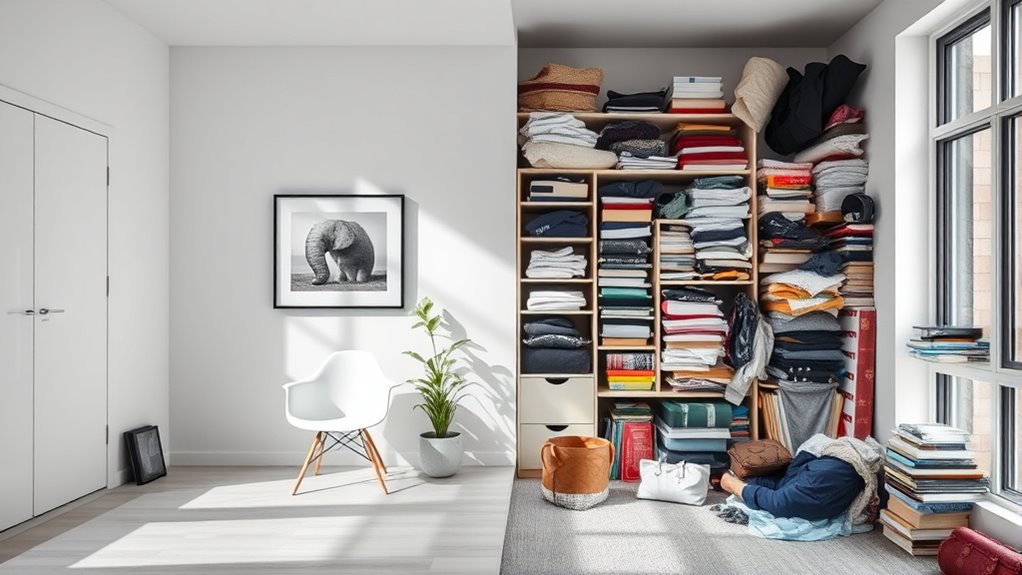

Minimalism and decluttering are related but serve different purposes. Decluttering involves temporarily removing excess items to organize your space and create quick relief from chaos. Minimalism, on the other hand, emphasizes long-term habits of owning fewer possessions, making mindful choices, and living intentionally. While decluttering offers immediate benefits, minimalism impacts your mindset and lifestyle for the long run. Understanding these differences can help you create a more balanced, purposeful life—more details await if you continue.

Get the little things that make your day delivered free — and shop member deals
- Fast, free delivery on millions of items
- Access to Prime Big Deal Days deals on October 6–7
- Prime Video, Amazon Music and more included
Key Takeaways
- Decluttering is a temporary process of removing excess items, while minimalism is a lifestyle promoting long-term intentional living.
- Decluttering focuses on physical space organization; minimalism encompasses digital habits, routines, and overall mindset.
- Decluttering provides immediate relief from chaos; minimalism fosters ongoing mindful consumption and purposeful ownership.
- Decluttering is often a one-time or short-term action; minimalism involves sustained habits and value-based decision making.
- Decluttering addresses visible clutter; minimalism influences daily choices, priorities, and environmental impact.
Defining the Core Concepts of Minimalism and Decluttering
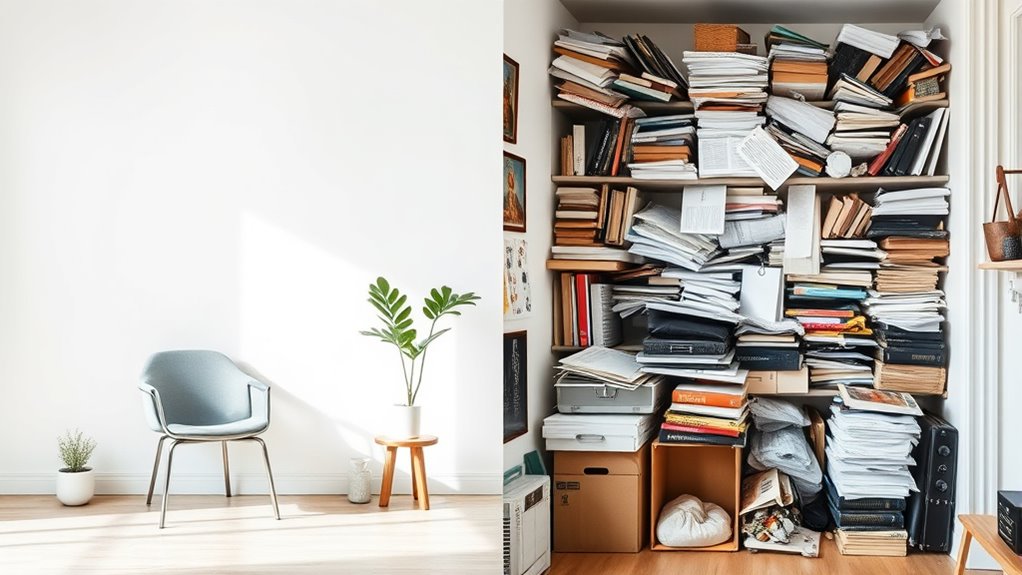
To understand the core concepts of minimalism and decluttering, it’s important to recognize that although they often overlap, they serve different purposes. Decluttering involves periodically removing unnecessary items to create a more organized, manageable space. It’s typically a one-time or short-term action, often triggered by specific events like moving or tidying up. Minimalism, on the other hand, is a lifestyle choice rooted in living with fewer possessions and emphasizing intentionality. It’s a continuous mindset that extends beyond physical clutter to digital habits, work, and social commitments. While decluttering makes your environment cleaner and more functional, minimalism encourages a long-term reevaluation of needs, focusing on meaningful possessions and reducing consumption to improve overall well-being. Additionally, adopting a holistic approach to how you manage your possessions can enhance both your physical space and mental clarity.
Exploring the Main Goals and Motivations Behind Each Approach
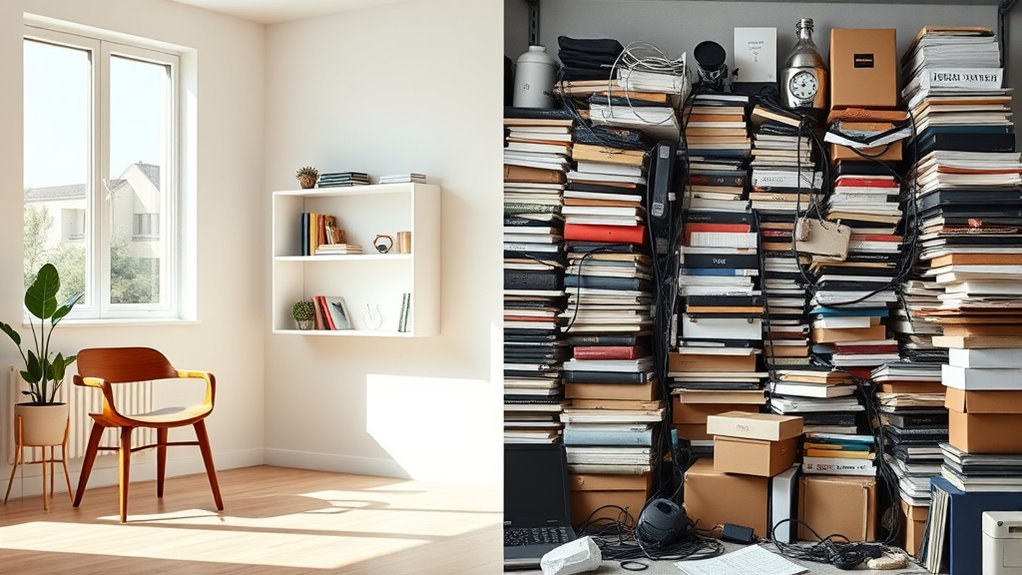
Understanding the main goals and motivations behind decluttering and minimalism reveals how each approach addresses different personal needs. Decluttering focuses on immediate relief by removing unnecessary items, helping you regain control over clutter and improve your environment quickly. It’s often driven by specific events like moving or feeling overwhelmed. Minimalism, on the other hand, aims for a long-term shift in your lifestyle. It encourages you to question your needs, prioritize what truly adds value, and live intentionally. This approach motivates you to reduce consumerism, save resources, and cultivate a sense of freedom through simplicity. While decluttering offers short-term satisfaction, minimalism seeks ongoing fulfillment by fostering mindful decisions and sustainable habits that align with your core values. Additionally, understanding spoilage signs of perishable items can help maintain a clutter-free kitchen and prevent waste.
The Scope and Duration of Action: Short-Term vs. Long-Term Perspectives
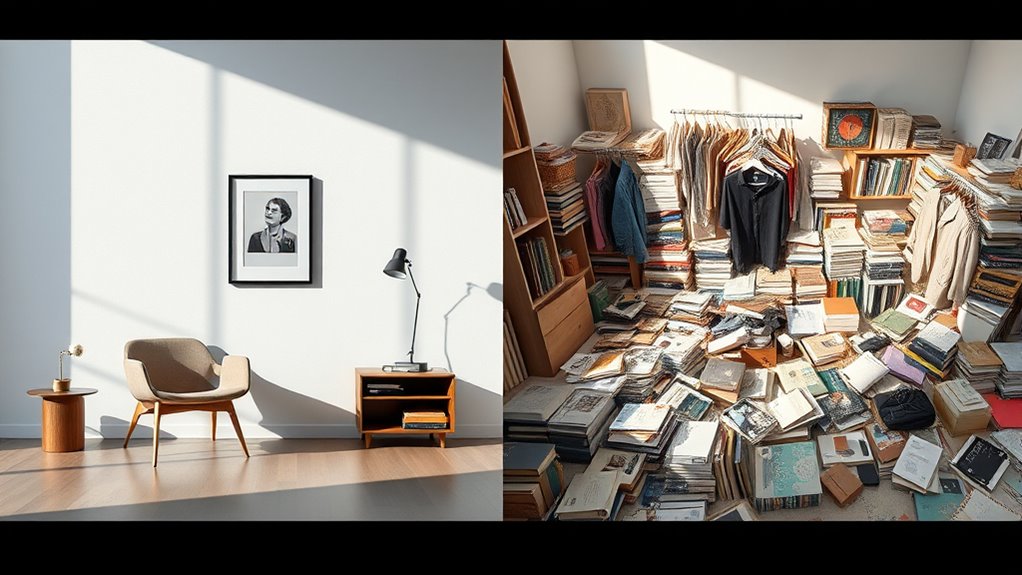
You often see decluttering as a quick fix that clears space temporarily, while minimalism requires a continuous effort to maintain simplicity. Decluttering provides immediate results, but minimalism fosters long-term lifestyle changes. Understanding this difference helps you decide whether to focus on short-term gains or sustained growth. Incorporating sustainable practices like mindful organization can enhance the longevity of your decluttering efforts.
Decluttering: Immediate Fix
Decluttering often serves as an immediate fix to mounting chaos, providing quick relief by removing unnecessary items and tidying up spaces. You focus on clearing visible clutter, making your environment look more organized instantly. This process is typically short-term, addressing specific problem areas or preparing for events like moving or hosting guests. You might sort belongings into keep, donate, or discard, quickly reducing chaos. While it offers immediate satisfaction, it doesn’t necessarily change your habits or long-term relationship with possessions. The goal is to regain control temporarily and create a more manageable space. However, without ongoing effort, clutter can reappear. Decluttering as an immediate fix helps you feel less overwhelmed in the moment but doesn’t replace a sustained lifestyle change. Regular maintenance can help sustain the benefits of decluttering over time.
Minimalism: Ongoing Practice
While decluttering offers quick relief by removing visible messes, adopting minimalism requires a commitment to continuous effort. It’s a long-term mindset that influences daily choices, encouraging you to evaluate what you truly need and value. This ongoing practice involves regular reflection on possessions, habits, and priorities, making intentional decisions about consumption and lifestyle. Unlike a one-time decluttering session, minimalism demands discipline and awareness, shaping your environment and routines over time. You’ll find yourself questioning purchases, reducing digital clutter, and simplifying commitments to create space for what matters most. This sustained approach helps prevent clutter from returning and promotes a more meaningful, balanced life rooted in simplicity and purpose. It’s a continuous journey, not a destination. Incorporating vetted strategies can enhance your ability to maintain a minimalist lifestyle effectively.
Practical Strategies and Techniques Employed
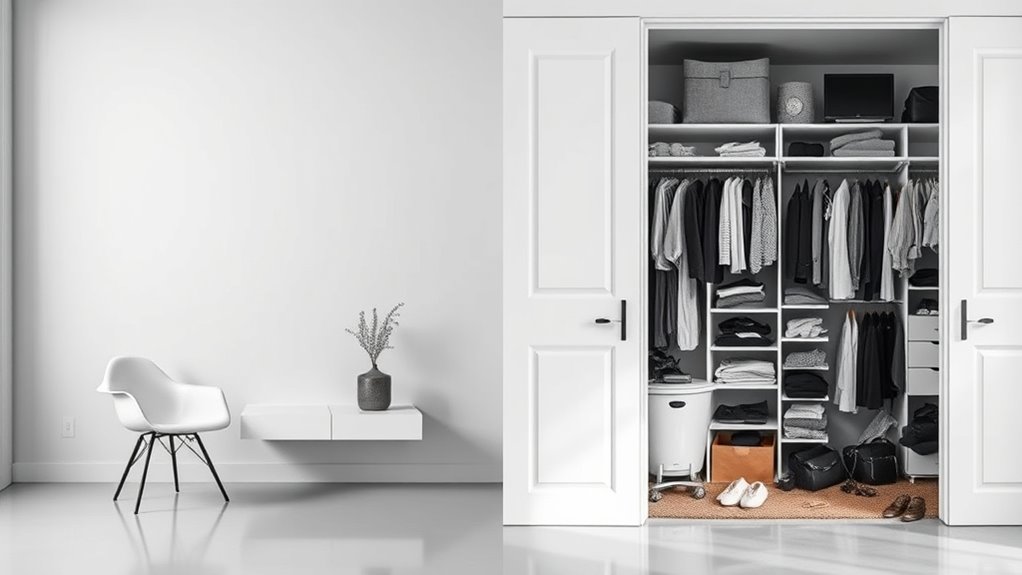
Practically managing clutter involves employing specific strategies that make organizing more efficient and sustainable. You can start by sorting items into categories, such as clothes, books, or kitchenware, then decide what truly adds value. Use methods like Marie Kondo’s “spark joy” approach to identify what to keep and discard. Regularly evaluate your possessions, questioning whether each item serves a purpose or aligns with your lifestyle. Implement routines like daily tidying or weekly reviews to prevent accumulation. Create designated storage spaces to keep things organized and accessible. Avoid impulse buying by planning purchases carefully and practicing mindful consumption. Additionally, understanding the importance of tire pressure can help maintain your bike’s performance and reduce the need for frequent repairs, supporting a more minimalist approach to gear management. These techniques help maintain a clutter-free environment while supporting a more intentional, minimalist lifestyle over time.
Impact on Psychological Well-Being and Lifestyle Habits

Managing clutter effectively can substantially boost your mental clarity and reduce daily stress. When your space is organized, you’ll feel calmer and more focused, making it easier to tackle daily tasks. Decluttering provides quick relief by removing visible chaos, but minimalism offers deeper psychological benefits by reshaping your mindset. Embracing minimalism encourages intentional living, helping you prioritize what truly matters, which can reduce feelings of overwhelm and anxiety over time. It also fosters healthier habits, like mindful consumption and better time management, leading to sustained well-being. Both approaches can improve your mood and confidence, but minimalism’s long-term perspective promotes resilience against clutter-induced stress, supporting a more balanced, purposeful lifestyle. Additionally, understanding divorce statistics can help individuals anticipate life changes and focus on creating a clutter-free, stable environment to enhance overall well-being.
Relationship With Consumerism and Environmental Sustainability
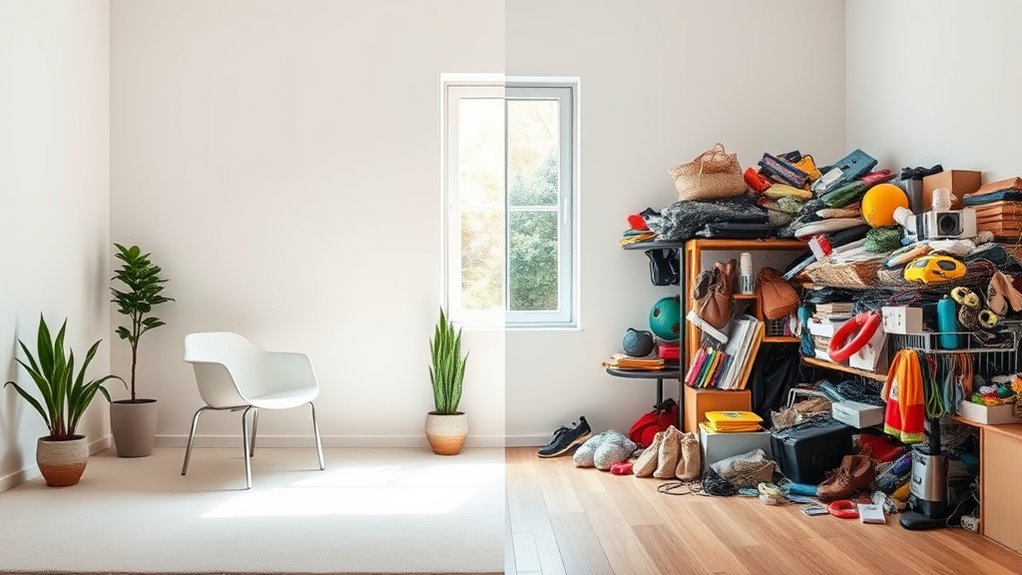
Your approach to decluttering might clear space temporarily, but unless you adopt minimalism, your consumption habits could stay the same. Minimalism encourages mindful purchasing and owning only what truly adds value, which reduces waste and environmental impact. Embracing this mindset helps you live more sustainably and lessens your contribution to overproduction and pollution. Recognizing gaslighting tactics in consumer culture can also help you resist impulsive buying driven by marketing strategies.
Impact on Consumption Habits
While decluttering can temporarily reduce clutter, it doesn’t necessarily change your overall purchasing habits or attitudes toward material possessions. If you want to truly impact your consumption, consider these approaches:
- Question needs before buying — ask if an item truly adds value, reducing impulse purchases.
- Limit new acquisitions — set rules for minimal shopping or avoid unnecessary buying.
- Prioritize quality over quantity — choose durable, meaningful items that last longer, decreasing waste.
- Reflect on your relationship with consumerism to identify patterns and motivations behind your purchasing behaviors, fostering more mindful consumption.
Minimalism actively challenges consumerism by encouraging mindful acquisition and ownership. It promotes conscious choices that align with long-term sustainability goals, helping you resist societal pressures to accumulate. Decluttering alone might clear space temporarily but won’t alter your underlying habits, whereas minimalism fosters ongoing awareness, reducing unnecessary consumption and waste over time.
Promoting Eco-Friendly Living
Adopting a minimalist lifestyle naturally promotes eco-friendly living by encouraging you to buy less and choose more sustainable options. When you focus on owning only what truly adds value, you’re less likely to support overconsumption and waste. Minimalism pushes you to prioritize quality over quantity, which often means selecting durable, eco-friendly products. This mindset reduces the demand for mass-produced goods, decreasing resource extraction and pollution. By making intentional choices, you contribute to lowering your carbon footprint and minimizing landfill waste. Incorporating high-quality projectors into your home setup exemplifies sustainable consumption by investing in durable, long-lasting equipment. Minimalism also encourages you to reuse, repurpose, and repair items rather than discard them. Over time, this sustainable approach helps foster a deeper connection to the environment while promoting responsible consumption habits that benefit the planet.
Typical Triggers and Motivations for Engagement in Each Practice
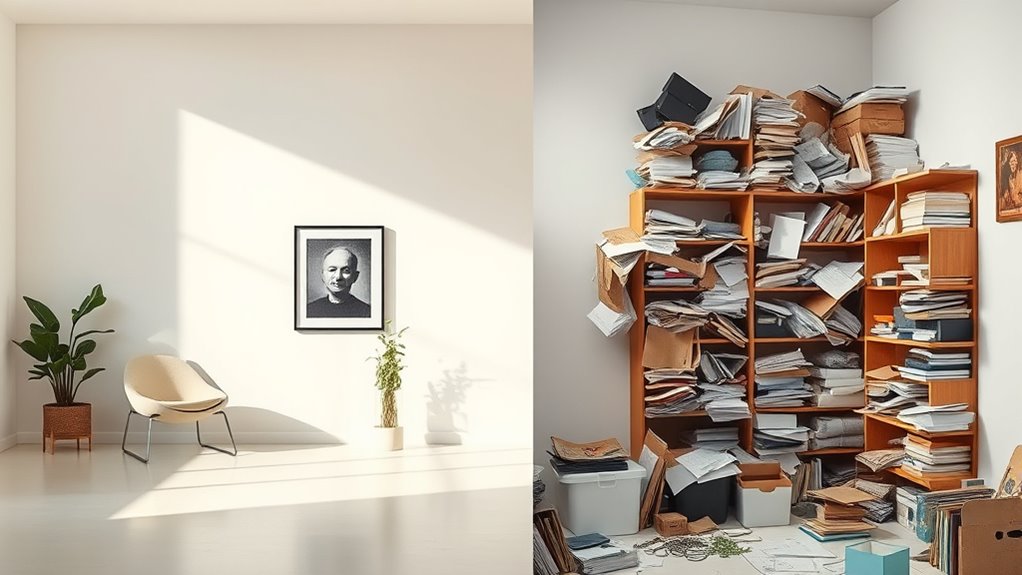
People often turn to decluttering or minimalism in response to specific life events or feelings of overwhelm. These triggers push you to seek clarity and control. Common motivations include:
- Moving or downsizing, prompting quick decluttering to prepare for a new space.
- Feeling overwhelmed by clutter, which sparks a desire to organize and simplify your environment.
- Searching for more meaningful living, motivating you to adopt minimalism as a lifestyle change.
Decluttering offers immediate relief from chaos, while minimalism addresses root causes of excess. You might declutter temporarily to handle a move or clear space, but minimalism encourages ongoing intentional choices. Both practices stem from a need for order, purpose, and a sense of calm.
Outcomes and Changes in Daily Life and Mindset

Engaging in decluttering can bring immediate relief by making your space feel more organized and manageable, which often boosts your sense of control and reduces stress. You’ll notice a clearer environment that’s easier to clean and maintain, leading to short-term satisfaction. However, these changes may be temporary if you don’t address underlying habits. Minimalism, on the other hand, fosters a lasting mindset shift that influences your daily routines and priorities. You begin to value quality over quantity, making intentional choices about possessions, time, and energy. Over time, this leads to reduced clutter, greater focus, and a calmer mind. Your daily life becomes more streamlined, with less distraction and fewer decision fatigue moments, ultimately enhancing your overall well-being and sense of purpose.
How Each Approach Fits Into Broader Personal Development and Values
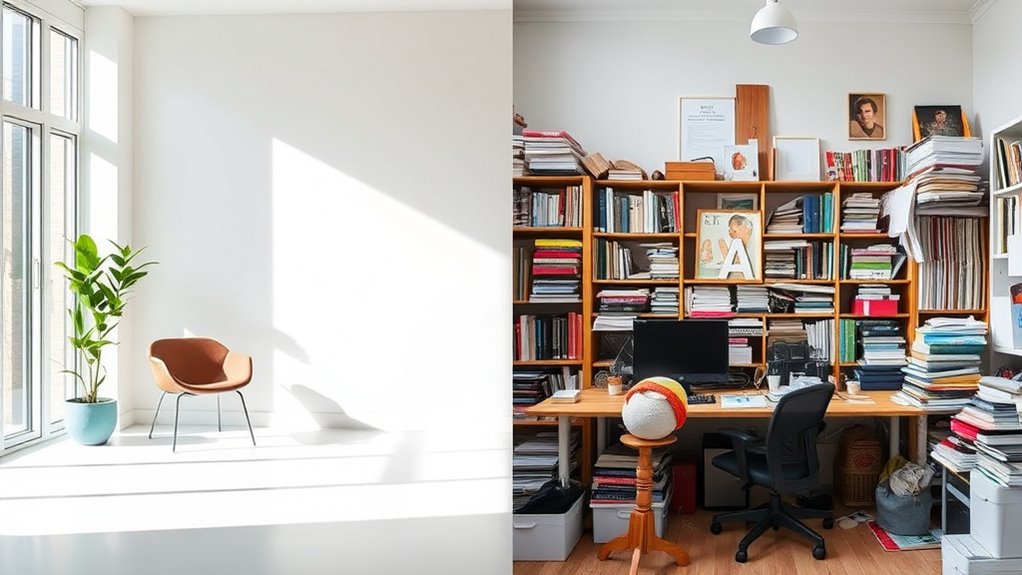
Both decluttering and minimalism influence your broader personal development by shaping your core values and guiding how you prioritize what truly matters. They help you clarify your beliefs and align your actions with your long-term goals. Consider these ways they fit into your values:
- Intentional Living: Minimalism encourages you to make mindful choices, focusing on quality over quantity, and aligning actions with your beliefs.
- Simplicity and Focus: Both approaches promote clarity by reducing distractions, allowing you to invest energy in what truly matters.
- Sustainable Mindset: They foster awareness about consumption and resource use, reinforcing values of responsibility and long-term well-being.
Together, they support a lifestyle rooted in purpose, authenticity, and conscious growth.
Frequently Asked Questions
Can Decluttering Lead to Adopting a Minimalist Lifestyle?
Yes, decluttering can lead you toward minimalism by helping you realize what truly matters and reducing excess. As you remove unnecessary items, you become more aware of your needs and habits. This process often sparks a mindset shift, encouraging you to adopt intentional living. Over time, decluttering can motivate you to simplify further, ultimately supporting a minimalist lifestyle focused on quality, purpose, and mindful consumption.
How Do Minimalism and Decluttering Influence Financial Habits Long-Term?
Minimalism and decluttering both positively influence your long-term financial habits by encouraging you to spend less and focus on what truly matters. When you declutter, you realize which items are unnecessary, reducing impulsive buying. Adopting minimalism shifts your mindset to value quality over quantity, leading to mindful purchases. Over time, these habits help you save money, avoid debt, and make more intentional financial decisions aligned with your values.
Are There Specific Personality Types More Suited for Minimalism?
You’re likely to thrive with minimalism if you’re naturally organized, disciplined, and value intentional living. People who dislike clutter and are motivated by simplicity find it easier to embrace this lifestyle. If you’re patient, reflective, and willing to challenge societal norms about possessions, minimalism suits you perfectly. It’s not about perfection but about creating a life that’s more meaningful, freeing, and aligned with your core values.
How Does Minimalism Address Digital Clutter and Online Consumption?
Minimalism helps you manage digital clutter by encouraging intentional online habits. You’ll regularly evaluate your digital spaces, deleting unnecessary files, unsubscribing from unwanted emails, and limiting social media use. This practice reduces distractions and mental clutter, freeing up time and energy for meaningful activities. By setting boundaries on digital consumption, you reinforce your commitment to a simpler, more focused lifestyle, making your digital environment more intentional and aligned with your values.
Can Decluttering Practices Prevent Future Clutter Buildup Effectively?
Seventy percent of clutter returns within six months if you don’t change habits. Decluttering practices can prevent future buildup if you establish ongoing routines. You need to regularly assess your possessions and avoid impulsive buying. By creating habits like daily tidying and mindful shopping, you keep clutter at bay and sustain a more organized space long-term. Consistency turns a one-time declutter into lasting order and helps prevent future clutter accumulation.
Conclusion
By embracing minimalism or decluttering, you create a space that feels lighter and more intentional. Imagine your home as a breath of fresh air, each item serving a purpose and reflecting your true values. Whether you choose a quick tidy or a lasting lifestyle change, you’ll find clarity and peace in a environment that supports your well-being. Ultimately, it’s about crafting a life where simplicity nurtures your mind and spirit.
Fall Picks
fall essentials
As an affiliate, we earn on qualifying purchases.