
To plan for sustainability and cut your carbon footprint, start by evaluating your daily energy use and making simple changes like unplugging unused devices and choosing energy-efficient appliances. Opt for low-carbon transportation, such as biking, walking, or carpooling, and embrace plant-based foods while reducing waste with reusable products. Support renewable energy initiatives and community projects. Keeping track of your progress helps you stay motivated and focused on ongoing improvements—discover more ways to make a meaningful impact.

Get the little things that make your day delivered free with Prime
- Fast, free delivery on millions of items
- Prime Video, Amazon Music and more included
- Member-only deals all year
Key Takeaways
- Track and analyze your energy use, focusing on major appliances and habits to identify reduction opportunities.
- Choose sustainable transportation options like biking, public transit, or electric vehicles to lower emissions.
- Incorporate plant-based foods, reduce food waste, and support local, eco-friendly produce to lessen your food footprint.
- Support and advocate for renewable energy projects and policies to transition to cleaner energy sources.
- Set measurable goals and regularly monitor progress to continuously reduce your personal carbon footprint.
As an affiliate, we earn on qualifying purchases.
Understanding Your Personal Impact on Climate Change

Understanding your personal impact on climate change is crucial because individual choices collectively influence global emissions. Every time you drive, use electricity, or buy products, you contribute to greenhouse gases, which drive climate change. For example, if you rely on fossil fuels for energy or transportation, your carbon footprint increases. Choices like eating red meat or buying disposable items add to methane emissions and waste. Even small actions, when multiplied by millions, make a significant difference. Recognizing how your daily habits contribute to emissions helps you make informed decisions. By understanding your personal impact, you can identify areas to reduce your footprint and support broader efforts to curb climate change. Implementing sustainable lifestyle practices can further amplify your positive impact. Your actions matter — they can help shape a more sustainable future.
As an affiliate, we earn on qualifying purchases.
Assessing Your Daily Energy Consumption

To effectively assess your daily energy consumption, start by tracking how much electricity, heating, and cooling you use each day. Review your utility bills or install energy monitors to gather accurate data. Pay attention to major appliances like refrigerators, washing machines, and HVAC systems, noting their usage patterns. Keep a log of daily habits, such as how often you turn on lights or run appliances. Identify times when energy use spikes and consider if those are necessary. This awareness helps you pinpoint areas where you can cut back. For example, reducing unnecessary heating or cooling and unplugging devices when not in use can make a significant difference. Understanding your baseline allows you to target specific behaviors and appliances to lower your overall energy footprint. Additionally, being aware of energy-efficient appliances can further enhance your efforts to reduce consumption.
reusable food storage containers
As an affiliate, we earn on qualifying purchases.
As an affiliate, we earn on qualifying purchases.
Embracing Low-Carbon Transportation Options

Reducing your energy consumption at home is a great start, but addressing how you get around plays a significant role in lowering your overall carbon footprint. Shifting to low-carbon transportation options can make a big difference. Here are four ways to start:
- Use public transit whenever possible to cut emissions from individual vehicles.
- Bike or walk for short trips to eliminate fuel use entirely.
- Carpool with friends or colleagues to reduce the number of vehicles on the road.
- Choose electric or hybrid vehicles over traditional gasoline-powered cars for longer commutes.
- Consider vehicle efficiency improvements to maximize fuel savings and reduce emissions.
electric vehicle charging station
As an affiliate, we earn on qualifying purchases.
As an affiliate, we earn on qualifying purchases.
Making Sustainable Food Choices

You can make a real difference by choosing plant-based proteins, which have a lower environmental impact than meat. Supporting local foods helps reduce emissions from transportation and supports your community. Additionally, cutting back on food waste minimizes unnecessary resource use and greenhouse gas emissions. Using self-watering plant pots can also help conserve water and reduce the frequency of watering, promoting more sustainable gardening practices.
Choose Plant-Based Proteins
Choosing plant-based proteins offers a practical way to reduce your environmental footprint, as livestock agriculture accounts for a significant share of global greenhouse gas emissions. By shifting your diet, you can make a meaningful impact. Here are four ways to incorporate more plant proteins:
- Swap beef for beans or lentils in your meals.
- Try tofu or tempeh as meat alternatives.
- Incorporate nuts and seeds into snacks and salads.
- Experiment with plant-based meat substitutes.
Reducing red meat consumption cuts methane and CO₂ emissions linked to livestock farming. These small changes can lower your carbon footprint while offering nutritious, sustainable options. Making deliberate choices about plant-based proteins is a simple yet powerful step toward a more sustainable future.
Support Local Foods
Supporting local foods can substantially lower your carbon footprint by reducing emissions from long-distance transportation and industrial farming. When you buy locally, you cut down on the fuel used to ship produce across countries and continents. Plus, local farms often use fewer chemicals and less energy-intensive methods, decreasing overall environmental impact. To see the benefits clearly, consider this table:
| Food Type | Transportation Impact | Farming Method Impact |
|---|---|---|
| Fruits & Veg | Minimal if local | Usually organic & less resource-intensive |
| Meat | High if imported | Factory farming increases emissions |
| Grains | Moderate if regional | Conventional farming may use more inputs |
| Dairy | Varies, often local | Small-scale farms tend to be more sustainable |
Choosing local foods supports a healthier planet and community. Additionally, supporting sustainable farming practices encourages environmentally friendly methods that further reduce your carbon footprint.
Reduce Food Waste
Did you know that nearly one-third of all food produced globally goes to waste, contributing considerably to greenhouse gas emissions? Reducing food waste is a powerful way to lower your carbon footprint. Here are four ways to make a difference:
- Plan meals carefully to buy only what you need.
- Store perishable items properly to extend their shelf life.
- Use leftovers creatively instead of discarding them.
- Share excess food with friends or charities instead of throwing it away.
- Familiarizing yourself with food waste statistics can help you understand the impact of your actions and motivate further reductions.
Reducing Waste With Reusable Products

Reusing products is a simple yet effective way to cut down on waste and reduce your carbon footprint. By choosing reusable items like water bottles, shopping bags, and food containers, you limit the need for single-use plastics and packaging. This reduces the energy and resources required to produce disposable products, which often end up in landfills and oceans. Opt for durable, long-lasting alternatives whenever possible, and remember to carry your reusable items daily. Not only does this habit decrease waste, but it also lowers greenhouse gas emissions associated with manufacturing and transportation. Incorporating reusable bike tires and accessories into your routine can further minimize environmental impact. Encouraging friends and family to adopt reusable products amplifies your impact. Small changes like these collectively help reduce landfill waste and lessen the environmental burden of our consumption habits.
Advocating for Renewable Energy Solutions
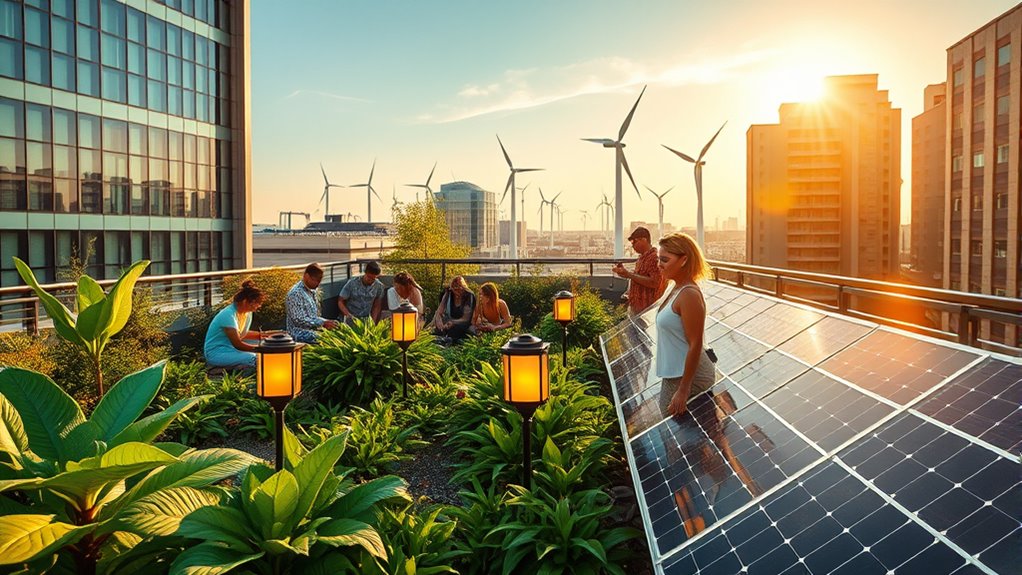
Switching to renewable energy sources is one of the most effective ways to cut down greenhouse gas emissions. By advocating for renewables, you can drive change and reduce reliance on fossil fuels. Here’s how you can make a difference:
Switching to renewable energy is a key step toward reducing greenhouse gases and protecting our planet.
- Support local solar and wind projects to boost clean energy availability.
- Encourage your community to adopt renewable energy options through education.
- Advocate for policies that incentivize renewable energy investments.
- Choose green energy plans from your utility provider whenever possible.
- Emphasize the importance of solar energy solutions and supporting innovations that improve efficiency and storage capabilities.
Your voice matters in pushing for a cleaner future. Every step toward renewable energy not only cuts emissions but also promotes economic growth and energy independence. By actively supporting these solutions, you help create a sustainable environment for future generations.
Supporting Policies and Initiatives for Emissions Reduction

Supporting policies and initiatives for emissions reduction is essential to achieving meaningful progress in combating climate change. You can participate by advocating for stronger carbon pricing, which incentivizes businesses and individuals to lower emissions. Supporting government programs that promote renewable energy, energy efficiency, and sustainable transportation helps accelerate shift efforts. You can also push for regulations that limit fossil fuel extraction and promote clean technology adoption. Engaging with local, national, and international initiatives amplifies impact, encouraging broader policy changes. Additionally, holding policymakers accountable ensures commitments translate into action. By backing these policies, you create an environment where sustainable practices become the norm, making it easier for everyone to reduce their carbon footprint and contribute to global climate goals. Incorporating AI-powered solutions can further optimize resource management and reduce emissions at scale.
Engaging With Community Sustainability Projects
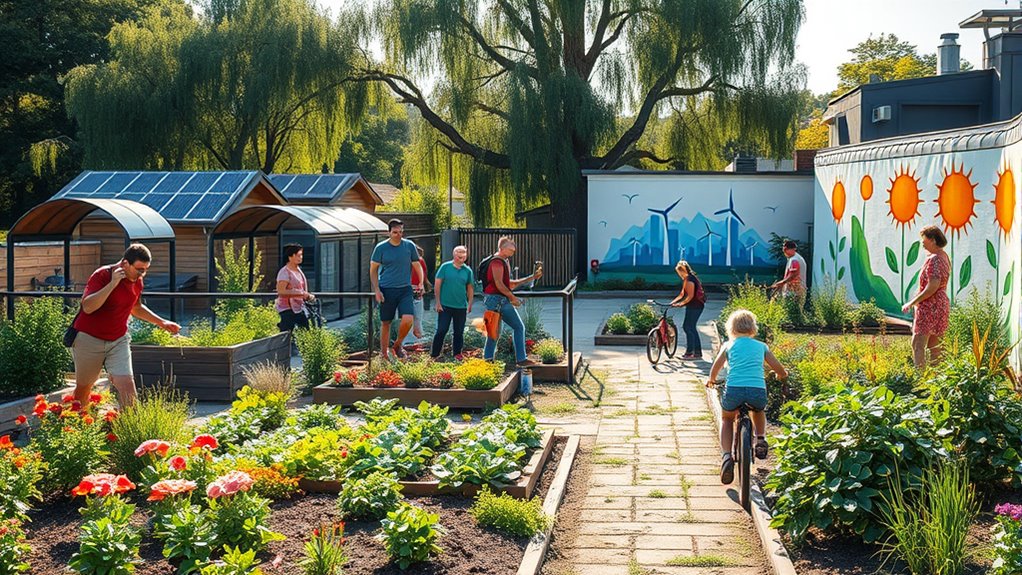
Engaging with community sustainability projects offers a powerful way to make a tangible impact on local environments and promote broader climate goals. By participating, you can:
- Support local renewable energy initiatives, reducing dependence on fossil fuels.
- Volunteer for community clean-up or tree-planting events to improve air quality and biodiversity.
- Advocate for sustainable urban planning, such as bike lanes and green spaces.
- Educate others about conservation practices and sustainable living.
Engaging in these efforts can also foster a sense of cultural artistic influence and community identity, inspiring collective action for environmental preservation.
Your involvement amplifies collective efforts, creating a ripple effect that encourages more people to adopt eco-friendly habits. Community projects often lead to policy changes and infrastructure improvements that benefit everyone. Together, your actions help build resilient, sustainable neighborhoods that contribute to global climate change mitigation.
Tracking and Monitoring Your Carbon Footprint

Tracking and monitoring your carbon footprint is essential for understanding how your daily activities contribute to climate change. By keeping track, you can identify areas to reduce emissions and make informed choices. Use tools like apps, spreadsheets, or online calculators to measure your energy use, waste, transportation, and diet. Regular tracking helps you see progress and adjust your habits for better sustainability.
| Activity | Emissions Source | Reduction Tips |
|---|---|---|
| Transportation | Cars, flights | Carpool, bike, fly less |
| Home Energy | Heating, cooling | Upgrade insulation, switch to renewables |
| Food Consumption | Red meat, processed foods | Eat plant-based, reduce waste |
| Waste Management | Disposal, packaging | Reuse, recycle, avoid disposables |
| Shopping | Clothing, electronics | Buy secondhand, prioritize durability |
Setting Realistic Goals for Ongoing Improvement
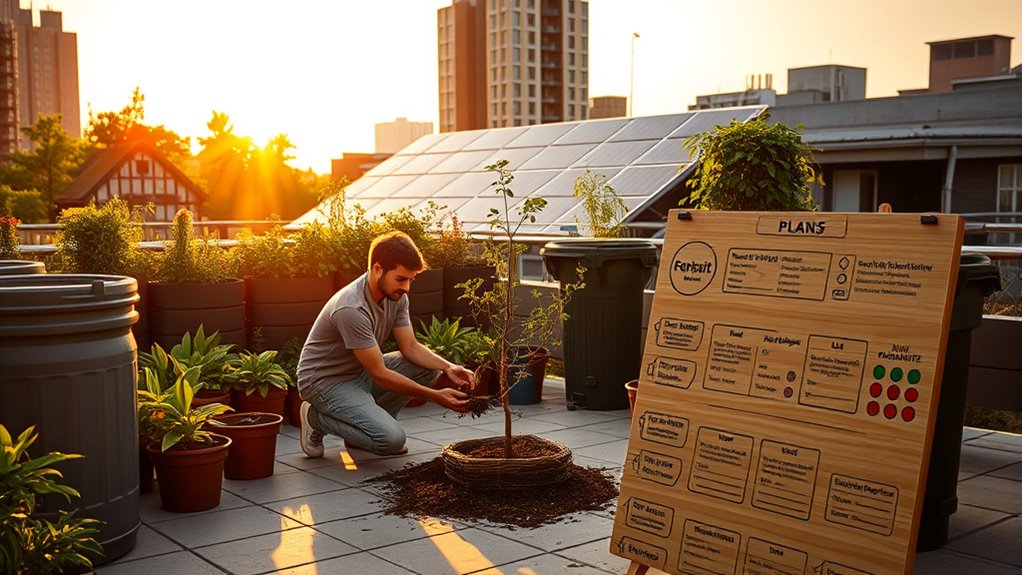
Setting realistic goals for ongoing improvement helps you create manageable steps toward reducing your carbon footprint over time. Start with clear, achievable targets that keep you motivated. To make progress, consider these steps:
- Prioritize actions based on your biggest impact areas, like transportation or energy use.
- Set specific, measurable goals, such as reducing energy bills by 10% in six months.
- Break goals into smaller milestones to track progress and stay motivated.
- Adjust your goals periodically as you learn what works best and circumstances change.
Frequently Asked Questions
How Does Natural Variation Affect My Personal Carbon Footprint Calculations?
Natural variation can impact your personal carbon footprint calculations because seasonal changes, weather patterns, and natural processes like vegetation growth or decay influence greenhouse gas levels. For example, during spring, plants absorb more CO₂, temporarily lowering your footprint. Conversely, in autumn, decomposition releases more emissions. These fluctuations mean your calculations might vary slightly over time, but human activities, especially fossil fuel use, remain the primary driver of long-term increases.
Are There Effective Ways to Offset My Carbon Emissions Beyond Reducing Consumption?
Yes, there are effective ways to offset your emissions beyond reducing consumption. You can invest in certified carbon offset projects like reforestation or renewable energy initiatives that absorb or prevent greenhouse gases. Supporting local conservation efforts or participating in community-based projects can also make a difference. These actions create a tangible impact, helping you balance your footprint while contributing to broader climate solutions—making your efforts more powerful than you might imagine.
How Do Policy Changes Impact Individual Efforts to Lower Carbon Footprints?
Policy changes markedly support your efforts to lower your carbon footprint by creating incentives and removing barriers. When governments implement carbon pricing or stricter emissions standards, it makes sustainable choices more affordable and accessible for you. These policies also encourage companies to adopt cleaner practices, expanding options like renewable energy and eco-friendly products. By backing such policies, you help accelerate systemic change, making it easier for you to live more sustainably and reduce your impact.
What Are the Most Impactful Lifestyle Changes for Long-Term Sustainability?
Switching to renewable energy at home makes a big difference. Imagine installing solar panels—this reduces reliance on fossil fuels, cutting your carbon footprint markedly. In a case study, a family saved thousands annually and lowered their emissions by 50%. You can also adopt energy-efficient appliances, use public transport, and reduce waste. These lifestyle changes add up, helping you contribute to long-term sustainability and fight climate change effectively.
How Can Community Initiatives Influence Broader Climate Change Mitigation?
Community initiatives can markedly influence broader climate change mitigation by fostering collaboration and raising awareness. When you participate in local projects like tree planting, renewable energy programs, or waste reduction efforts, you help create a culture of sustainability. These actions can inspire others to join, amplify collective impact, and influence policies. As more communities adopt eco-friendly practices, they contribute to larger emissions reductions and push for systemic change on regional and national levels.
Conclusion
By taking these steps, you can make a real difference, like planting seeds that grow into a healthier planet. Every small change you make—whether cutting energy use or supporting green policies—adds up over time. Remember, sustainability is a journey, not a sprint. Stay committed and keep tracking your progress. Together, your efforts can create a ripple effect, turning individual actions into a powerful wave of change for a brighter, greener future.
Halloween Picks
halloween
As an affiliate, we earn on qualifying purchases.