
To understand habit loops and brain plasticity, recognize that habits consist of cues, routines, and rewards, which your brain reinforces through neural pathways in areas like the basal ganglia. Repetition strengthens these pathways via dopamine, making habits automatic. By identifying and modifying cues and replacing routines with healthier options, you leverage your brain’s plasticity to reshape habits over time. Keep exploring, and you’ll discover how to harness this process for lasting change.
Key Takeaways
- Habit loops comprise cue, routine, and reward, reinforcing behaviors through neural pathway strengthening.
- Brain plasticity allows neural circuits to grow and adapt, enabling habits to form, change, or be replaced over time.
- Repeating cue-routine-reward cycles intensifies neural connections in the basal ganglia, automating habits.
- Modifying cues and routines leverages brain plasticity to rewire responses and develop healthier habits.
- Rewards trigger dopamine release, reinforcing neural pathways and making habits more automatic and enduring.
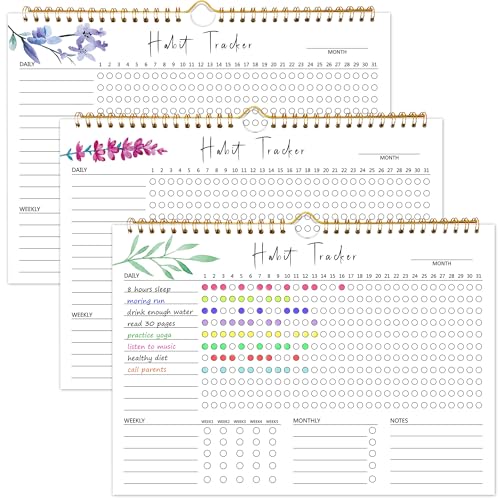
Habit Tracker Calendar, Aesthetic Daily Weekly Goal and Habit Tracker Journal, 12 Months Undated Habits Tracker Planner with Spiral Binding, Boost Productivity Tool and Workout Calendar, 11.7"x8.5"
【Original Design】Our habit tracker is designed to help you build and maintain healthy habits. Whether you want to…
As an affiliate, we earn on qualifying purchases.
As an affiliate, we earn on qualifying purchases.
The Components of Habit Loops
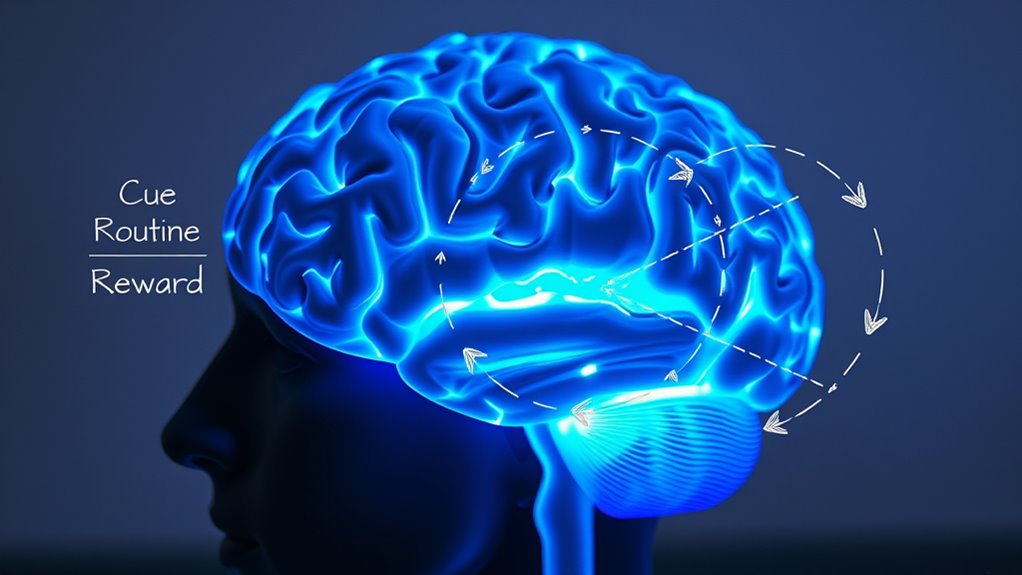
Understanding the components of habit loops is essential for recognizing how habits form and persist. A habit loop consists of three parts: the cue, routine, and reward. The cue acts as the trigger, which can be external—like a specific time, location, or people—or internal, such as emotions or thoughts. When you experience the cue, your brain automatically initiates the routine, which is the behavior or action performed without conscious effort. The routine leads to a reward, providing a satisfying outcome that reinforces the habit. Your brain repeats this cycle, strengthening the neural pathways involved. Recognizing each component helps you understand why habits develop and how they become ingrained, making it easier to identify points of intervention for change. Additionally, understanding the brain’s plasticity can help you rewire habits by forming new neural connections over time.

Neuroplasticity (The MIT Press Essential Knowledge series)
As an affiliate, we earn on qualifying purchases.
As an affiliate, we earn on qualifying purchases.
How the Brain Forms and Reinforces Habits
The brain forms and reinforces habits through a dynamic process involving neural pathways that become stronger with repetition. When you repeatedly perform a behavior in response to a cue, your basal ganglia—an area deep in your brain—solidifies the connection. Dopamine release during the reward phase strengthens this pathway, making the behavior more automatic over time. As you engage in the routine regularly, the neural circuits become more efficient, requiring less conscious effort. Brain plasticity allows these pathways to grow and adapt, meaning habits can be created or changed with targeted effort. Repeating the cycle of cue, routine, and reward reinforces the habit loop, embedding it deeper into your brain’s wiring and making the behavior more ingrained.
Building the Core Competencies of Change: A Guide to Coaching in Organizations
As an affiliate, we earn on qualifying purchases.
As an affiliate, we earn on qualifying purchases.
Identifying and Modifying Cues
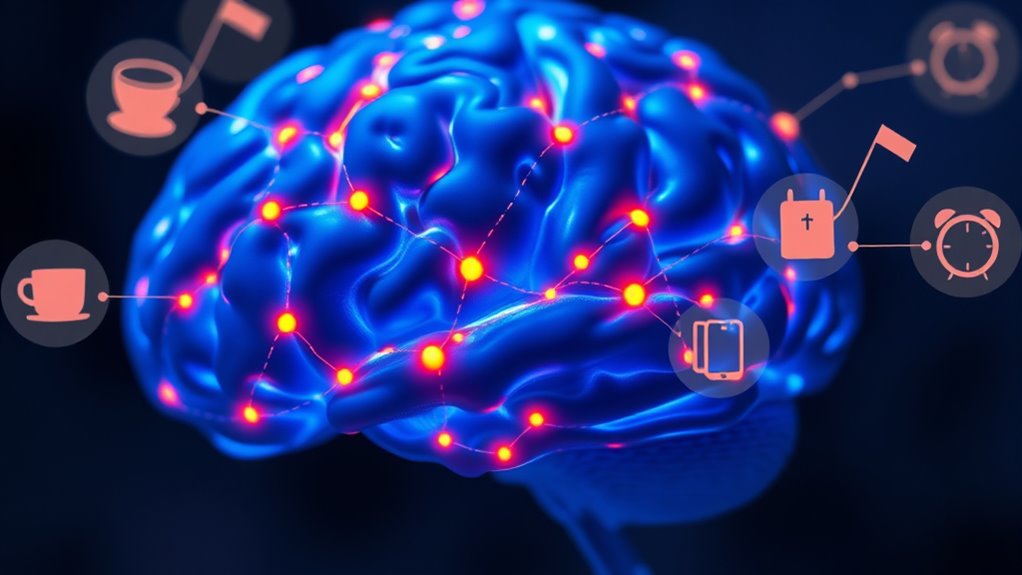
Since habits are reinforced through repeated cue-routine-reward cycles, pinpointing the specific triggers that set these behaviors in motion is essential for effective change. To identify cues, observe when your habit occurs — note the time, location, or emotional state. Keep a journal or use a habit tracker to record patterns. Pay attention to internal triggers like stress or boredom, as well as external ones like specific people or surroundings. Once you recognize these cues, you can work to modify them. This might mean changing your environment, developing alternative routines, or managing emotional responses. Additionally, understanding the role of brain plasticity can help you rewire your responses over time. By consciously detecting and adjusting your triggers, you increase your chances of breaking unwanted habits and establishing new, healthier behaviors.

Taja Undated Weekly Planner, Weekly To Do List Notebook with Goal & Habit Tracker Organizer, A5 Weekly Planner Notebook with Spiral Binding, 6.1" x 8.2" – Green
Efficient Weekly Planning – Utilize the 52 Weeks Undated Planner to articulate and prioritize weekly goals and to-do…
As an affiliate, we earn on qualifying purchases.
As an affiliate, we earn on qualifying purchases.
The Role of Rewards in Habit Strengthening

Rewards play a crucial role in strengthening your habits because they reinforce the behavior and motivate you to repeat it. When you receive a positive outcome, your brain releases dopamine, which enhances neural connections and makes the habit more ingrained. The more immediate and satisfying the reward, the stronger the habit becomes. To understand this better, consider:
- Tangible rewards like treats or money boost motivation.
- Intangible rewards such as relief or pride reinforce behaviors.
- Social approval can serve as a powerful motivator.
- Consistent rewards strengthen the neural pathways associated with the habit.
- The integration of AI-driven data analytics can help tailor personalized rewards to optimize habit formation.
Strategies for Reshaping Habits Through Plasticity
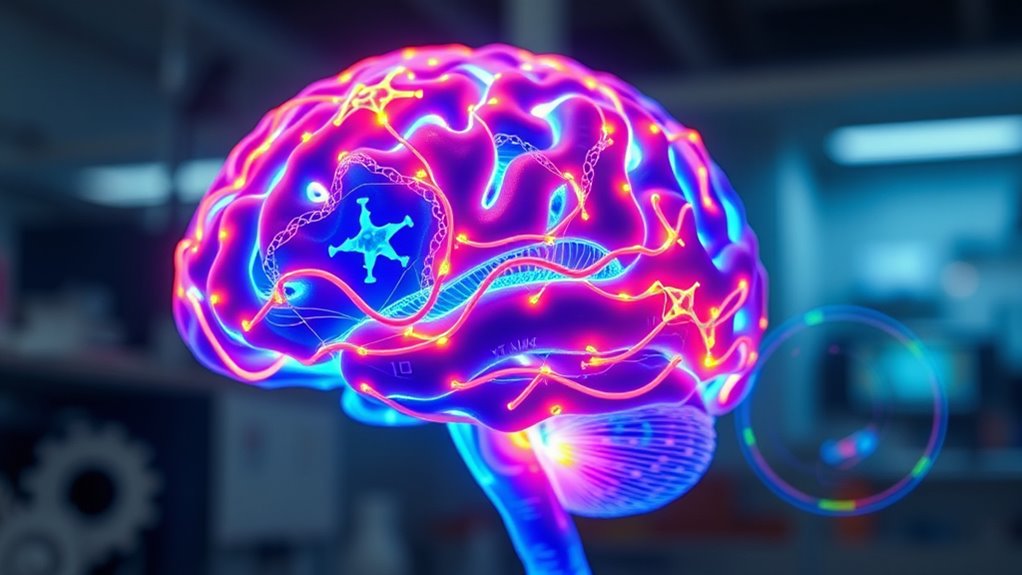
Harnessing brain plasticity offers effective strategies for reshaping habits by rewiring existing neural pathways and creating new ones. To do this, start by identifying the specific cue that triggers your habit. Once you know the cue, replace the routine with a healthier or more desirable behavior that still leads to a satisfying reward. Consistency is key—repeating the new routine strengthens the new neural connections. You can also layer new habits onto existing ones through habit stacking, making the change smoother. Disrupt the old cue or routine if needed, and adjust your environment to reduce triggers. Over time, repeated practice rewires your brain, making the new habit automatic. Incorporating brain plasticity principles can enhance the effectiveness of your habit change efforts. Patience and persistence are essential, as lasting change depends on sustained effort.
Frequently Asked Questions
Can Habits Form Without Conscious Awareness or Intention?
Yes, habits can form without your conscious awareness or intention. When you repeatedly experience a specific cue, your brain automatically links it to a routine and reward, creating a habit loop. Over time, this process strengthens neural pathways even if you don’t actively try to develop the habit. Consistent exposure to cues and routines gradually engrains behaviors into your brain, often happening below your conscious mind.
How Long Does It Typically Take to Break a Habit?
It usually takes about 21 to 66 days to break a habit, but it varies depending on the person and the habit’s complexity. You need to identify the cue, change the routine, or modify the reward. Consistency is key; you must repeatedly practice the new behavior and disrupt the old pattern. With patience and persistence, your brain rewires, making healthier habits stick over time.
Are Some Habits More Resistant to Change Than Others?
Some habits are almost impossible to break, like trying to erase a tattoo with a whisper. Deeply ingrained habits, especially those with powerful emotional rewards, resist change because your brain’s neural pathways are fiercely fortified. You’ll find it more challenging to rewire these habits, requiring relentless effort, patience, and strategic intervention. But with persistence and awareness, even the most stubborn habits can be reshaped, transforming your behavior over time.
Can Environmental Changes Automatically Alter Existing Habits?
Environmental changes can automatically alter your habits by disrupting existing cues and routines. When you modify your surroundings—like removing junk food from your kitchen or changing your workout location—you prevent the usual triggers that start your habits. This forces your brain to adapt and create new routines. Consistent environmental shifts make it easier for you to break old habits and build new, healthier ones through repeated exposure and reinforcement.
How Do Emotional States Influence Habit Formation and Modification?
Emotion influences habit formation and modification by fueling feelings that trigger specific cues, routines, and rewards. When you’re stressed or happy, those emotional states can intensify or weaken your habits, pushing you toward familiar routines or encouraging change. By recognizing emotional triggers, you can deliberately disrupt destructive routines, replace them with positive patterns, and reinforce new habits. Emotional awareness empowers you to actively alter habits, harnessing feelings to forge healthier behaviors.
Conclusion
Understanding habit loops and brain plasticity is like holding a key to transforming your life. By recognizing cues, rewards, and how your brain rewires itself, you have the power to reshape habits just as a sculptor molds clay. Change might seem intimidating, but with patience and awareness, you can rewire your brain’s pathways like a river carving new courses. Embrace this knowledge, and watch your habits shift as effortlessly as waves kissing the shore.