

Sustainable fashion aims to protect our environment by reducing water use, pollution, and textile waste. It encourages you to choose brands that prioritize eco-friendly materials, transparent practices, and circular economy principles like reuse and repair. By supporting innovations in recycling and sustainable fibers, you can help cut down on microplastics, carbon emissions, and waste. If you continue exploring, you’ll discover practical ways to make a positive impact and foster a greener industry.

Get the little things that make your day delivered free — and shop member deals
- Fast, free delivery on millions of items
- Access to Prime Big Deal Days deals on October 6–7
- Prime Video, Amazon Music and more included
Key Takeaways
- Adopt circular economy practices like reuse, repair, and recycling to extend clothing lifespan and reduce waste.
- Shift to sustainable fibers such as organic cotton and recycled materials to lower water use and chemical impact.
- Implement eco-friendly manufacturing processes using renewable energy and reducing water, chemical, and carbon footprints.
- Increase transparency and traceability in supply chains to ensure ethical sourcing and environmental accountability.
- Promote consumer awareness and slow fashion choices that prioritize durability, ethical sourcing, and minimal environmental harm.
The Environmental Toll of Fast Fashion

Fast fashion considerably damages the environment through its massive resource consumption and pollution. You might not realize that the industry accounts for about 10% of global carbon emissions, surpassing international flights and shipping combined. Each year, it uses around 141 billion cubic meters of water—enough to meet the needs of millions—while textile waste totals roughly 92 million tonnes globally, much of which ends up in landfills. Microplastic fibers from synthetic garments pollute oceans, releasing about 500,000 tons annually. Producing synthetic fibers relies heavily on fossil fuels, emitting significant greenhouse gases. Dyeing and finishing processes pollute water sources with toxic chemicals, and shipping goods across borders adds to the carbon footprint. All of these factors combine to create a profound environmental toll driven by fast fashion‘s rapid production and consumption. Water filtration systems can help mitigate some of the pollution by reducing chemical runoff and conserving clean water.
Resource Use and Pollution Challenges

You’re likely aware that cotton farming requires massive amounts of water, straining resources and harming ecosystems. Producing synthetic fibers burns fossil fuels, releasing harmful emissions into the air. Additionally, dyeing processes pollute waterways with toxic chemicals, impacting aquatic life and human communities.
Water-Intensive Cotton Farming
Have you ever considered how much water goes into producing a single cotton shirt? Cotton farming demands about 2,700 liters per shirt, depleting freshwater sources and harming ecosystems. This intensive water use contributes to droughts, especially in arid regions, and strains local communities. The table below illustrates key impacts:
| Impact | Cause | Consequence |
|---|---|---|
| Water depletion | Excessive irrigation | Reduced groundwater levels |
| Ecosystem disruption | Altered river flows | Habitat loss |
| Pollution from runoff | Pesticides and fertilizers | Water contamination |
| Soil degradation | Over-farming | Reduced land fertility |
| Inefficient water use | Outdated irrigation methods | Water waste |
Addressing these issues calls for sustainable farming practices, like drip irrigation and crop rotation, to reduce water consumption and environmental damage. Incorporating sustainable farming practices can significantly mitigate these impacts and promote resource conservation.
Synthetic Fiber Emissions
While reducing water use in cotton farming addresses one environmental challenge, synthetic fibers like polyester and nylon present another major issue. These fibers require vast fossil fuel resources for production, releasing high levels of carbon emissions. Additionally, manufacturing releases toxic pollutants that harm ecosystems. During washing, microfibers shed into oceans, contributing about 500,000 tons of microplastics annually. This pollution affects marine life and enters the food chain. Here’s what you should know:
- Synthetic fiber production accounts for a significant share of global carbon emissions.
- Fossil fuels power most synthetic fiber manufacturing, increasing resource depletion.
- Microfiber shedding during washing releases microplastics into waterways.
- These microplastics make up over 35% of ocean microplastic pollution, harming marine ecosystems.
Dyeing Pollution Impact
Did you know that dyeing and finishing processes in the fashion industry are responsible for over a third of its pollution? These steps use vast amounts of water, energy, and chemicals, often releasing toxic wastewater into rivers and oceans. This contamination harms aquatic life and pollutes drinking water sources. The energy-intensive dyeing relies heavily on fossil fuels, increasing carbon emissions. Additionally, untreated wastewater contains dyes and harmful chemicals that persist in the environment. The table below highlights key issues:
| Issue | Impact | Solutions |
|---|---|---|
| Water consumption | Depletes freshwater resources | Use of eco-friendly dyes |
| Toxic wastewater | Pollutes ecosystems | Advanced treatment tech |
| Energy use | Increases carbon emissions | Renewable energy |
| Chemical runoff | Damages aquatic environments | Safer dye alternatives |
| Microplastic shedding | Pollutes oceans | Better textile treatments |
Minimizing dyeing pollution requires sustainable practices and technological innovation. Implementing sustainable practices can significantly reduce the environmental footprint of dyeing processes.
The Problem of Textile Waste and Disposal
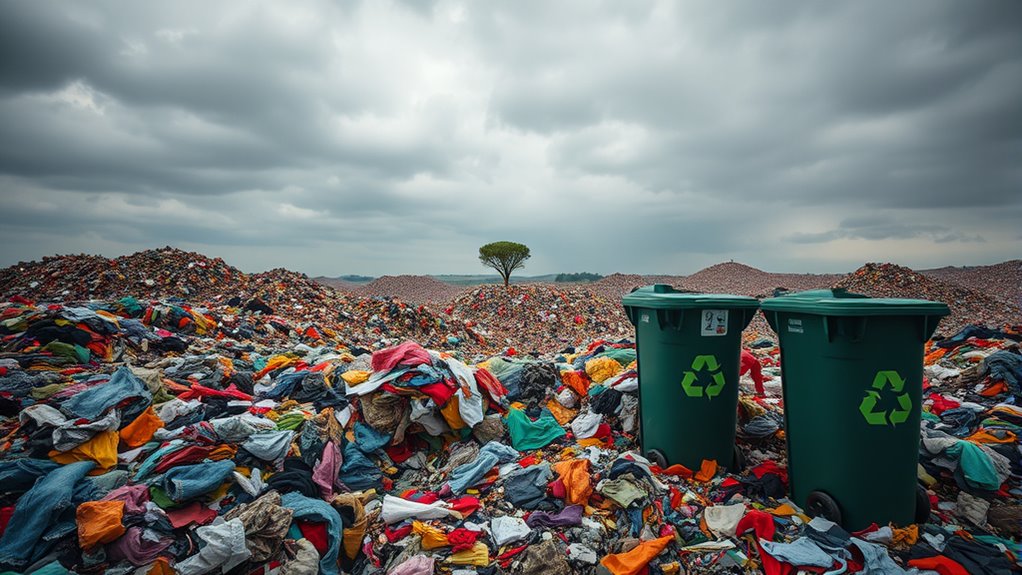
You generate millions of tonnes of textile waste each year, much of which ends up in overflowing landfills. Recycling efforts are limited and often degrade fiber quality, making it hard to reduce waste effectively. As a result, most discarded clothing remains in landfills, harming the environment and wasting resources. Implementing sustainable merchant services can help businesses adopt eco-friendly practices and reduce their environmental impact.
Landfill Overload Issues
The rapid growth of fast fashion has led to an overwhelming surge in textile waste, with about 92 million tonnes discarded globally each year. Most of this waste ends up in landfills, where it decomposes slowly, releasing harmful methane gases. You need to understand that this overload worsens environmental pollution and wastes valuable resources. Here are four key issues:
- Landfill saturation: Many landfills are reaching capacity, forcing the expansion of waste sites or illegal dumping.
- Toxic leachate: Synthetic textiles release chemicals as they break down, contaminating soil and groundwater.
- Microplastic shedding: When textiles decompose, microfibers pollute ecosystems and threaten marine life.
- Resource waste: Discarded textiles waste water, energy, and raw materials that could be reused or recycled. Incorporating sustainable practices can help mitigate these issues and reduce the environmental footprint of the fashion industry, especially through sound healing science techniques that promote awareness and responsible consumption.
Recycling Challenges and Limitations
Recycling textiles presents significant challenges that hinder effective waste management in the fashion industry. You may think recycling is straightforward, but textiles are complex, made from blends of fibers like cotton, polyester, and elastane. Separating these materials is difficult and costly, often leading to contamination and degraded fiber quality. Many recycling processes require energy-intensive methods that diminish fabric strength, limiting reuse options. Additionally, microplastic shedding during recycling worsens environmental pollution. Most discarded textiles end up in landfills because recycling infrastructure is limited and expensive, discouraging widespread adoption. Fast fashion’s rapid turnover makes recycling even harder, as garments are designed for short-term use. Without significant technological advances and industry commitment, textile recycling remains a limited solution to the growing waste problem. Efficiency ratings are crucial for selecting models that provide better energy savings and performance, highlighting the importance of innovative solutions in addressing environmental challenges.
Market Trends and Consumer Awareness

Are consumers truly aware of the environmental impact of their fashion choices? Many know fast fashion harms the environment, but only some act on that knowledge. You should consider these market trends:
- About 72% of US consumers are aware of sustainability issues, yet only 55% actively seek sustainable options.
- The global fast fashion market is projected to hit $291 billion by 2032, driven by low prices and rapid trends.
- Greenwashing causes mistrust; consumers find it hard to identify genuinely sustainable brands.
- Public pressure and regulations, especially in the EU, are pushing brands toward transparency and eco-friendly practices.
- Understanding zodiac sign compatibility can influence personal choices and alignments toward more mindful consumption.
Awareness is rising, but aligning consumer behavior with sustainability remains a challenge. Your choices, combined with industry shifts, can accelerate change.
Innovative Approaches to Sustainability in Fashion

Innovative approaches are reshaping how the fashion industry addresses environmental challenges. You can see this in the rise of sustainable fibers like organic cotton and recycled materials, which cut down on pesticide use and waste. Textile recycling technologies are improving, enabling fibers to be reused with less degradation and microplastic shedding. Brands are adopting energy-efficient processes and shifting to renewable energy sources during dyeing and finishing, reducing carbon footprints. Slow fashion emphasizes durability and timeless design, encouraging consumers to buy less often. Circular economy practices, such as garment reuse and repair, are gaining traction, helping to extend product life and minimize waste. Additionally, innovative comfort solutions such as improved fabric technology and sustainable materials are making eco-friendly fashion more functional and appealing. These innovations demonstrate how industry players are actively working toward a more sustainable future, balancing style, quality, and environmental responsibility.
Industry Initiatives and Regulatory Efforts
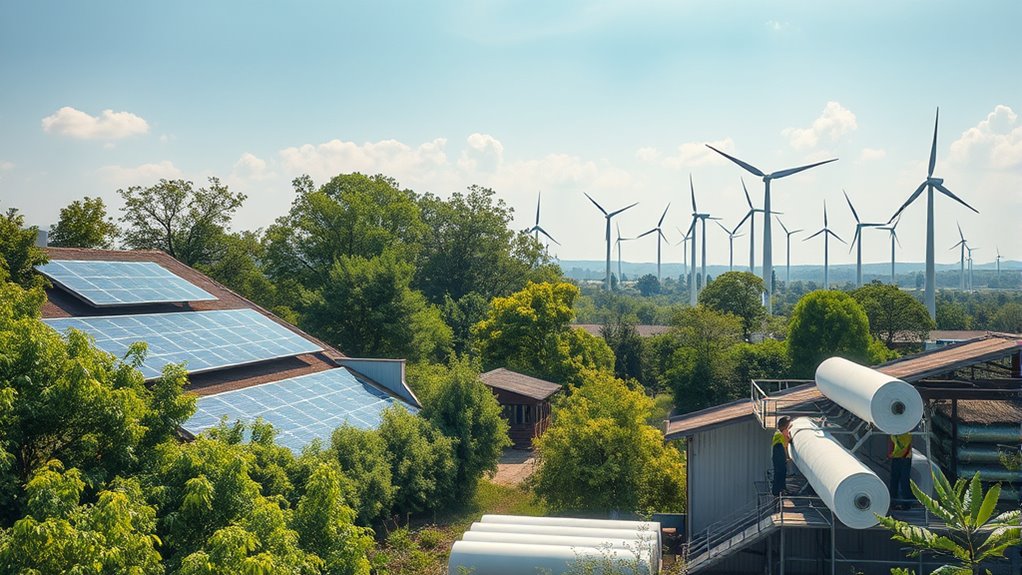
Industry initiatives and regulatory efforts are essential in driving sustainable change within the fashion sector. They set standards and encourage brands to reduce their environmental impact. Here are four key actions:
- Transparency and traceability: Brands are adopting supply chain transparency initiatives to track materials and reduce environmental harm.
- Legislation on microplastics: Governments are implementing laws to limit microplastic pollution from synthetic textiles and improve wastewater treatment.
- Sustainable material development: Collaborations between governments, NGOs, and companies focus on creating eco-friendly fabrics and promoting circular economy practices.
- Carbon reduction commitments: Industry leaders are setting targets to cut emissions, with some aligning efforts to meet climate goals like those outlined in the Paris Agreement. Additionally, certifications and endorsements from beauty experts are helping consumers identify genuinely sustainable brands.
These efforts aim to create a more sustainable, accountable, and environmentally responsible fashion industry.
Building a More Sustainable Fashion Future

How can we create a more sustainable fashion future in a world overwhelmed by waste and environmental damage? You play a crucial role by choosing brands committed to transparency and eco-friendly practices. Support slow fashion labels that prioritize durability, timeless design, and ethical sourcing. Embrace circular economy principles—reuse, repair, and recycle clothing whenever possible. Advocate for industry-wide standards that reduce microplastic pollution, water use, and carbon emissions. Demand greater regulation and accountability from brands, pushing for innovation in sustainable fibers and cleaner production processes. Educate yourself and others about the environmental impacts of fast fashion, and make conscious purchasing decisions. Collectively, your choices can drive demand for meaningful change, encouraging the industry to adopt practices that protect our planet for future generations.
Frequently Asked Questions
How Can Consumers Verify if a Fashion Brand Is Truly Sustainable?
You can verify if a fashion brand is truly sustainable by checking for transparent supply chain information and third-party certifications like GOTS or Fair Trade. Look for detailed reports on their environmental practices, such as water and energy use, and avoid brands that rely heavily on greenwashing. Research their materials—prefer organic, recycled, or sustainably sourced fibers—and stay informed about their commitments to ethical labor and waste reduction.
What Sustainable Materials Are Most Effective for Reducing Environmental Impact?
Like choosing a lighter backpack, selecting sustainable materials lightens your environmental load. Organic cotton, hemp, and Tencel are effective because they require less water and pesticides, unlike traditional cotton. Recycled fibers from plastic bottles reduce microplastic pollution and conserve resources. Innovations like Piñatex and mushroom leather offer eco-friendly alternatives to animal products. By opting for these materials, you’re actively helping reduce pollution, resource depletion, and waste in the fashion industry.
How Does Fast Fashion Influence Global Economic Disparities?
Fast fashion widens global economic disparities by making trendy clothing affordable for consumers in wealthier countries, while exploiting low-wage workers in developing nations. You might buy cheap clothes, but behind the scenes, workers often face poor conditions and low pay. Meanwhile, small local brands struggle to compete with fast fashion giants that prioritize mass production and low costs, deepening economic divides and limiting fair income opportunities worldwide.
What Are the Barriers to Implementing Circular Economy Practices Industry-Wide?
Implementing circular economy practices industry-wide is like trying to turn a massive ship—slow and challenging. You face barriers like high costs of recycling technology, inconsistent quality of recycled fibers, and limited infrastructure for collection and reuse. Additionally, many brands fear profit loss from changing their fast-paced models. Consumer skepticism and the lack of regulatory incentives further hinder widespread adoption, making this shift a complex, uphill journey.
How Do Government Policies Impact Sustainable Fashion Development?
Government policies strongly influence sustainable fashion development by setting standards and regulations that encourage eco-friendly practices. When policies promote transparency, waste reduction, and sustainable sourcing, you’re more likely to see brands adopting greener methods. Conversely, weak enforcement or lack of incentives can hinder progress. Policies that support innovation, recycling, and fair labor practices motivate you to choose sustainable options, ultimately driving industry-wide change toward environmental responsibility.
Conclusion
By choosing sustainable fashion, you’re steering the industry away from its destructive path like a guiding light through darkness. Every eco-conscious purchase you make is a step toward reducing pollution, waste, and resource depletion. Remember, your choices ripple outward, shaping a future where fashion and the planet can thrive together. Together, we can turn the tide and make sustainability the new standard—because a greener wardrobe starts with you.
NFL season / tailgating Picks
team gear
As an affiliate, we earn on qualifying purchases.