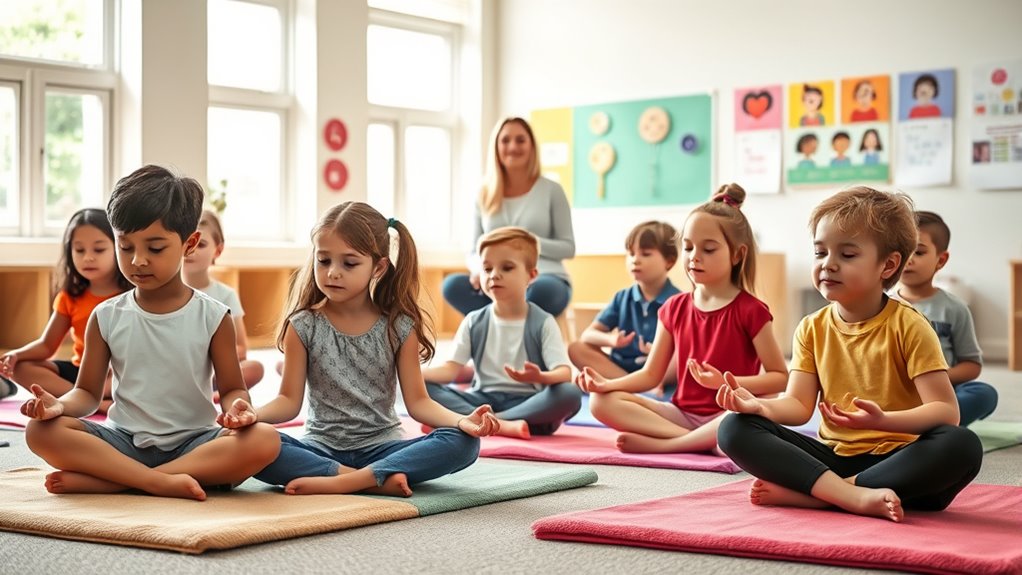

Implementing mindfulness in schools helps build emotional literacy by teaching students to become aware of their feelings, regulate their reactions, and develop empathy. Simple practices like meditation and deep breathing can be highly effective if integrated thoughtfully into the classroom. While evidence shows mixed results, consistent efforts and proper teacher training boost success. Keep exploring to discover effective strategies for sustaining these practices and making a lasting impact on students’ emotional growth.
Key Takeaways
- Mindfulness practices enhance emotional literacy by helping students recognize, understand, and label their feelings accurately.
- Integrating mindfulness in classrooms supports emotional regulation and resilience through present-moment awareness.
- Age-appropriate mindfulness activities foster empathy and emotional growth in students.
- Teacher training and culturally sensitive approaches improve engagement and effectiveness of emotional literacy programs.
- Sustaining mindfulness initiatives involves ongoing feedback, student participation, and embedding practices into school culture.

BayWel 100 Mindful Meditations Cards – Mindfulness & Meditation Self‑Care Prompts | Desk & Travel Deck for Stress Relief, Focus, Motivation & Well‑Being
🧘 Simple Practices for Daily Calm – Build a sustainable mindfulness habit with bite-sized meditation prompts, breathing exercises,…
As an affiliate, we earn on qualifying purchases.
As an affiliate, we earn on qualifying purchases.
Understanding Mindfulness and Its Role in Emotional Growth
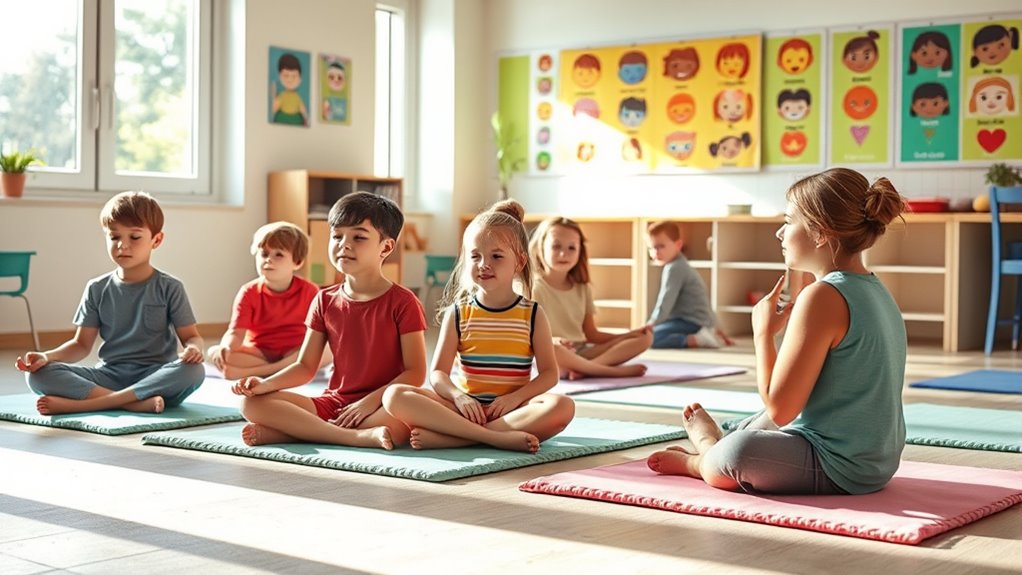
Understanding mindfulness begins with recognizing it as the practice of being fully present in the moment, often achieved through meditation or deep breathing exercises. When you practice mindfulness, you intentionally focus your attention on your current experience—thoughts, feelings, bodily sensations—without judgment. This awareness helps you slow down and observe your emotions objectively. By doing so, you develop better emotional regulation and resilience. In a school setting, mindfulness fosters emotional literacy by encouraging students to recognize and understand their feelings. This increased awareness allows students to respond thoughtfully rather than react impulsively, improving their social interactions and mental health. Ultimately, mindfulness supports emotional growth by helping you stay grounded, manage stress, and cultivate empathy for others. Incorporating mindfulness techniques into daily routines can further enhance emotional understanding and resilience among students.

The Needs Game | 64 flashcards for Emotional Literacy | Non-Violent Communication Teaching Tool | 177 Needs to Discover | Pedagogical Tool | Self Expression
The Needs Game is an emotional literacy game including 64 flashcards and a leaflet with 9 rules. It's…
As an affiliate, we earn on qualifying purchases.
As an affiliate, we earn on qualifying purchases.
Examining the Evidence for School-Based Mindfulness Programs

Evaluating the effectiveness of school-based mindfulness programs requires a careful review of the existing research, which presents a mixed picture. Some studies show modest improvements in students’ emotional regulation, attention, and prosocial behavior, especially with high-quality programs like MBSR and Learning to BREATHE. However, other research reports no significant benefits or even negative effects, such as increased anxiety in certain groups. Systematic reviews indicate small to moderate effects overall, but the quality of studies varies, and some lack rigorous methodology. Additionally, factors related to juice cleansing and detoxification practices can influence how students respond to mindfulness interventions. While some programs demonstrate promising results, the evidence isn’t consistent across all settings. To truly understand their impact, you need to contemplate study design, implementation fidelity, and contextual factors influencing outcomes.

ajdvart Mindfulness Breathing Exercise Poster, Calm Down Corner & Classroom Decor, Breathing Exercise Poster for Therapy Office & Mental Health Wall Art Educational Tool Unframed Canvas 8.5"x11"
8.5"x11" Unframed 3 Canvas Poster: High-quality canvas with a soft matte finish, this poster is built to last….
As an affiliate, we earn on qualifying purchases.
As an affiliate, we earn on qualifying purchases.
Benefits for Educators and How They Can Incorporate Practices

Research shows that effective mindfulness programs can benefit not only students but also educators by reducing stress and preventing burnout. When you incorporate mindfulness practices, you can:
Implementing mindfulness benefits educators by reducing stress and preventing burnout.
- Create a calmer classroom environment by modeling calmness and patience.
- Enhance your resilience to daily challenges, helping you stay focused and composed.
- Improve your overall well-being by regularly practicing deep breathing or meditation.
- Incorporate Louisiana alimony laws and other legal considerations to better understand the importance of emotional stability during challenging times.
To integrate these practices, start with brief daily routines like mindful breathing or body scans. Attend professional development workshops to deepen your understanding. Use short mindfulness exercises at junctures or during stressful moments. Incorporating these habits can rejuvenate your teaching experience and foster a more positive classroom climate.

Essential Resources for Mindfulness Teachers
As an affiliate, we earn on qualifying purchases.
As an affiliate, we earn on qualifying purchases.
Engaging Students and Overcoming Implementation Challenges

Have you ever wondered why some students fully engage in mindfulness activities while others seem disengaged? You can boost participation by making practices relevant and accessible. Use age-appropriate, culturally sensitive approaches that resonate with students’ experiences. Incorporate feedback from students to tailor activities to their needs, making sessions more meaningful. Overcoming implementation challenges requires proper teacher training, so they feel confident leading sessions and addressing student questions. Creating a supportive environment helps students feel safe to practice mindfulness without judgment. Consistent reinforcement and integrating mindfulness into daily routines encourage ongoing engagement. Recognizing that some students may need extra support or encouragement is essential. By being flexible and responsive, you can foster genuine interest and help students see the value of mindfulness in their lives. Additionally, understanding the importance of attention in creative practice can help teachers design more effective activities that hold students’ focus and enhance their emotional literacy skills.
Strategies for Sustaining and Enhancing Mindfulness Initiatives

Building on strategies to boost student engagement, maintaining the momentum of mindfulness initiatives requires deliberate planning and ongoing effort. To sustain and enhance these programs, you should focus on three key actions. First, involve students in co-designing activities, making them feel ownership and motivated. Second, invest in in-depth teacher training to ensure effective delivery and confidence. Third, develop sustainability plans that embed mindfulness into school culture, ensuring continuity beyond initial phases. Regularly monitor outcomes and gather feedback to refine approaches. Additionally, understanding anime culture and storytelling can inspire creative mindfulness activities that resonate with students. By actively engaging students, empowering teachers, and planning long-term, you create a resilient foundation. This approach not only keeps mindfulness alive but also deepens its impact, fostering a supportive environment where emotional literacy can flourish consistently.
Frequently Asked Questions
How Can Mindfulness Be Adapted for Diverse Student Populations?
You can adapt mindfulness for diverse students by incorporating culturally sensitive practices, using inclusive language, and respecting different backgrounds. Tailor activities to meet various developmental levels and learning styles, ensuring everyone feels comfortable participating. Engage students and communities in co-designing programs to reflect their values and needs. Be flexible with techniques, offering options like guided imagery or breathing exercises, and continuously gather feedback to improve relevance and effectiveness for all students.
What Are the Best Methods to Train Teachers Effectively in Mindfulness Practices?
You should focus on providing extensive, hands-on training that combines theoretical understanding with practical exercises. Incorporate ongoing support, such as coaching and peer collaboration, to reinforce skills. Use evidence-based curricula like MBSR or Learning to BREATHE, and tailor training to your school’s needs. Regularly assess progress and gather feedback to refine your approach, ensuring teachers feel confident and equipped to integrate mindfulness effectively.
How Do Cultural Differences Influence Mindfulness Implementation in Schools?
Think of cultural differences as different languages spoken by students’ hearts. You need to listen and adapt your mindfulness practices to resonate with each cultural voice. This means respecting traditions, using culturally relevant examples, and being sensitive to beliefs. When you do, mindfulness becomes a bridge rather than a barrier, creating a safe space where all students feel understood, valued, and more open to engaging fully in their emotional and mental well-being.
What Role Do Parents and Caregivers Play in Supporting Mindfulness at Home?
You play a essential role in supporting mindfulness at home by modeling calm, focused behavior and encouraging regular practice. When you create a peaceful environment, you help your child develop emotional awareness and self-regulation skills. Engage in mindfulness activities together, like deep breathing or guided meditation, and provide positive reinforcement. Your involvement boosts consistency, reinforces skills learned at school, and nurtures your child’s overall emotional well-being and resilience.
How Can Technology Enhance or Hinder Mindfulness Practices in Educational Settings?
Technology can boost mindfulness in education by offering interactive apps and guided meditations that engage students and make practices accessible. However, it can also hinder by causing distractions or encouraging superficial engagement. To maximize benefits, you should select age-appropriate tools, set clear boundaries, and encourage mindful use of devices. Regularly evaluate how technology impacts focus and emotional regulation, adjusting strategies to make sure it supports genuine mindfulness development.
Conclusion
By weaving mindfulness into your school day, you open a door to calm amidst chaos, guiding students toward emotional clarity. Like a gentle tide, these practices ripple outward, strengthening resilience and empathy. Embrace the journey, navigate challenges with patience, and watch as mindfulness blossoms, transforming classrooms into havens of growth. With each breath, you plant seeds of awareness, nurturing minds and hearts to flourish in a garden of emotional literacy.