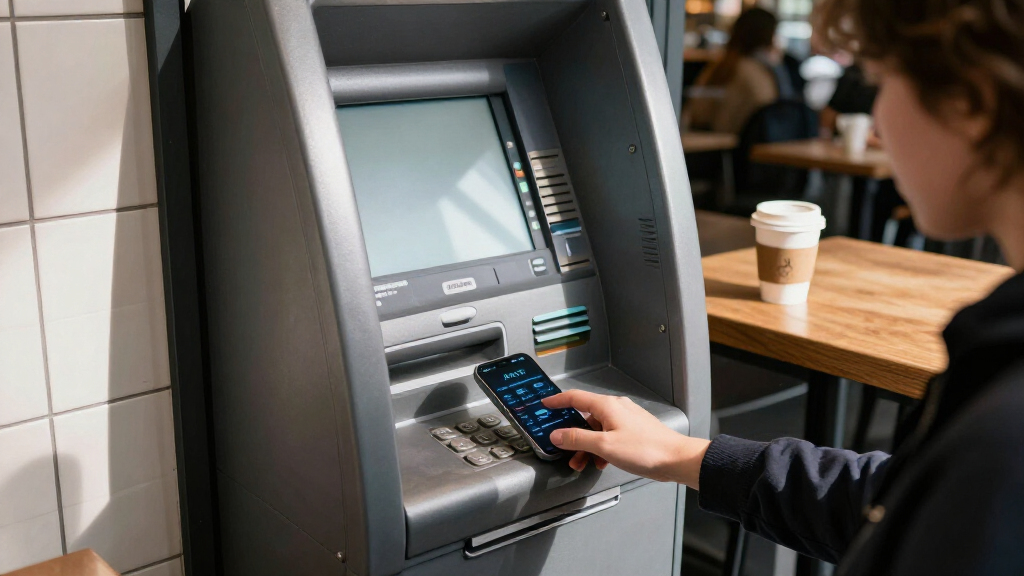

🔍 Read the full analysis: The AI Era And The ATM Paradox on ThorstenMeyerAI.com

Get the little things that make your day delivered free with Prime
- Fast, free delivery on millions of items
- Prime Video, Amazon Music and more included
- Member-only deals all year
TL;DR
A November 20, 2026, article on ThorstenMeyerAI.com revisits the ATM’s effect on bank tellers, drawing on research that found teller employment in the United States rose modestly from 1980 to 2010 despite a major expansion in ATMs. The account argues that cheaper branches and shifting teller duties helped explain the result, while mobile banking and branch closures later coincided with a substantial drop in teller employment. The figures and causal interpretation are attributed to the article’s cited sources.
Thorsten Meyer’s November 20 article revisits the ATM’s effect on bank tellers, arguing that the machines reduced the number of tellers needed per branch but did not immediately erase the occupation. Citing economist James Bessen’s research, the article says U.S. teller employment rose modestly from about 500,000 in 1980 to about 550,000 in 2010, even as the country’s ATM count roughly quadrupled. Later changes, particularly mobile banking and branch closures, coincided with a sharper fall in teller jobs.
The article opens with the first Barclays cash machine, introduced outside a branch in Enfield, north London, on June 27, 1967. Actor Reg Varney withdrew up to ten pounds in one-pound notes. The machine operated after the branch closed, addressing a practical limit of banking at the time: customers generally had to visit during office hours to get cash. Early Barclays machines used special paper cheques marked with carbon-14 and a customer code, rather than today’s plastic cards.
The technology spread to other countries. The source dates Germany’s first cash machine to May 27, 1968, in Tübingen, and a Docutel cash dispenser installed by Chemical Bank in New York to September 1969. ATMs took over cash dispensing, one of a teller’s central duties, and later also supported deposits. But the article’s account of the U.S. labor figures complicates the assumption that automating a core task would make tellers vanish.
From about 100,000 ATMs in 1995, the U.S. total rose to around 400,000 in 2010, according to figures attributed to the Bank for International Settlements and used by Bessen. Meanwhile, Bessen’s findings, as summarized by MIT economist David Autor in 2015, put teller employment at roughly 500,000 in 1980 and 550,000 in 2010. These are historical estimates, not a claim that every teller job was unaffected or that employment rose continuously in every year.
Infographic 01 · The paradox
Four times the machines, more tellers
ATMs took over the teller's core task. For three decades, banks answered with more branches, not fewer tellers.
US commercial bank offices (head offices + branches) · year-end · FDIC
Teller and ATM figures: Bessen’s analysis of Census and American Community Survey microdata, as summarised by Autor (2015); ATM counts from the Bank for International Settlements. Branch growth in cities: Bessen (2015), urban markets. FDIC series: FDIC-insured commercial banks in the US states and DC; savings institutions are not included.
Sources: D. Autor, Journal of Economic Perspectives 29(3), 2015; J. Bessen, Toil and Technology, IMF Finance & Development (March 2015); FDIC, Historical Bank Data (commercial banks, year-end).
Powered by Thorsten Meyer AI
How Automation Reshaped Teller Work
The account offers a case study in how automating tasks differs from automating an entire job. ATMs reduced the staffing needed to operate a branch: in a typical urban market, the article says, staffing fell from about 20 tellers per branch to about 13 between 1988 and 2004. But cheaper-to-run branches could also make expansion more attractive. The number of branches in U.S. cities grew by 43% during that period, according to Bessen’s analysis cited by Meyer. More branches partly offset the reduction in staffing at each one.
The teller role also changed. As routine cash handling became less central, banks placed more emphasis on customer interaction and what they call relationship banking—including advice and the sale of loans, credit cards, and investment products. This does not mean automation guaranteed more jobs: the article presents a particular historical outcome shaped by branch growth and changing duties. It does show why predictions based only on the number of machines can miss how demand for a service, and the remaining work around it, changes.
Products Worth Considering

Withings Body Scan Smart Scale

Levoit Vital 200S-P Smart Air Purifier for Large Rooms (Up to 1875 sq ft)

Therabody Theragun PRO Plus 6-in-1 Deep Tissue Massage Gun, Black
As an affiliate, we earn on qualifying purchases.
From Cash Machines to Mobile Banking
The article distinguishes the ATM’s first phase from a later shift driven by phones and digital banking. In the United States, 48.3% of households with a bank account mainly used mobile banking in 2023, while 15.1% mainly used a teller, according to figures cited in the source. The article reports that U.S. teller employment fell from about 600,500 in 2008 to 339,200 in 2025, attributing those figures to the Bureau of Labor Statistics. The dates and measures differ from Bessen’s earlier estimates, so the figures should be read as separate reported series rather than a seamless annual comparison.
Germany provides another indication of the shift in physical banking access: the source reports that the country’s bank branches fell from 45,467 at the end of 2004 to 16,799 at the end of 2025. Meyer also says cash machines are now retreating in Germany, China, and Japan, though the supplied material does not give comparable counts or a specific time period for those withdrawals. The central historical contrast is that ATMs changed branch operations first; widespread mobile banking and a smaller branch network came later.
Limits of the Employment Comparisons
The figures in the article come from different sources, periods, and measures. Bessen’s historical estimates, Autor’s summary, the Bureau of Labor Statistics count, household banking-use data, and branch totals do not by themselves establish exactly how much of the later teller-job decline was caused by mobile banking. The source describes the phone as the driver of the second phase, but the figures provided do not isolate its effect from other changes in banking or the broader economy.
It is also unclear from the supplied material how many tellers moved into other roles, how the balance between advice and sales changed across banks, or how many cash machines remain in each country named. The 43% branch increase applies to U.S. cities from 1988 to 2004; it is not a measure of teller employment growth or a nationwide branch-growth rate. The FDIC figures cited for U.S. commercial bank offices show a similar direction, but count head offices as well as branches.
The Next Phase of Bank Access
The source frames the next development as a continuing retreat from in-person banking, with teller employment already much lower in the 2025 figure than in the 2008 count. It provides no new policy announcement, bank plan, or forecast, so the pace and scale of future branch and ATM changes cannot be established from this account alone.
For readers tracking the shift, the relevant indicators are future BLS teller-employment data, household choices among mobile, teller, and other banking channels, and country-by-country figures for branches and ATMs. Those measures would help show whether digital services continue to replace in-person transactions, and whether any remaining customer-facing work changes along with them.
Key Questions
Did ATMs immediately eliminate bank teller jobs?
No. The article cites Bessen’s estimate that U.S. teller employment rose modestly, from about 500,000 in 1980 to 550,000 in 2010, despite a large increase in ATMs. That national trend does not mean every teller or branch was unaffected.
Why did teller employment hold up as ATMs spread?
One explanation in Bessen’s analysis is that ATMs lowered branch operating costs while staffing needs per branch fell. The article says U.S. city branches grew by 43% from 1988 to 2004, partly offsetting fewer tellers at each location.
What later change was associated with falling teller numbers?
The article points to mobile banking and branch closures as part of a later phase. It reports that 48.3% of U.S. households with bank accounts mainly used mobile banking in 2023 and cites a decline in teller employment between 2008 and 2025.
Are all the employment figures directly comparable?
No. The figures come from different years, sources, and measures. They show a broad historical pattern, but the material does not provide a single consistent series that explains how much each technology or other factor contributed to job changes.
Source: ThorstenMeyerAI.com