
TL;DR
Apple announced a new Mac Studio featuring up to 512GB of unified memory, enabling local inference of large AI models. While capable of loading frontier-scale models, real-world performance depends on bandwidth and workload, not just memory size.
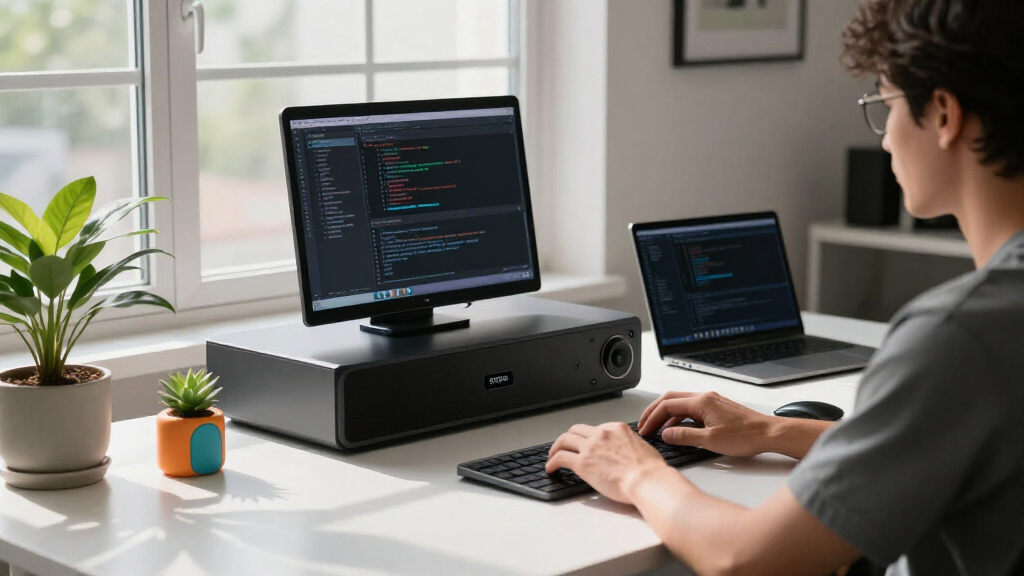
Apple has announced a new Mac Studio equipped with up to 512GB of unified memory, capable of loading frontier-scale AI models locally, a capability previously limited to data centers. This development matters because it offers individual researchers, developers, and small teams a desktop solution for running large models without relying on cloud infrastructure, aligning with the trend toward greater hardware sovereignty.
The new Mac Studio, announced on August 25, 2026, in two configurations, features the M5 Ultra chip, which combines two M5 Max chips via Apple’s UltraFusion interconnect, creating a quad-die processor. The high-memory version, with 512GB of unified memory and 1.2 terabytes per second bandwidth, is designed to load large AI models directly into GPU memory. Preorders are open, with the model expected to ship in late October and general availability on September 22, 2026.
Apple claims the M5 Ultra offers up to 4.3x faster AI performance than the previous M3 Ultra, and up to 9.8x faster than the M1 Ultra, based on internal benchmarks. The key innovation is the unified memory architecture, which allows the GPU to address the entire 512GB pool directly, enabling the loading of models that previously required multiple high-end GPUs or cloud resources. This capacity makes it feasible for individual users to experiment with large models, including some frontier-scale open models, on their desktop.
However, experts emphasize that loading a model is distinct from running it efficiently. While the machine can hold large models, actual inference speed depends heavily on memory bandwidth and compute power, which, although substantial for a desktop, falls short of data center GPU clusters. Apple’s benchmarks are promising but are not representative of all workloads; real-world performance will vary, and software ecosystem maturity remains a consideration.
Potential Impact on AI Development and Research
This machine represents a significant step toward democratizing access to large-scale AI models, allowing small teams and individual researchers to work with models previously confined to data centers. The ability to load frontier-scale models locally enhances privacy, reduces reliance on cloud infrastructure, and accelerates experimentation. However, performance limitations mean it is best suited for development and small-scale deployment rather than large-scale production or serving many users simultaneously.
As an affiliate, we earn on qualifying purchases.
Evolution of Local AI Hardware and Apple’s Position
Until now, running frontier-scale AI models locally has been largely restricted to specialized data center hardware, due to the enormous memory and bandwidth requirements. Cloud providers have dominated this space, offering scalable GPU clusters for inference and training. Apple’s move with the M5 Ultra and 512GB memory configuration marks a shift toward high-end consumer and professional desktop hardware capable of handling larger models. This development follows a broader industry trend of integrating AI accelerators directly into consumer hardware, but Apple’s focus on unified memory and custom silicon distinguishes its approach.
Previous Apple silicon generations supported smaller models, with maximum memory configurations far below 512GB. The new architecture, combining multiple chips via UltraFusion, enables a desktop device to approach data center capabilities in terms of model capacity, albeit with performance trade-offs. The timing coincides with increasing interest in local AI inference for privacy-sensitive applications, research, and small-scale deployment.
“Loading a big model and serving it fast are different achievements, and this machine is dramatically better at the first than the second.”
— Thorsten Meyer
As an affiliate, we earn on qualifying purchases.
Unclear Aspects of Performance and Ecosystem Maturity
While the hardware specifications are confirmed, the real-world inference performance across diverse workloads remains to be validated through independent benchmarks. Software ecosystem maturity, including support for popular AI frameworks and tools, is still evolving, and some workflows may require porting or may not run optimally on Apple silicon.
Additionally, the extent to which this machine can replace cloud-based solutions for production-scale inference or training is uncertain, given bandwidth and compute limitations compared to data center hardware. The long-term reliability and scalability for sustained heavy workloads are yet to be seen.
As an affiliate, we earn on qualifying purchases.
Upcoming Benchmarks and Software Support Developments
Independent testing of the Mac Studio’s AI inference capabilities is expected in the coming months, which will clarify its performance in real workloads. Software developers are also working to optimize frameworks for Apple silicon, potentially improving efficiency and speed. The late October release of the high-memory model will allow early adopters to evaluate its suitability for their specific AI projects, and feedback from the community will shape future expectations.
Further updates from Apple regarding software ecosystem maturity and potential hardware revisions could influence how the device is adopted for AI development and deployment.
As an affiliate, we earn on qualifying purchases.
Key Questions
Can the new Mac Studio replace cloud GPUs for large-scale AI inference?
While it can load and run large models locally, performance limitations mean it is best suited for development, experimentation, and small-scale inference rather than large-scale, production deployment.
What makes the 512GB memory configuration special for AI workloads?
The large unified memory pool allows loading frontier-scale models directly into GPU memory, enabling local experimentation with models that previously required data center hardware.
How does the performance of this machine compare to data center GPU clusters?
Although the machine offers significant capacity, its bandwidth and compute power are still below what large GPU clusters provide, limiting its use for serving many users or high-throughput applications.
Will software tools support AI development on Apple silicon effectively?
Support is improving, but some workflows may require porting or optimization. The ecosystem is still maturing compared to dominant GPU platforms.
When will the high-memory model be available for purchase?
The 512GB configuration is expected to ship in late October 2026, with preorders already open and general availability on September 22, 2026.
Source: ThorstenMeyerAI.com